


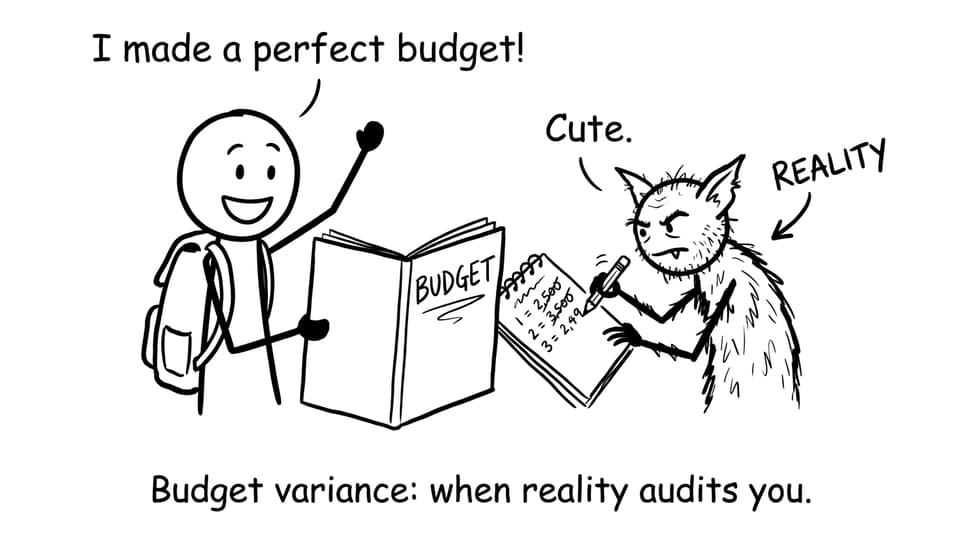
If you have ever built a perfect plan on Sunday night, then watched Monday morning tear it apart, you already understand the emotional logic behind IB Business Management budgeting. A budget is a promise about the future. Actual results are the future arriving, with opinions.
That gap between what you expected and what happened is called a budget variance. And for managers (and for you in IB Business Management exam questions), the real skill is not spotting the gap. It is explaining why it exists, and what should change next.
Budget variances: the simple definition you can use in exams
A budget variance is the difference between budgeted (planned) figures and actual results. Variances can be:
-
Favourable: outcome is better than expected (e.g., higher revenue or lower costs)
-
Adverse: outcome is worse than expected (e.g., lower revenue or higher costs)
To lock in the syllabus wording and avoid definition drift, pair this post with RevisionDojo’s Variances (3.9.3) notes.
What causes budget variances in IB Business Management cases?
Managers rarely get just one cause. Variances often come in clusters, and your job in IB Business Management is to connect the number to a realistic operational story.
Sales revenue shifts (the biggest domino)
Revenue assumptions can be fragile. A small change in demand can quickly become a large variance because it affects production volume, purchasing, staffing, and cash flow. Common triggers include competition, seasonality, pricing changes, and marketing effectiveness.
If you want the budgeting logic behind those assumptions, review Constructing a Budget (3.9.2) notes.
Unexpected cost changes (inputs do not stay still)
Costs move even when managers do everything “right.” Supplier prices can rise, utilities fluctuate, and labour costs can change due to overtime, turnover, or wage adjustments. These cost variances are often adverse, but they are also informative: they highlight where the business is exposed.
Operational inefficiencies (the quiet leak)
Not all adverse variances are dramatic. Some come from slow processes: wasted materials, machine downtime, poor inventory control, or low productivity. These are the variances managers can often influence most directly, which is why they matter in evaluation.
External factors (the weather of business)
Exchange rates, regulation, and macroeconomic shifts can distort both costs and revenue. In IB Business Management, you score higher when you show awareness of control: external causes may require adaptation rather than blame.
Why variance analysis matters for managers (and for your marks)
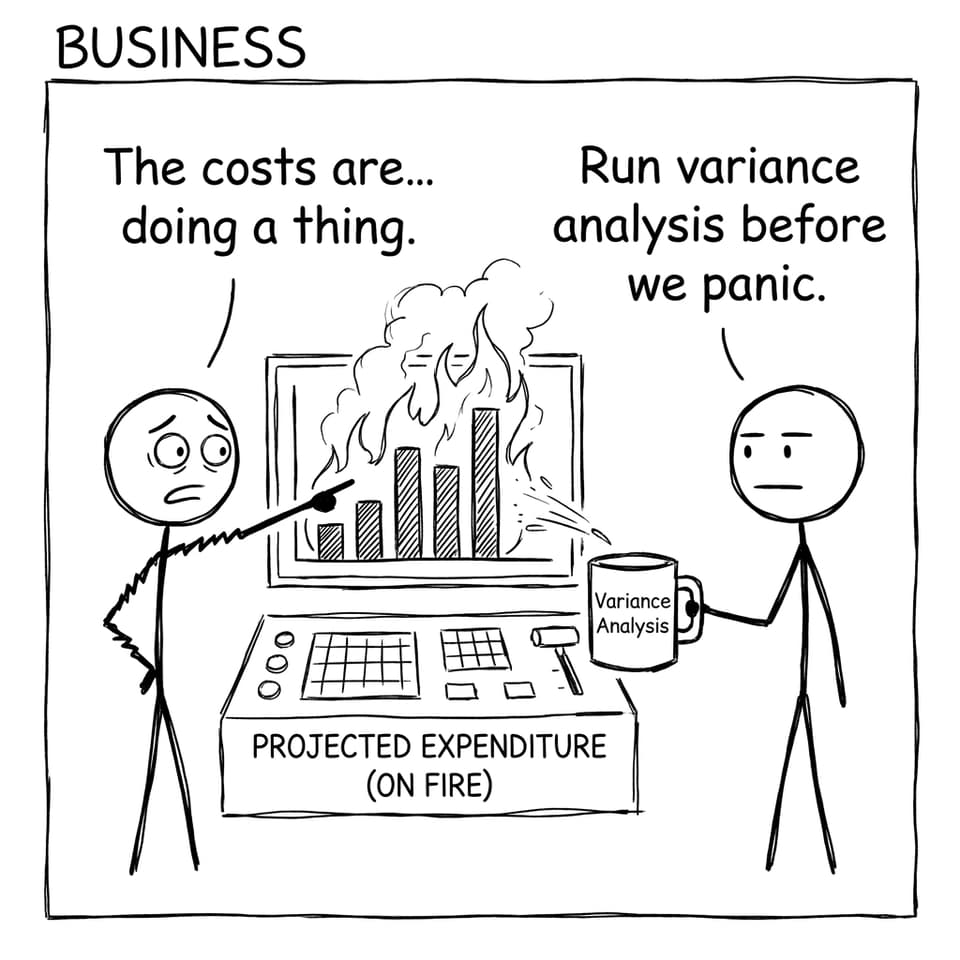
Variance analysis is what turns a budget from a document into a decision tool. Done well, it supports four manager priorities:
Better decisions, faster
Variance analysis forces managers to identify root causes instead of guessing. If sales fall, is it price, promotion, product quality, or distribution? If costs rise, is it supplier inflation or internal waste? In IB Business Management, this is the difference between description and analysis.
Stronger planning and more realistic budgets
Each variance is feedback on assumptions. Managers use that feedback to forecast with more accuracy next cycle. That is why the topic is paired with budgeting in the syllabus and in RevisionDojo’s Importance of Budgets and Variances (3.9.4) notes.
Performance evaluation with context
Variances help managers assess teams and departments, but the key word is fairly. A favourable variance may come from cutting essential spending. An adverse variance may come from a deliberate long-term investment. This is where evaluation language in IB Business Management earns marks.
Strategy and control
Variance analysis highlights where control systems are weak and where resources should go next. If recurring adverse variances appear in operations, managers might invest in training, maintenance, or improved scheduling.
For exam practice that mirrors how these calculations and explanations are tested, use the Budgets (3.9) Questionbank and the 3.9.3 Variances topic hub.
Quick checklist: how to explain a variance in 20 seconds
-
State whether it is favourable or adverse
-
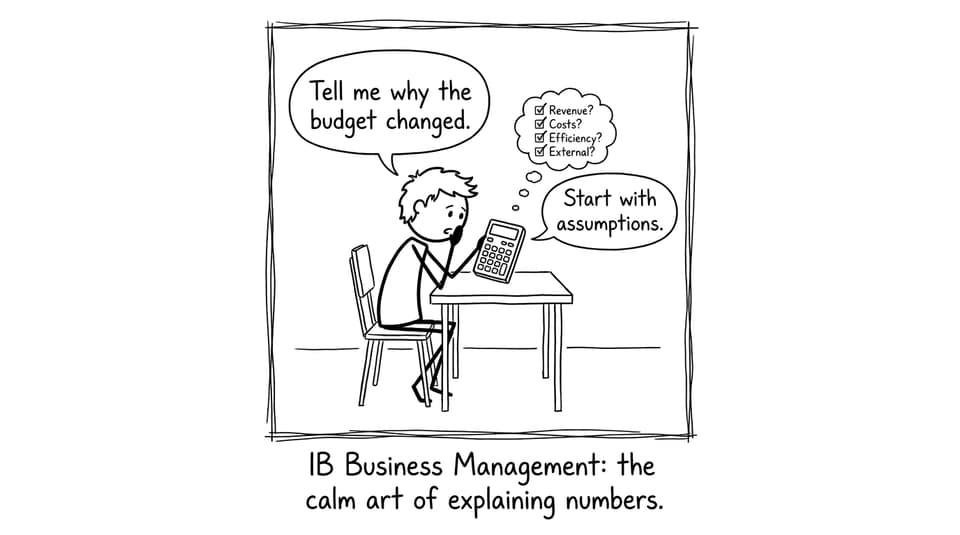
Identify the likely driver: revenue, costs, efficiency, or external factors
-
Add one realistic business reason (not just “demand changed”)
-
Suggest one managerial response (short-term fix + long-term improvement)
Conclusion: turn variances into a story, not a shock
Budget variances are normal. Businesses operate in moving conditions, and budgets are written in still ink. What matters in IB Business Management is your ability to translate a variance into cause, consequence, and response.
To practise that skill under exam pressure, RevisionDojo is built for it: use the Questionbank for exam-style variance questions, Study Notes for clean definitions, Flashcards for quick recall, and AI Chat to test your explanations. When you want realism, build timed practice with Mock Exams and Predicted Papers, and for feedback on structure and judgement, use RevisionDojo’s Grading tools or learn with Tutors. Budget variance stops feeling like “randomness” when you have a system for analysing it.


