


If you’ve ever paid for something and instantly thought, “Worth it,” you’ve felt value creation in real time. In IB Business Management, that moment is more than a feeling; it’s a core lens for analyzing why some businesses grow, earn loyalty, and survive change while others fade.
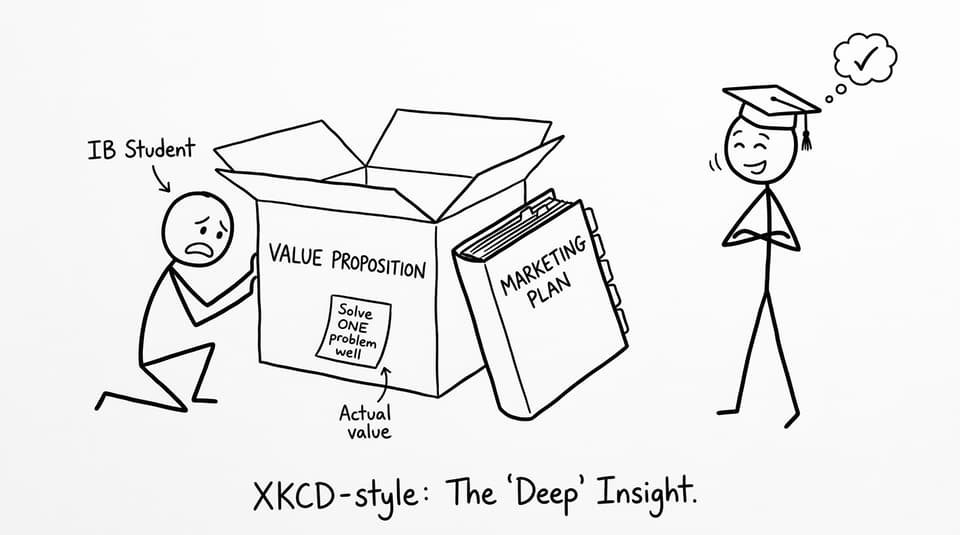
Businesses create value when they improve life for customers and, increasingly, for society too. The best answers in IB Business Management don’t treat value as a slogan. They treat it as a process: spotting a need, designing a solution, delivering it reliably, and doing it in a way stakeholders can live with.
A quick IB Business Management checklist for “value”
Use this as a mini-plan for Paper 1 and Paper 2.
-
What need/problem is being solved?
-
What makes the offer better than alternatives?
-
Where does innovation show up (product, process, experience)?
-
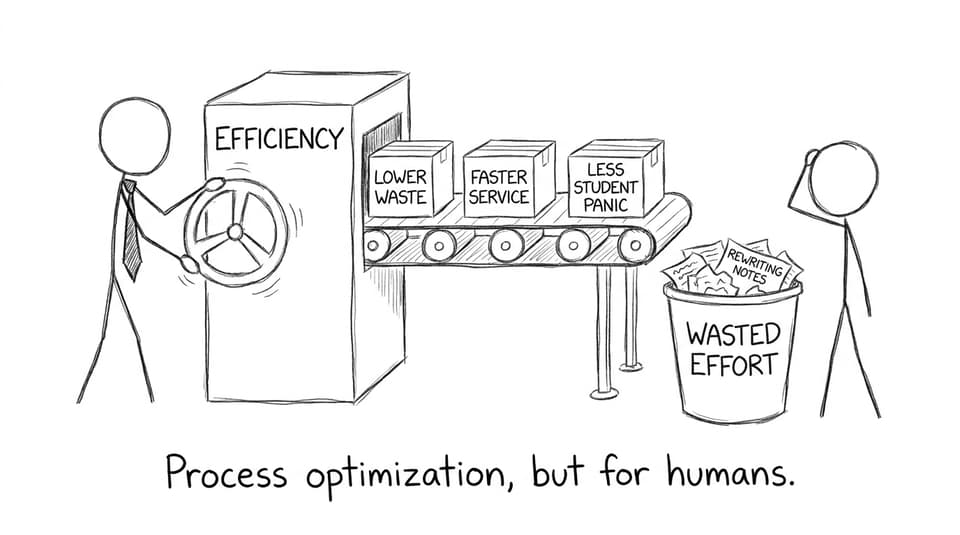
How does efficiency reduce cost or waste?
-
What’s the ethical/social value (trust, sustainability, fairness)?
-
How does the business build human capital (training, skills, learning)?
For a syllabus-aligned starting point, keep the IB Business Management resources hub open while you revise.
IB Business Management: Value starts with a real customer problem
In exam responses, value creation should begin with clarity: what job is the customer “hiring” the product to do? A café isn’t selling coffee; it’s selling speed, comfort, routine, and a place to think. A ride-share isn’t selling a car; it’s selling certainty and convenience.
This is why definitions matter. If you want a tight foundation, review 1.1 What Is a Business? and the matching 1.1 notes. In IB Business Management, examiners reward answers that connect purpose, stakeholders, and outcomes.
Innovation creates value people can actually feel
Innovation is simply the business saying, “We can do this better.” Sometimes it’s a new product. Often it’s a quieter change: fewer steps, clearer design, better service recovery, smarter personalization.
A strong IB Business Management paragraph links innovation to competitive advantage: differentiation, brand loyalty, or improved customer experience. If you want frameworks to support that analysis, browse the BM Toolkit and its step-by-step lessons.
Efficiency creates value by cutting waste (not quality)
Efficiency is value creation that doesn’t always look exciting, but customers feel it: fewer delays, fewer defects, more consistent outcomes, and sometimes lower prices.
In IB Business Management, you can show efficiency through operations choices (capacity use, inventory systems) or financial indicators. For quick, exam-ready examples, see strategies to improve efficiency ratios notes and operations content like Unit 5: Operations Management.
Ethical and social value: the trust multiplier
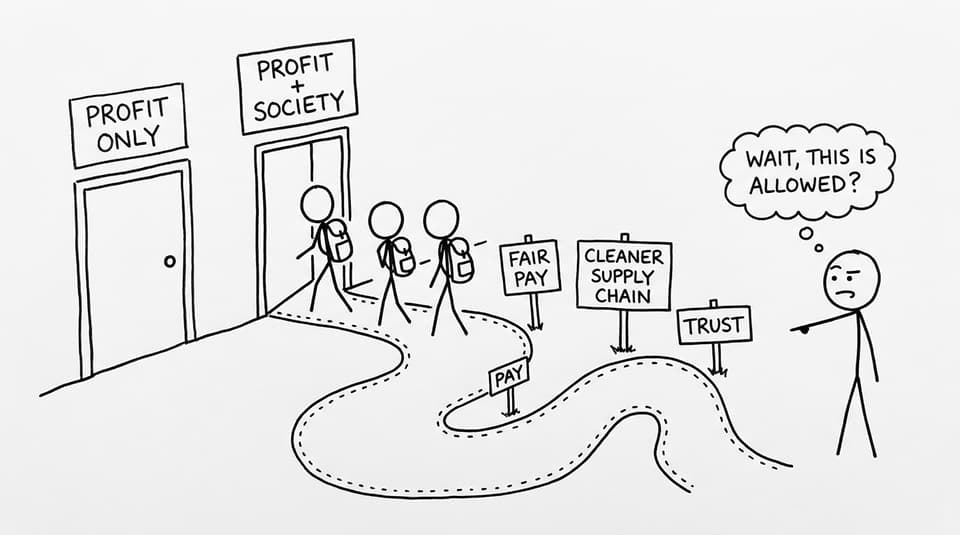
A business can be profitable and still damage stakeholders. Modern value creation includes ethics and sustainability because trust has economic consequences: brand resilience, employee retention, reduced risk, and stronger long-term demand.
A clean IB Business Management evaluation asks: who gains, who loses, and what trade-offs exist short term vs long term? If you’re working on structured exam technique, the guide How to Maximize Your Score in IB Business Management pairs well with timed practice.
Skills and knowledge: value that keeps compounding
Training employees and improving skills is value creation that compounds. Better skills improve productivity, service quality, innovation capacity, and culture.
If you’re revising people-focused impacts, motivation is a good bridge topic: it connects stakeholder well-being to performance outcomes. Use motivation theories notes to build those cause-and-effect chains in IB Business Management answers.
Conclusion: Turn value into marks (and judgment)
Value creation is not one thing. In IB Business Management, it’s the intersection of solving a customer problem, innovating, running efficiently, acting ethically, and developing people. If you can explain how each element creates value, and who benefits, you’ll write answers that feel mature and exam-ready.
Build that skill with RevisionDojo: revise fast with Study Notes, lock in key terms with Flashcards, drill application in the Questionbank, ask AI Chat when you’re stuck, improve writing with Grading tools, then rehearse under pressure using Predicted Papers and Mock Exams. When you want guided feedback, Tutors and the Coursework Library help you level up with confidence.


