
Hiring a tutor for MYP History can be worthwhile when a specific difficulty persists despite teacher support and focused independent practice. It is not automatically necessary after one disappointing result, a demanding unit, or a frustrating week.
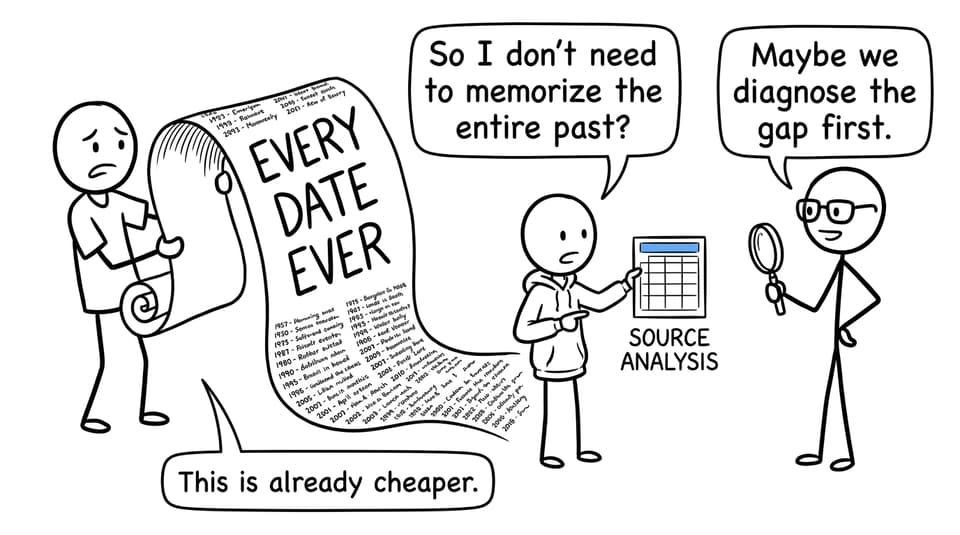
The best decision begins with diagnosis. Is your child missing historical knowledge, struggling to evaluate sources, misunderstanding assessment criteria, or finding it difficult to organize ideas? A tutor helps most when the problem is specific and progress can be observed.
Parents do not need to become historians or rush into a long-term commitment. The first task is simply to identify the smallest useful next step.
A quick decision checklist
Consider exploring tutoring if several of these statements are true:
- The same difficulty has appeared across multiple tasks or several weeks.
- Your child cannot explain the teacher's feedback or apply it to new work.
- Historical writing remains descriptive when the task requires analysis.
- Source questions repeatedly cause confusion.
- Your child understands lessons but struggles to communicate that understanding.
- Independent practice and teacher support have not produced noticeable progress.
- History is creating disproportionate anxiety, avoidance, or conflict at home.
- Your child is willing to practise between tutoring sessions.
If only one statement applies, begin with a smaller intervention. One result is information, not a verdict.
Understand what MYP History assesses
History usually sits within the MYP Individuals and Societies subject group. Schools may offer it as a discrete course or within integrated humanities, and units vary between schools. The student's current task sheet, rubric, and teacher feedback therefore matter more than a generic content checklist.
The four assessment criteria are equally weighted, with each having a maximum achievement level of 8:
| Criterion | What it examines |
|---|---|
| A: Knowing and understanding | Knowledge, concepts, terminology, and explanations |
| B: Investigating | Research questions, planning, information collection, and reflection |
| C: Communicating | Structure, appropriate formats, expression, and source documentation |
| D: Thinking critically | Analysis, perspectives, arguments, and source evaluation |
RevisionDojo's guide to how MYP History is assessed explains these criteria further. Its overview of topics covered in MYP History shows why school-specific content matters.
A student may know the sequence of events but struggle to explain causation. Another may have thoughtful ideas but organize them poorly. A third may misunderstand what evaluate requires. They do not need identical tutoring.
Try focused support first
Before hiring a tutor, test a short routine for two or three weeks. Try two 30-minute sessions each week:
- Choose one skill from recent feedback, such as evaluating a source.
- Review the relevant concept for 10 minutes.
- Complete one short question without notes.
- Compare the response with the rubric or feedback.
- Rewrite only the weakest part.
- Record one question for the teacher.
The RevisionDojo MYP History resource hub gives students a structured place to use Study Notes, Flashcards, lessons, and Questionbank practice. If sources are the main obstacle, the guide to analyzing historical sources helps distinguish description from evaluation.
Parents can ask: “Which part is unclear?”, “What does the command term require?”, and “What evidence supports your point?” These are coaching questions, not disguised answers. RevisionDojo also offers guidance on supporting a child in the MYP and building calmer MYP homework routines.
Signs that a tutor may be useful
A tutor becomes a reasonable next step when the difficulty remains after structured effort. The clearest signs are persistence, specificity, and impact.
Persistence means the issue continues beyond one assignment. Specificity means you can name it: weak source evaluation, unsupported arguments, ineffective research questions, uncertain command terms, or poor time management. Impact means it is affecting progress, confidence, or engagement.
A good tutor observes the student's reasoning, identifies a pattern, models a strategy, and asks the student to apply it independently. Tutoring should reduce dependence over time. It should not become supervised homework completion, extensive editing, or a substitute for communicating with the classroom teacher.
How to choose an MYP History tutor
A knowledgeable historian is not automatically an effective MYP tutor. Look for someone who understands criterion-based assessment and can adapt to the units taught by your child's school.
Ask prospective tutors:
- How will you identify whether the difficulty involves knowledge, investigation, communication, or critical thinking?
- How will you use the school rubric and teacher feedback?
- How do you teach source analysis without memorized formulas?
- What independent practice will happen between sessions?
- How will we evaluate progress after four to six weeks?
- How do you protect academic integrity around assessed work?
A strong first meeting should include questions, a short diagnostic task, and a narrow plan. Be cautious if a tutor promises a particular grade, rewrites student work, or recommends indefinite sessions before understanding the problem. Families can browse RevisionDojo Tutors for relevant MYP and humanities experience.
Set a small goal and review it
Avoid goals such as “get better at history.” Choose something observable: writing analytical paragraphs with precise evidence, evaluating a source in context, creating a focused research question, or applying feedback independently.
Review the arrangement after four sessions or the next relevant assessment. A higher score is useful evidence, but so is needing fewer prompts or explaining mistakes clearly. If progress is absent, reconsider the diagnosis before purchasing more sessions. The issue may involve tutor fit, language, attention, wellbeing, or learning support that requires coordination with the school.
Tutoring works best within a simple learning system. RevisionDojo Study Notes can rebuild context, Flashcards can strengthen retrieval, and the Questionbank can turn explanations into practice. AI Chat and Grading tools can help students identify a next step, while Predicted Papers, Mock Exams, the Coursework Library, and Tutors support the wider IB journey. The guide to MYP History learning websites can help families give each resource a clear purpose.
Ultimately, hiring a tutor for MYP History should create clarity and independence. Begin with the rubric, teacher comments, recent work, and your child's description of the problem. Try one modest routine. If the obstacle remains, choose targeted support and review it honestly. RevisionDojo can remain the student's consistent home base, turning feedback into manageable action rather than additional pressure.