

A hook you can feel on exam day
You know that moment when you finally understand earthquakes and volcanoes, and then the syllabus quietly adds: “future challenges”. In IB Geography, that’s where the topic stops being a list of hazards and becomes a story about people, politics, and pressure. Managing geophysical hazards is getting harder, not because Earth suddenly changed its rules, but because we did: more people live in risky places, climate-linked triggers are amplifying secondary hazards, and trust in institutions is fragile.
If you’re revising IB Geography Option D, this post gives you a clean way to explain why hazard management will be more complex in the decades ahead.
Quick checklist for a top-mark answer (IB Geography)
Use this mini-structure to build a strong paragraph chain in IB Geography:
-
Exposure is rising (population growth, urbanisation, informal settlements)
-
Secondary hazards are increasing (especially landslides and lahars)
-
Inequality shapes capacity to cope (finance, tech, governance)
-
Prediction is limited (earthquakes can’t be precisely predicted)
-
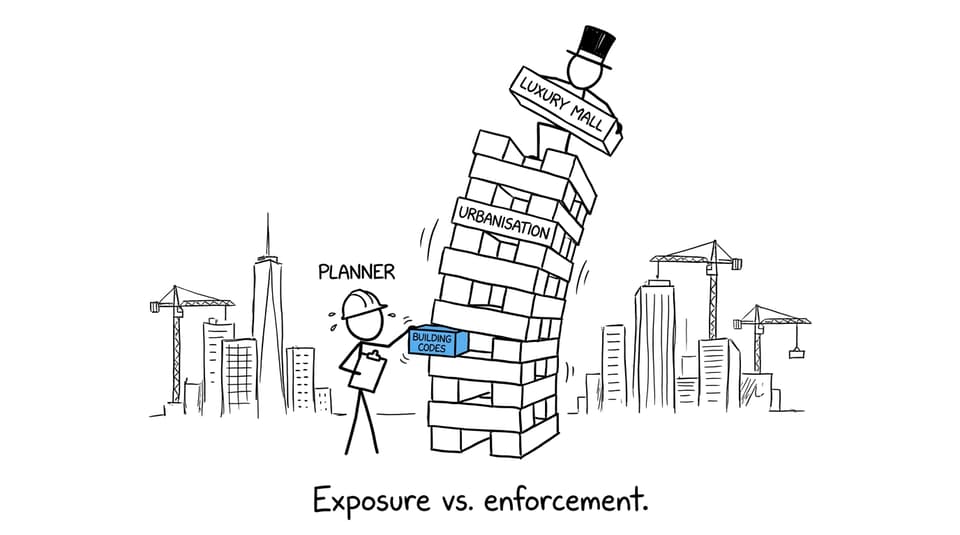
Governance and compliance matter (building codes, land-use planning)
-
Risk perception fades (complacency, misinformation)
For the core content, anchor your revision with IB Geography Option D Geophysical Hazards and the syllabus-aligned Notes for Option D Geophysical Hazards - IB.
Urban growth: more people, more value, more exposure
A major future challenge is rapid urbanisation in hazard-prone regions. Many fast-growing cities sit near plate boundaries, where the distribution of hazards is already well understood but still hard to manage in practice. As cities expand, critical infrastructure concentrates in small areas: transport hubs, hospitals, power networks, water systems. One event can trigger a chain of failures.
In IB Geography, link this to vulnerability: informal housing can appear on steep slopes or unstable ground, raising landslide risk and complicating evacuation. If you need a place to refresh the physical background quickly, use Notes for D.2.1 Distribution of Geophysical Hazards - IB.
Climate-linked triggers: geophysical hazards with “extra steps”
Geophysical hazards aren’t caused by climate change, but their impacts can be intensified by climate-linked processes. Heavier rainfall can saturate slopes and increase landslides; glacier and permafrost melt can destabilise mountains; volcanic landscapes can produce more dangerous lahars when water and ash mix.
This matters for exam answers because it adds a “future uncertainty” layer: hazards become more compound and less predictable in timing and location. Pair this with a concise vulnerability explanation from Notes for D.3.2 Understanding Vulnerability - IB.
Inequality: the capacity gap that doesn’t close fast enough
Another future challenge in IB Geography is that risk reduction is not evenly distributed. Lower-income countries and marginalised communities often face:
-
weaker building standards and enforcement
-
limited monitoring networks
-
slower emergency response
-
less insurance and savings for recovery
That means the same magnitude event can produce radically different outcomes. For a clear exam-ready framing, connect your argument to Why Are Some Areas More Vulnerable to Geophysical Hazards Than Others and follow it with a response pathway from Responses to Geophysical Hazards.
Prediction, warning, and the problem of trust
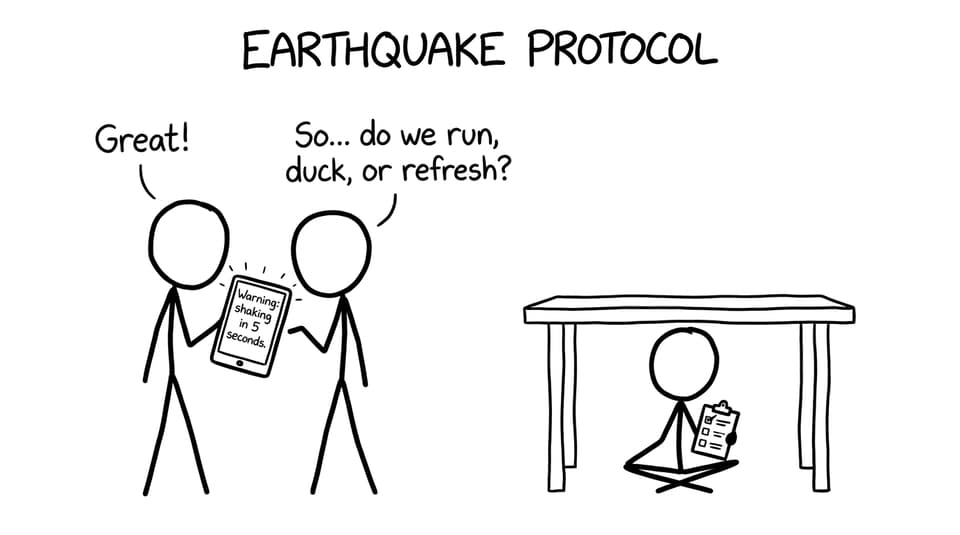
Technology is improving, but in IB Geography you must be precise: earthquakes cannot be predicted accurately in terms of exact timing and magnitude. Volcano forecasting is often better, but still uncertain. That creates a leadership problem: false alarms reduce public trust, while delayed warnings increase casualties.
Over-reliance on apps and sensors can also reduce personal preparedness. If a warning system fails, communities that never practised response can freeze.
Governance and risk perception: the slow challenges
The hardest problems are often the least dramatic. Politicians prefer short-term wins; hazard planning needs long-term investment. Building codes might exist on paper, but enforcement can be weak, especially where rapid growth pressures governments to allow development.
Meanwhile, risk perception fades. When the last major event is years ago, people rebuild in the same places, resist relocation, and treat preparedness as optional. In IB Geography, this is a strong evaluation point: managing hazards is as much about human behaviour as it is about tectonics.
Conclusion: the future is a management problem
The future challenge isn’t that earthquakes and volcanoes will “get worse” -- it’s that society is becoming more exposed, more interconnected, and more unequal. In IB Geography, the highest-scoring answers show this tension clearly: science can reduce uncertainty in some hazards, but governance, trust, and vulnerability decide outcomes.
If you want to turn this into exam-ready writing, use RevisionDojo’s Study Notes, Questionbank, Flashcards, Mock Exams, Predicted Papers, and AI Chat to practise the exact explanations and evaluation that IB Geography rewards.