


In the week before a big test, most students do the same thing: they shrink their world. They stop asking questions, stop trying new approaches, and start hunting for “safe” answers that feel guaranteed.
The MYP asks you to do the opposite.
It is built for learners who can walk into uncertainty, stay curious, and learn loudly in public, not because they love failing, but because they know that confusion is data. When you train risk-taking and inquiry early in MYP, your exam preparation becomes calmer later: you’ve already practiced thinking when you’re not sure.
Quick checklist for MYP inquiry that actually helps exams
-
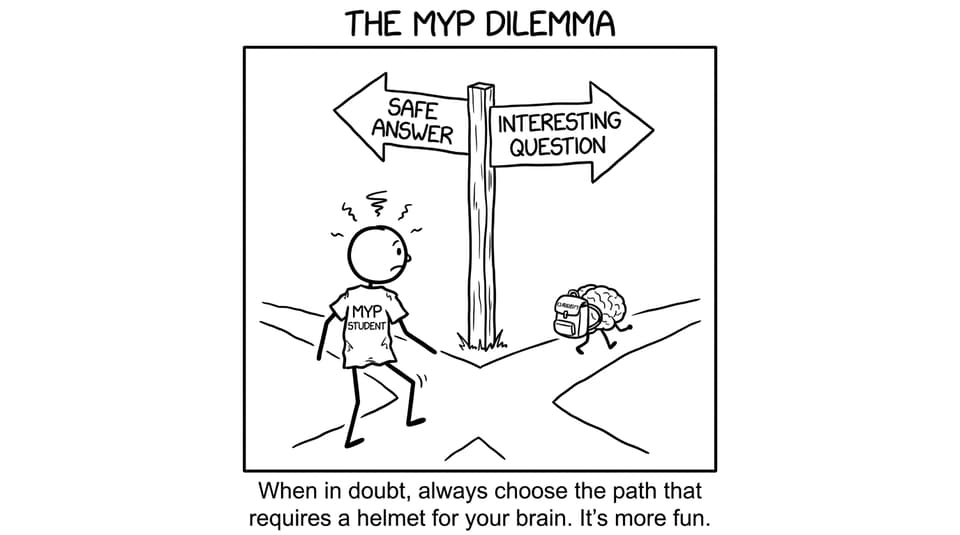
Swap “What’s the answer?” for “What would a good method look like?” in MYP practice.
-
Collect mistakes like clues: one error log entry per study session.
-
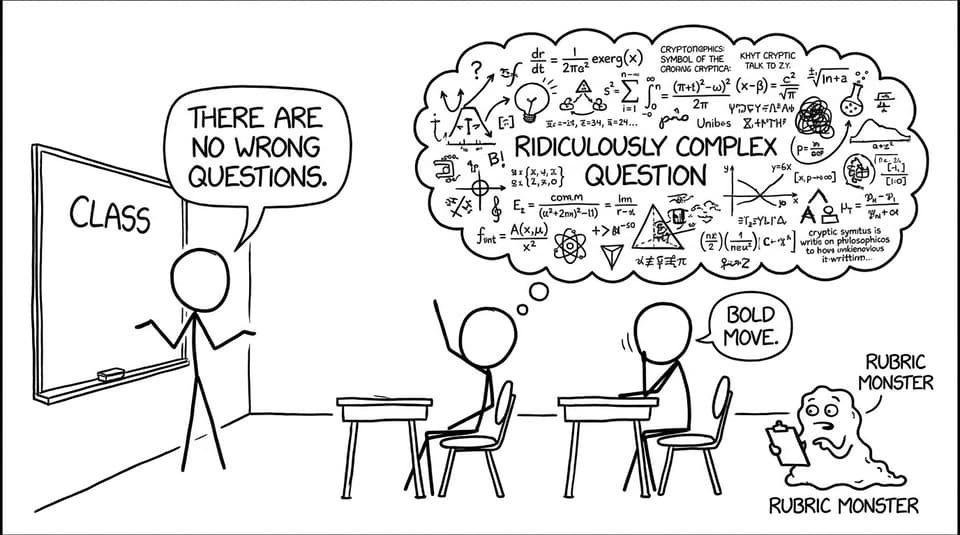
Ask one open-ended question per topic before you memorize anything.
-
Use criteria language (command terms, success descriptors) to guide your risks.
-
Practice small risks daily, then one bigger risk weekly (timed set, unfamiliar question type).
If you want a structured routine around this, borrow the rhythm in MYP eAssessments: 30-Day Study Plan That Works.
Why risk-taking matters in MYP (and why it’s not reckless)
In MYP, risk-taking is an IB Learner Profile attribute. But it’s rarely about being bold socially. It’s mostly intellectual: attempting a harder explanation, trying a new structure, or choosing a question that might expose a gap.
Here’s the quiet advantage: when you take small academic risks early, you build conceptual understanding instead of brittle memorization. That’s the kind of understanding that survives exam pressure.
A practical way to see this is to connect risk-taking to practice. RevisionDojo’s Questionbank lets you do “safe” questions and stretch questions back-to-back. The point is not to get everything right. The point is to learn what breaks your thinking, so you can rebuild it.
Building a culture of inquiry in MYP study sessions
Inquiry in MYP isn’t just raising your hand in class. It’s training your brain to treat every topic like a case you’re investigating.
Try this three-question frame at the start of any revision block:
-
What do I already know (confidently)?
-
What do I think I know (but might be shaky)?
-
What would convince me I actually understand it?
That last question is the engine of MYP inquiry. It pushes you toward evidence: a worked solution, a clear paragraph, a correct diagram, a justified claim.
If your units use Statements of Inquiry, it helps to revisit how they’re designed to provoke questions, not decorate a cover page. See Creating Meaningful Statements of Inquiry in the MYP.
Turning mistakes into momentum: the MYP feedback loop
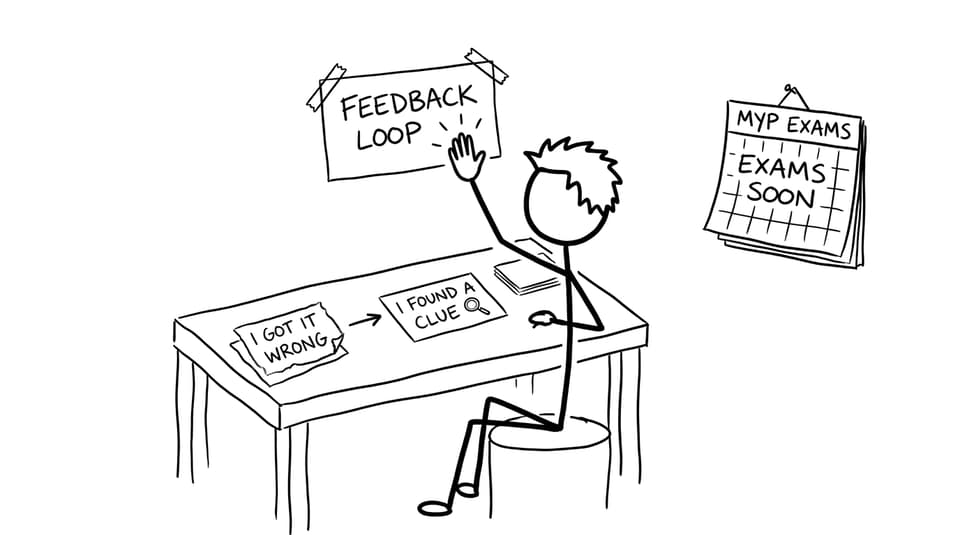
Most students fear mistakes because they treat them like a verdict. MYP works better when you treat mistakes like a map.
Use a simple feedback loop after any practice set:
-
Name the mistake type (concept gap, method gap, command term mismatch, careless, time panic).
-
Write a one-sentence rule for next time.
-
Retest within 48 hours on a similar question.
RevisionDojo makes this loop easier because your study tools connect: start with Study Notes for clarity, drill targeted items, then convert repeated errors into Flashcards for spaced repetition.
For exam confidence, this is the real upgrade: not more hours, but tighter loops.
Collaboration: a safer way to take bigger MYP risks
Some risks are easier with witnesses.
In MYP group work, you can try a new explanation, test a hypothesis, or present an imperfect draft while the cost of being wrong is shared. Done well, collaboration becomes rehearsal for exam thinking: articulate, defend, revise.
Two high-impact roles to rotate in group revision:
-
The Question Writer: designs one unfamiliar prompt (forces inquiry).
-
The Criteria Coach: checks whether answers match command terms and required structure.
If you want to ground this in Learner Profile language, International Baccalaureate Learner Profile Traits Developed in MYP is a useful reference point.
How RevisionDojo supports inquiry-driven MYP exam prep
A lot of students think inquiry means “wandering.” It doesn’t. It means choosing better questions.
RevisionDojo supports MYP students with a full loop:
-
Questionbank for frequent, targeted practice
-
Study Notes for fast conceptual rebuilds
-
Flashcards to keep definitions, processes, and command terms alive
-
AI Chat when you’re stuck and need a calm explanation
-
Mock Exams and Predicted Papers to rehearse pressure realistically
-
Grading tools plus the Coursework Library to improve criterion-based writing
-
Tutors for strategy, accountability, and confidence
Start from the MYP hub and focus on one subject area at a time.
Closing: make MYP courage small, daily, and measurable
The students who improve fastest in MYP aren’t the ones who never get things wrong. They’re the ones who can sit with uncertainty for a moment, ask a better question, and try again with a clearer plan.
So take the smallest useful risk today: attempt one stretch question, write one honest reflection, or ask one inquiry that makes the topic feel alive. Then repeat tomorrow.
When you’re ready to turn that mindset into exam performance, build your routine with RevisionDojo, and let MYP inquiry become your advantage, not your stress.
Explore more MYP support through All #MYP Posts and the MYP Revision Guide: Study Tips for Success.


