


When STEM feels like rules, IB rewards the leap
The night before a big IB science exam, most students don’t think, “Time to be creative.” They think, “Please let my brain remember the mark scheme.” But here’s the twist: in IB STEM, creativity isn’t extra. It’s often the difference between a correct idea and a high-mark answer.
Creativity shows up when you choose a smarter method in Maths, design a cleaner investigation in Physics, or explain a Biology process with a diagram that actually earns marks. In other words: creative thinking becomes exam technique.
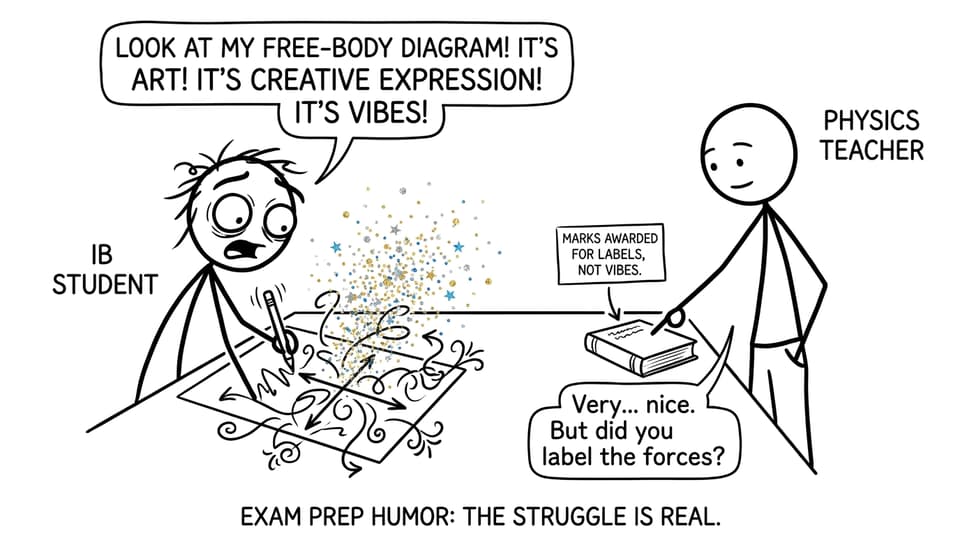
A quick IB checklist for creativity that improves marks
Use this mini-checklist during IB revision week:
-
Swap one “re-read notes” session for a create-your-own question session.
-
For every topic, write two different solution paths (Math/Physics especially).
-
Add one reflection line after practice: What mistake pattern caused the drop in marks?
-
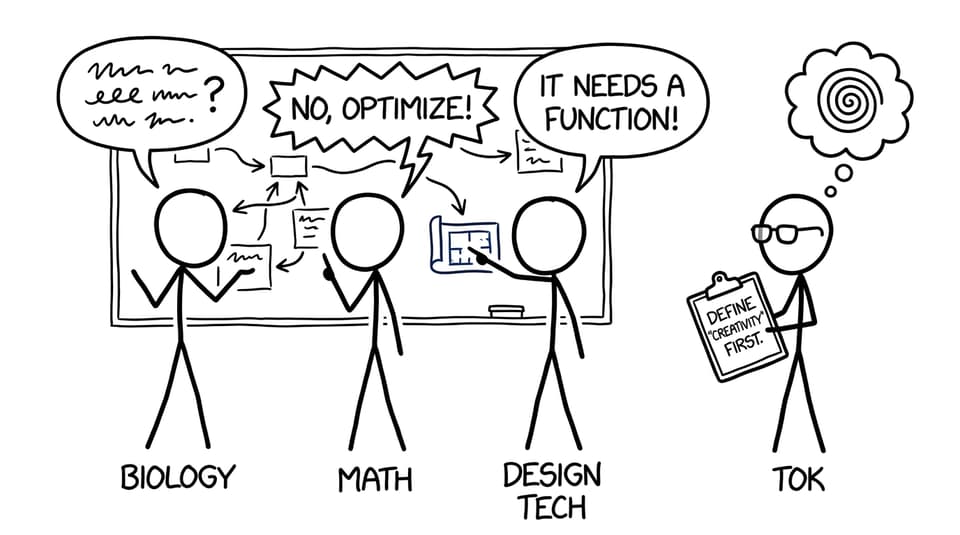
Do one short interdisciplinary link: How would a DT-style design cycle improve this lab?
-
Turn confusing content into a teachable object: a diagram, a flowchart, or a 60-second explanation.
If you want a structured way to do this, start with RevisionDojo for IB and build a repeatable loop across subjects.
Why IB STEM creativity matters (even when you’re cramming)
In IB STEM, the examiner isn’t only checking what you know. They’re checking how you think.
Creative thinking helps you:
-
Connect concepts across topics (the shortcut to stronger explanations).
-
Adapt when a question is unfamiliar (common in higher-mark prompts).
-
Communicate clearly with diagrams, labeling, and structure.
-
Recover from errors by spotting alternative approaches.
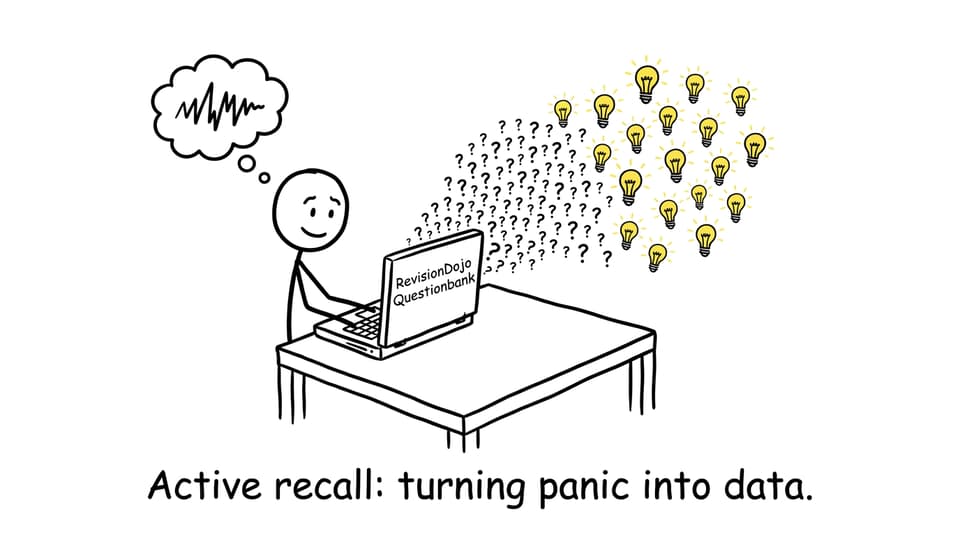
This is exactly why active practice beats passive review. Tools like the RevisionDojo Questionbank force you to generate ideas under pressure, then refine them with feedback.
Creative study moves for each IB STEM subject
IB Biology: creativity = clean explanations and smart diagrams
In IB Biology, creativity isn’t “art.” It’s choosing the clearest model, the best labeled diagram, and the most efficient explanation.
Try this:
-
Draw a process from memory, then check it against your understanding.
-
Re-explain one subtopic as a story of “inputs, transformations, outputs.”
Pair this with targeted resources like IB Subject Note Collections so your creativity stays accurate, not improvised.
IB Physics: creativity = multiple routes to the same mark
The best IB Physics students don’t just know formulas. They know options.
Try this:
-
Solve one problem with equations first, then solve it again using diagrams and proportional reasoning.
-
Write the “examiner-friendly” version of your logic in three lines.
Build stamina and timing using the strategy ideas in Can You Cram IB Exams? A Realistic 7-Day Plan (without relying on luck).
IB Maths: creativity = method choice under time pressure
In IB Maths, creativity often looks like picking a faster method and avoiding dead ends.
Try this:
-
For each mixed problem set, label your first decision: algebraic approach or graphical approach?
-
Keep a “method bank” of recurring tactics.
If stress is blocking your thinking, borrow the mindset tools from How to Study for IB Math AA Without Stress.
IB Design Technology and interdisciplinary STEM: creativity = iteration
If you take DT, your IB advantage is learning to iterate: prototype, test, refine.
Use that mindset across STEM by doing a second attempt on the same question after feedback. Revision becomes engineering.
A practical guide: How to Use RevisionDojo for IB Design Technology Success.
How RevisionDojo makes IB creativity usable in exam prep
Creativity is only helpful when it becomes repeatable.
RevisionDojo turns creative study into a system using:
-
Study Notes to learn the examinable version of a concept: Study Notes
-
Flashcards for active recall (especially definitions, processes, and conditions)
-
AI Chat to debug confusion fast before it hardens into a habit
-
Grading tools to improve how you communicate, not just what you know
-
Mock Exams and Predicted Papers to practice performance under time limits
-
A Coursework Library and Tutors for structured support when you’re stuck
And if you want the bigger workflow, use RevisionDojo App: The Smarter Way to Prep for IB Exams as your blueprint.
Creativity is the quiet advantage in IB STEM
If you’re preparing for IB exams, don’t treat creativity like a bonus trait reserved for arts subjects. Treat it like a practical skill: choosing methods, designing explanations, iterating on mistakes, and communicating cleanly under time pressure.
Build that skill with RevisionDojo’s Questionbank, Study Notes, Flashcards, AI Chat, Grading tools, Mock Exams, Predicted Papers, Coursework Library, and Tutors, and turn “I hope this comes up” into “I can handle whatever comes up.”