

Digital health sounds comforting until you notice the quiet trade happening in the background.
A smartwatch offers “peace of mind” about your heart rate. A clinic offers a faster appointment if you fill in an online form. An app promises better sleep if you share a little more data. None of these are evil. But in IB Digital Society, the point is to ask what the system does to people and communities once health becomes a stream of data.
That is why IB Digital Society treats digital health as a social system: it changes decision-making, shifts power, and raises ethical questions that don’t disappear just because the interface looks clean.
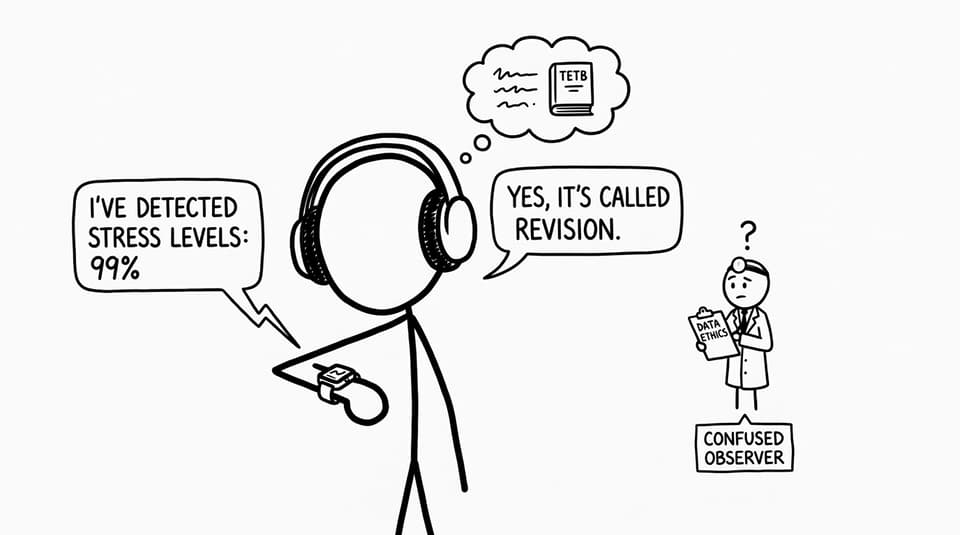
Digital health in IB Digital Society (simple definition)
In IB Digital Society, digital health refers to digital systems that collect, store, process, or share health-related data to support healthcare decisions, monitoring, or delivery.
You are not being examined on medicine. You are being examined on how a digital system behaves in society. A good definition usually includes:
-
The digital system (app, wearable, hospital platform, algorithmic triage tool)
-
The data flow (what is collected, where it goes, who can access it)
-
The stakeholders (patients, clinicians, companies, governments, insurers)
-
The impacts and implications (privacy, autonomy, inequality, trust)
If you need a clearer foundation for what counts as a “system,” start with What Are Digital Systems? IB Digital Society Explained.
Quick exam checklist for IB Digital Society digital health questions
When an unseen example mentions telemedicine, health apps, AI diagnosis, wearables, or patient databases, use this quick IB Digital Society checklist:
-
What health data is being collected (biometrics, location, symptoms, behavior)?
-
Who controls the system (public health service, private platform, employer)?
-
Who benefits most, and who carries the risk?
-
What forms of consent exist (opt-in, opt-out, implied, unclear)?
-
Where could bias enter (training data, access barriers, design assumptions)?
-
What ethical tension is central (privacy vs safety, efficiency vs fairness)?
Then move from description to evaluation: consequences, trade-offs, and accountability.
Why digital health matters in IB Digital Society
Healthcare sits close to human rights, safety, and dignity. That’s why digital health is such a rich context in IB Digital Society: the stakes are high, and the incentives are messy.
Digital health matters because it often:
-
Shifts care toward data-driven decision-making
-
Expands monitoring inside everyday life
-
Changes the relationship between people and institutions
-
Creates new forms of dependency on private tech providers
If you want broader course framing (and how the subject “thinks”), read What Is IB Digital Society?.
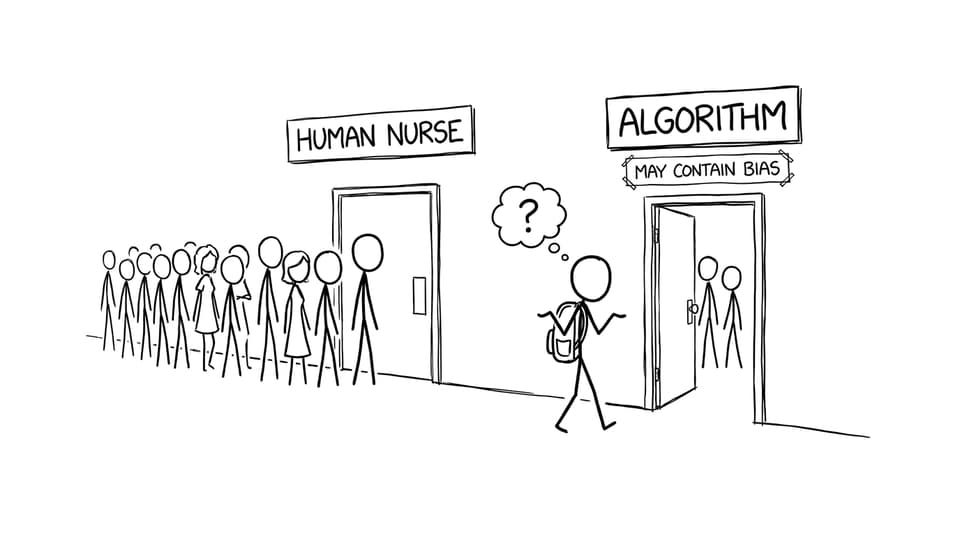
Impacts on individuals: convenience, anxiety, and automation
On an individual level, digital health can feel like a superpower.
Common benefits you can use in IB Digital Society analysis:
-
Faster access to advice (telehealth, symptom checkers)
-
Improved monitoring for chronic conditions (wearables, glucose monitors)
-
Better continuity of care (shared records, reminders)
But the exam marks usually come from the second sentence, not the first. So add the counterweight:
-
Privacy loss through continuous collection of sensitive data
-
Over-reliance on automated recommendations (reduced human judgment)
-
Increased stress from constant tracking and alerts
-
Reduced quality of care if “efficiency” replaces empathy
To strengthen your examples, you can pull health-related concepts and terminology from Notes for 4.4B The Human Body and Mental Health - IB and then apply IB Digital Society concepts like ethics and power to them.
Communities and systems: efficiency that can deepen inequality
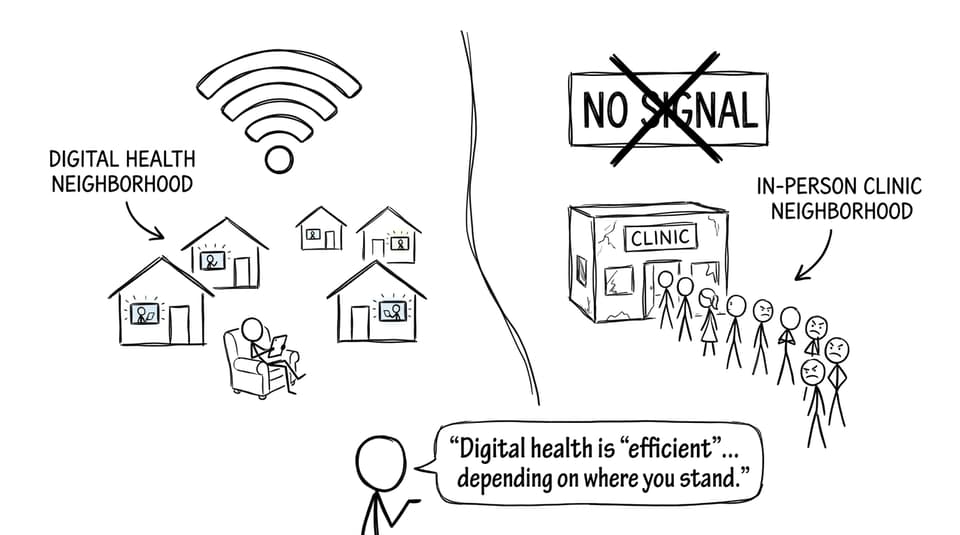
At community level, digital health changes how resources are allocated. The system may become “more efficient,” but efficiency is not the same as fairness.
Community-level impacts you can analyze in IB Digital Society:
-
Improved capacity (remote triage, digitized records)
-
New public-private partnerships that reshape priorities
-
Unequal access due to devices, connectivity, language, disability access
-
Data-driven public health decisions that may overlook minority groups
This connects naturally to the digital divide and infrastructure topics. For supporting context, see Digital IB Study Notes: Access Anywhere, Anytime and consider how “access” itself becomes part of the health system.
Data collection and surveillance: what makes health data different
Health data is intimate. That raises the ethical temperature.
In IB Digital Society, you should be ready to discuss:
-
Purpose limitation: was data collected for care, then reused for marketing or research?
-
Security: breaches can cause lasting harm (stigma, discrimination, anxiety)
-
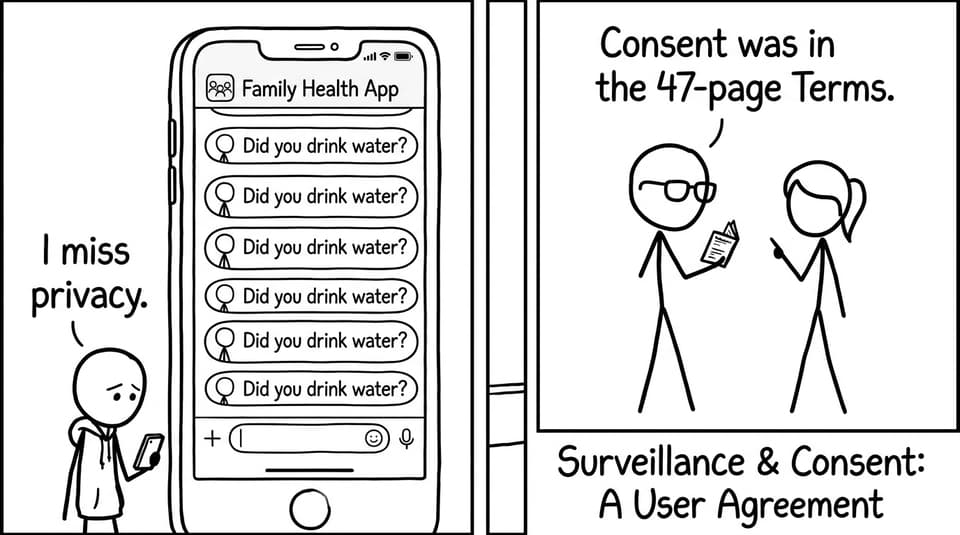
Informed consent: is it meaningful, or buried in long terms?
-
Secondary access: employers, insurers, schools, or governments gaining insight
Notice how quickly “support” can slide into “surveillance,” especially when the system is always on.
Power and control: who gets to decide what “healthy” means
The strongest IB Digital Society answers name power directly.
Ask:
-
Who owns the platform and the datasets?
-
Who sets thresholds, categories, and risk scores?
-
Can a patient challenge an automated decision?
-
If harm happens, who is accountable: the hospital, the developer, the government?
Power often hides in defaults: opt-out settings, unclear dashboards, or decisions presented as “just what the data says.”
To practice turning ideas into exam-ready analysis, use Effective Note-Taking Tips for IB Digital Society and keep a case-study bank organized by concept (ethics, inequality, power, surveillance).
How to write better exam responses on IB Digital Society digital health
A reliable structure for IB Digital Society exam questions is:
-
Define the system and the relevant digital health technology
-
Identify stakeholders and their incentives
-
Explain impacts on individuals and communities
-
Evaluate implications using course concepts (ethics, power, inequality)
-
Conclude with a balanced judgement and conditions (when it works, when it harms)
Then drill the skills under time pressure. RevisionDojo makes this feel manageable because you can loop quickly: Study Notes for clarity, Flashcards for key terms, Questionbank for exam-style practice, AI Chat when you’re stuck, then Mock Exams and Predicted Papers for realistic timing. If you need motivation and a plan, use the Ultimate Survival Guide for IB Digital Society Students.
Closing: the calm way to score higher on IB Digital Society digital health
Digital health is not just a story about better gadgets. In IB Digital Society, it’s a story about how data changes care, how platforms reorganize trust, and how power can shift quietly behind a friendly interface.
If you want your next IB Digital Society answer to feel sharper, build a simple routine on RevisionDojo: learn the concepts with Study Notes, lock in vocabulary with Flashcards, test your thinking with the Questionbank, use AI Chat to fix confusion fast, then rehearse pressure with Mock Exams and Predicted Papers. The goal isn’t to fear the system. It’s to see it clearly, and write like you do.

