


Digital systems are easiest to misunderstand when they feel most familiar.
You open an app to message a friend, tap to pay for lunch, or scroll a feed you didn’t ask for but can’t quite leave. It feels like “technology.” In IB Digital Society, that word is too small. The course is asking a sharper question: What invisible structure is shaping what I can do, what I can see, and what other people can do to me?
That structure is a digital system. And once you can spot one clearly, IB Digital Society exam questions stop feeling like traps and start feeling like puzzles you know how to solve.
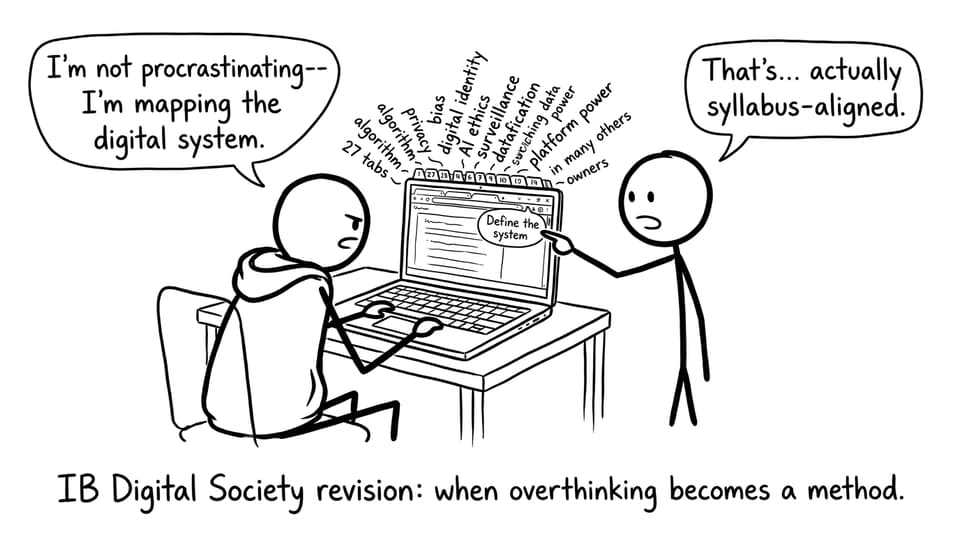
Quick checklist: how to recognize a digital system (fast)
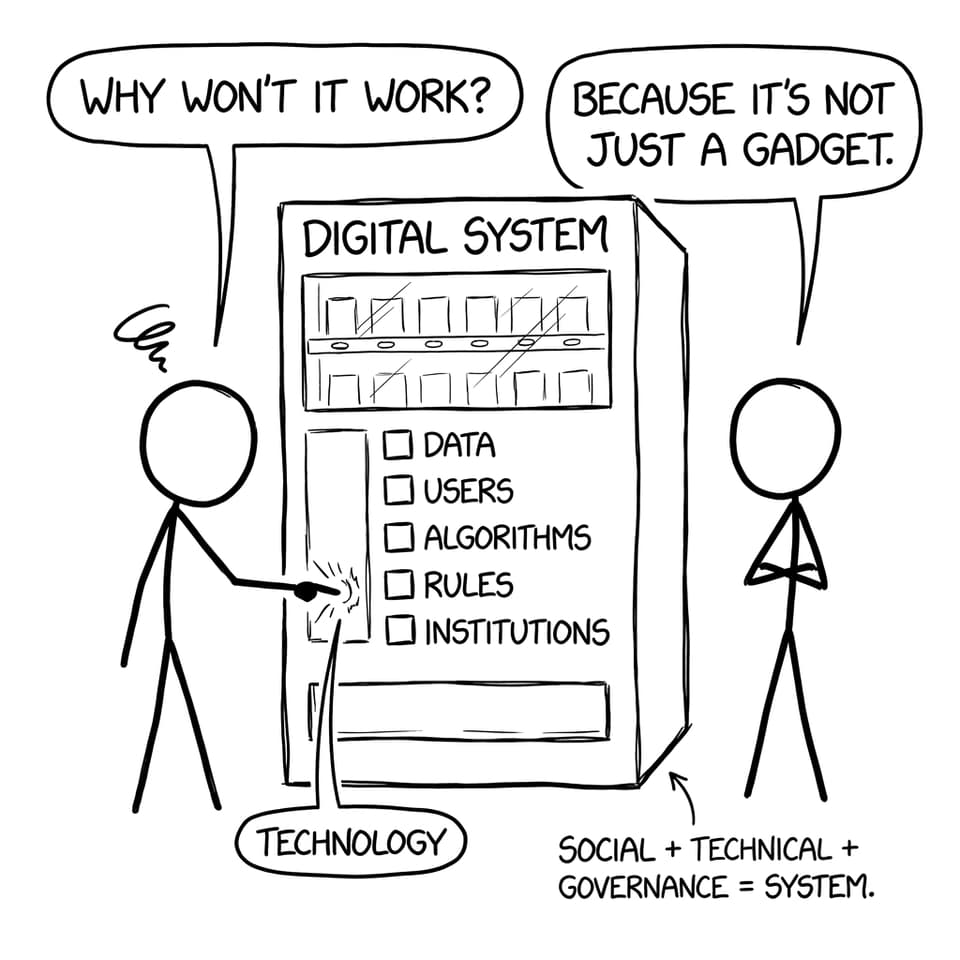
Use this when Paper prompts throw a new example at you. In IB Digital Society, a digital system usually has:
-
Digital data being created, processed, stored, or shared
-
Users (individuals, groups, institutions) interacting with it
-
Rules (terms of service, policies, moderation, laws)
-
Design choices (interfaces, defaults, nudges)
-
Algorithms (ranking, recommendation, detection, decision-making)
-
Organizations that build, run, or regulate it
-
Outcomes that affect people and communities
When you can name these parts, you can analyze almost any IB Digital Society stimulus with confidence.
What is a digital system in IB Digital Society?
In IB Digital Society, a digital system is any technology, platform, or process that handles digital data and creates real consequences in the world. It is not just the device in your hand or the software on your screen. It includes the wider network of people, incentives, governance, and design decisions that make the system behave the way it does.
That’s why the same “tool” can act like two different systems in two different contexts. A messaging app used by friends is one system. The same app used by a government agency, with different monitoring policies and power dynamics, becomes a different system socially.
If you want a syllabus-aligned place to anchor definitions and examples, start with the IB Digital Society Resources hub. It’s a clean map of notes, Questionbank practice, Flashcards, and lessons for IB Digital Society.
Digital systems are not neutral (and that’s the point)
A common exam mistake is describing what a system does instead of analyzing what it does to people.
Digital systems carry values because humans build them:
-
Defaults steer behavior (what’s public vs private, what’s opt-in vs automatic)
-
Metrics define what “success” means (engagement, profit, compliance)
-
Algorithms prioritize some content and bury other content
-
Policies decide who is protected, punished, or ignored
-
Business models reward certain kinds of attention and data extraction
In IB Digital Society, this becomes a consistent lens: identify who has power inside the system, how that power is exercised, and who has limited agency.
For a concept lens that shows up constantly, read Understanding Change in Digital Society and notice how small technical changes can create large social shifts in IB Digital Society case studies.
Examples of digital systems you can analyze
Your examples in IB Digital Society don’t need to be exotic. They need to be analyzable.
Good digital system examples include:
-
Social media platforms (feeds, moderation, influencer economies)
-
AI tools (recommendation, facial recognition, automated decisions)
-
Digital payment systems (cashless apps, digital wallets, ID verification)
-
Online learning platforms (analytics, proctoring, access)
-
Surveillance and data collection tools (CCTV with analytics, location tracking)
The best examples have clear stakeholders and evidence you can evaluate. If you’re practicing unseen prompts, the Topic 1.1 Questionbank is a simple way to train the “spot the system” skill under exam conditions for IB Digital Society.
How digital systems affect individuals and communities
A strong IB Digital Society response usually moves between two levels:
Individual impacts
Digital systems can shape:
-
Identity (how you present yourself, how you’re categorized)
-
Privacy (what is collected, inferred, shared)
-
Autonomy (nudges, defaults, addiction loops, friction)
-
Information access (what you see first, what you never see)
Community impacts
Digital systems can reshape:
-
Social norms (what feels acceptable or “normal”)
-
Power structures (who controls visibility, speech, participation)
-
Inclusion and inequality (digital divide, bias, accessibility)
-
Culture (language, humor, values, belonging)
If you want a clean menu of lenses for essays and Paper prompts, use IB Digital Society: Key Themes Explained. It helps you organize analysis without sounding repetitive in IB Digital Society writing.
Impacts vs implications: the distinction that earns marks
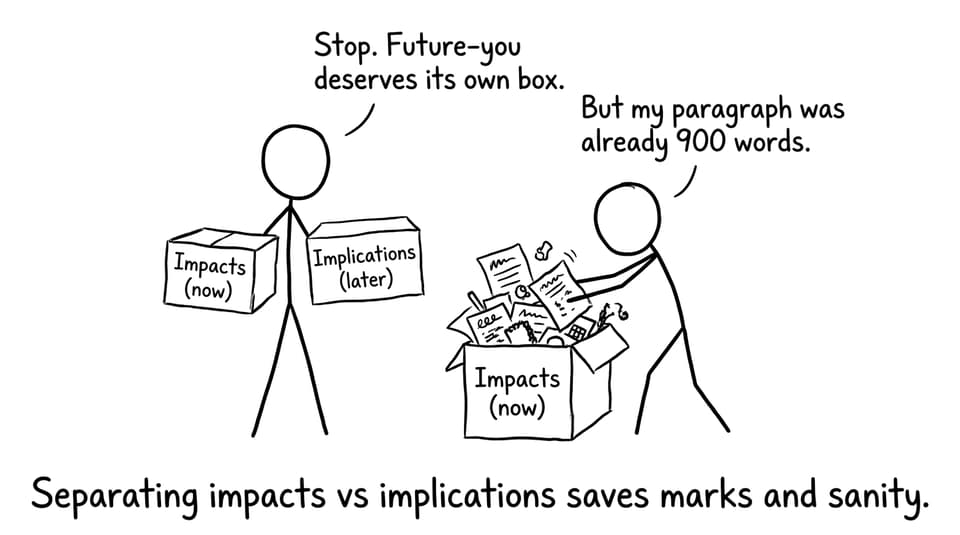
In IB Digital Society, impacts are observable effects happening now. Implications are longer-term possibilities, risks, and opportunities that may unfold over time.
Example: a school introduces AI-based proctoring.
-
Impact (now): students may feel monitored; behavior changes during exams; some students face false flags.
-
Implication (later): normalization of surveillance; data retention risks; changing trust relationships between students and institutions.
This separation makes your argument cleaner. It also helps you avoid the common trap of writing one long paragraph where everything is treated as immediate and equally certain.
How to use digital systems in exams and coursework
In exams, you’re often given an unfamiliar scenario. The goal is not to memorize the “right” system. It’s to show you can analyze any system like an investigator.
A practical IB Digital Society method:
-
Define the system in one sentence
-
Identify key stakeholders (who benefits, who is harmed, who decides)
-
Use 1--2 concepts (power, ethics, identity, change, systems thinking)
-
Separate impacts from implications
-
Offer at least one alternative perspective
-
End with a justified judgment
For coursework, system choice matters. If you’re planning your IA, How to Write a Strong IB Digital Society IA Research Question shows how to keep the scope small enough to finish but deep enough to score well in IB Digital Society.
When revision gets messy, RevisionDojo is designed to shrink the chaos into a loop:
-
Study Notes for fast clarity (start with 1.1 What is digital society notes)
-
Flashcards for precise definitions (Digital Society Flashcards)
-
Questionbank to practice under pressure (IB Digital Society resources)
-
AI Chat to get unstuck without losing momentum
-
Grading tools to align with markband language
-
Predicted Papers and Mock Exams to rehearse timing and decision-making
-
Coursework Library and Tutors when you need model answers and human feedback
Final thought: learn to see the system
A digital system is rarely loud about what it’s doing. It hides in defaults, in recommendations, in what gets removed, in what becomes normal.
That’s why IB Digital Society matters. It trains you to see the structure underneath the screen--and once you can see it, you can write about it clearly, evaluate it honestly, and handle unfamiliar exam prompts with calm control.
If you want one place to run the full revision loop (notes to Questionbank to Flashcards to timed practice), start with the IB Digital Society Resources hub and build your system for mastering IB Digital Society.
