


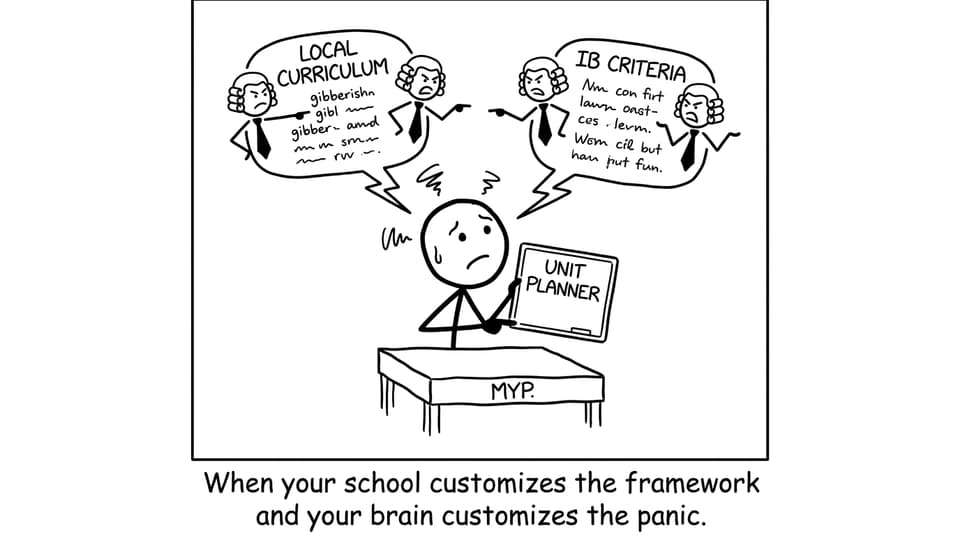
When a school says it “customizes the MYP,” it can sound like something happening in an office far from your desk. But you feel it immediately: one teacher talks in Criteria A-D, another talks in national grade boundaries, and your revision notes start to look like two separate languages.
Here’s the quiet truth: customizing the MYP isn’t supposed to create confusion. Done well, it’s the reason your learning feels globally ambitious and locally relevant. Done poorly, it becomes extra paperwork and mixed messages right before exams.
This guide explains what customization actually means for you as an IB student preparing for exams, how to study inside a dual system, and how to keep your effort aligned with the MYP expectations.
Quick checklist: what to ask when your MYP is customized
Use this as a fast filter before you revise a unit or start practice:
-
Which local outcomes are mandatory for this topic?
-
Which MYP criteria (A-D) will be used to grade the task?
-
Is there a second local grade or conversion rule you should understand?
-
Which command terms matter most in both systems?
-
What evidence proves you met the requirement (working, explanation, evaluation)?
If you’re missing any of those answers, your first revision task isn’t “study harder.” It’s “get clarity.”
A good starting point is the MYP hub on RevisionDojo, where subjects and skills are organized to match how you’re assessed: Middle Years Program (MYP) Resources.
What it really means to customize MYP for local curriculum requirements
The MYP is a framework, not a single fixed syllabus. That’s why it can live inside national or regional education systems. Your school can keep the IB design (inquiry, concepts, global contexts, ATL skills, criteria-based assessment) while also teaching the required local content.
Think of it like bilingual education. The facts may come from local curriculum documents, but the thinking routines come from the MYP: conceptual questions, evidence-based arguments, reflection, and transfer across contexts.
For exam prep, that flexibility matters. It means you shouldn’t revise only “what was taught.” You should revise what you were taught plus how your school expects you to show it using MYP criteria language.
If you want a simple way to keep that structure while revising, build your routine around one platform: RevisionDojo’s Questionbank, Study Notes, Flashcards, AI Chat, Grading tools, Predicted Papers, Mock Exams, Coursework Library, and Tutors.
Mapping local standards to MYP objectives (and why students should care)
Curriculum mapping is the behind-the-scenes work schools do to line up local outcomes with MYP subject group objectives (often assessed through Criteria A-D). You don’t need the spreadsheets to benefit from the idea.
You just need to revise like a mapper:
-
Start with the local requirement (the “must-know”).
-
Connect it to the MYP concept or global context (the “must-understand”).
-
Practice expressing it through criteria language (the “must-show”).
Example: a local science standard on ecosystems can still be assessed through MYP inquiry and analysis, especially if you’re asked to interpret data, justify a model, or evaluate human impact.
To practice that “must-show” part quickly, use targeted sets in RevisionDojo’s MYP subject pages, like MYP Biology Resources or MYP Standard Mathematics Resources. You’re not just reviewing content; you’re rehearsing how marks are earned.
How to survive “two grading systems” without doubling your workload
In customized programs, assessments often serve two masters: MYP criteria and local grading structures. The trap is assuming you must do two separate tasks. The better approach is to produce one strong piece of evidence that satisfies both.
Try this three-step upgrade for almost any assignment:
Build one response, then label it in two languages
Write your best answer normally. Then, in the margin, tag what you wrote as:
-
MYP: Which criterion strand did you just satisfy?
-
Local: Which stated outcome or skill did you just demonstrate?
This takes two minutes and forces alignment.
Turn teacher feedback into a “criteria translation”
If feedback says “needs more evaluation,” translate it into an action:
-
Add a limitation.
-
Compare two methods.
-
Judge reliability.
-
Link conclusion back to the question.
RevisionDojo makes this easier because practice is already structured for improvement loops. Start with the MYP Revision Guide: Study Tips for Success to set up a routine that keeps feedback visible.
Use criteria-based practice under time pressure
Customization often increases the range of content, but exams still reward speed, clarity, and criteria alignment. A realistic schedule helps: MYP eAssessments: 30-Day Study Plan That Works.
Keeping the IB heart of the MYP intact (what examiners actually reward)
The risk of customization is that the MYP becomes a traditional curriculum with an IB label. You’ll notice it when lessons become purely about memorizing content with fewer opportunities to explain reasoning, reflect, or connect ideas.
If you want to protect your own results, keep practicing the parts that do transfer between systems:
-
Inquiry habits (asking better questions)
-
Conceptual explanations (not just facts)
-
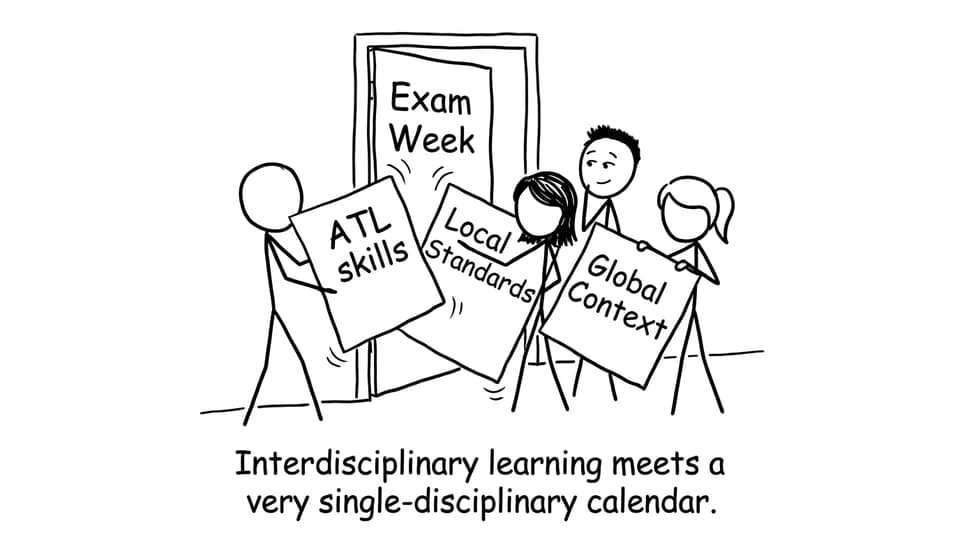
Interdisciplinary connections (using skills across subjects)
-
Approaches to Learning (ATL) skills (planning, research, communication)
Those habits are also why the MYP can be strong preparation for later IB exams: Is MYP Good Preparation for University?.
And if you want to understand how ATL and concepts work together (a common “hidden” marking difference between average and excellent), read: Linking ATL Skills to Conceptual Understanding in the MYP.
Closing: make customized MYP work for you (not against you)
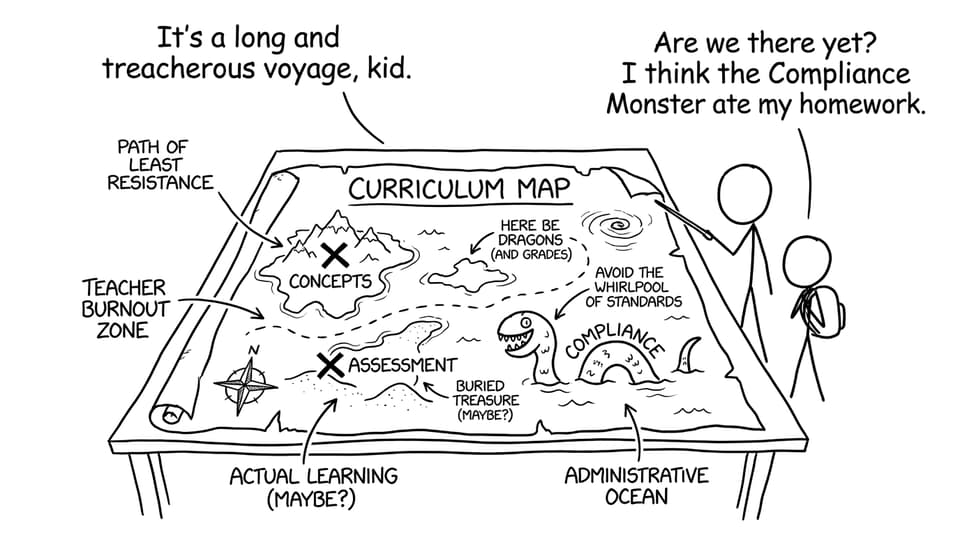
A customized MYP can feel like living at the intersection of two roads. One points to local compliance. The other points to international-minded learning. Exams don’t reward the student who panics at the crossroads; they reward the student who builds a map.
So build yours: clarify mandatory outcomes, translate tasks into MYP criteria, and practice showing evidence under time pressure. Then let RevisionDojo carry the heavy load: Questionbank for targeted practice, Study Notes for fast clarity, Flashcards for recall, AI Chat and Grading tools for feedback, Mock Exams for realism, Predicted Papers for sharpening, and Tutors when you want a human strategy check.
If your school customizes the MYP, your job is simple: customize your revision so you can score in any system.


