If you have ever watched a friend step into university like they belong there, while you are still figuring out where to sit, you have already met the real question.
It is not "Did they learn more content?"
It is "Did they learn how to learn?"
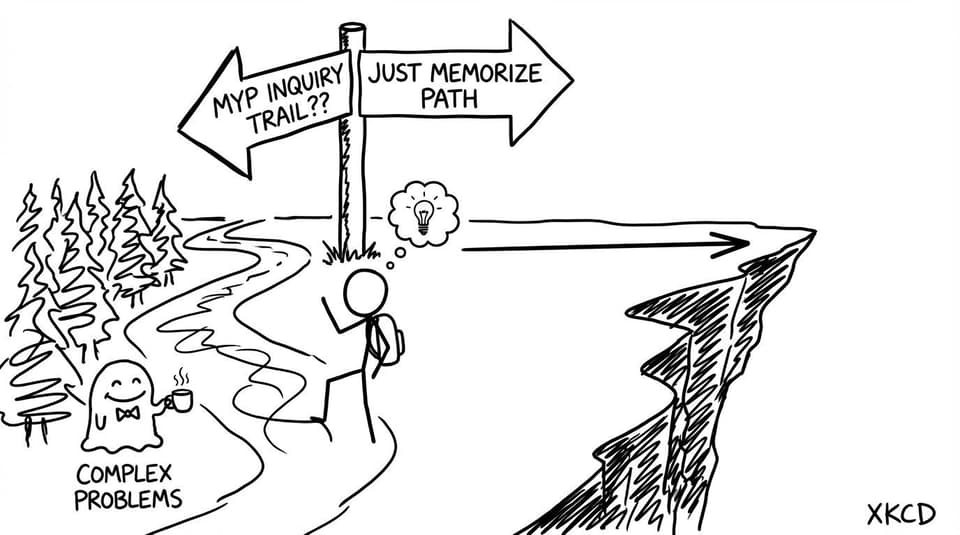
That is why so many students ask whether MYP is good preparation for university. Because MYP is not famous for brute memorization. It is famous for inquiry, criteria, reflection, and tasks that make you explain your thinking when you would rather just be done.
And when you are an IB student preparing for exams, that question matters twice. You are not just trying to survive this year; you are trying to build the kind of academic habits that still work when nobody checks your homework.
The quick checklist: what university actually demands
Before judging whether MYP helps, it is worth naming what university tends to reward.
- You manage your time without reminders.
- You read instructions carefully and follow criteria.
- You research, filter information, and cite appropriately.
- You write clearly, revise drafts, and defend an argument.
- You ask better questions when you do not understand.
- You recover from feedback without spiraling.
If that list sounds familiar, you can already see why MYP gets brought up in university-prep conversations.
If you want a structured refresh of how MYP assessments work (and how to revise for them), start with this guide: MYP Revision Guide: Study Tips for Success.
What MYP actually trains (and why universities notice)
The hidden strength of MYP is that it quietly trains "transferable academic behaviors." Not as slogans, but as routines.
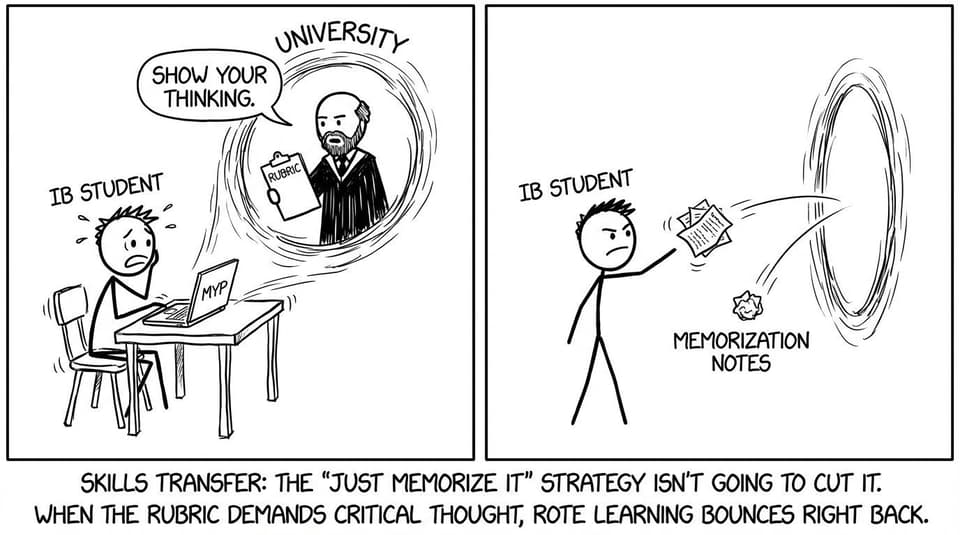
MYP builds comfort with criteria (the university language of grading)
Many students arrive at university thinking grades are mysterious. Then they meet rubrics, marking criteria, and assignment briefs that read like contracts.
MYP students have already lived inside criteria. You learn to aim at descriptors, not vibes. You learn to ask: "What does a top-level response do differently?"
That skill is also an exam skill. In the IB Diploma, marks are often won by alignment, not inspiration.
If you want the fastest way to practice that alignment in a very concrete way, use a tool built for it: RevisionDojo Questionbank. It is one of the most direct bridges between "I understood the topic" and "I can score on this type of question."
MYP builds inquiry: learning that starts with a question, not a chapter
University courses move fast. Lectures can feel like headlines. The real learning happens when you go home and chase what you did not understand.
MYP trains that reflex early. In good MYP classrooms, your grade depends on how well you explore, connect, and justify, not just how much you can repeat.
That matters for exam prep too. Inquiry does not replace practice. But it makes practice smarter: you stop doing random questions and start hunting patterns in your mistakes.
MYP builds "Approaches to Learning" habits that become survival skills
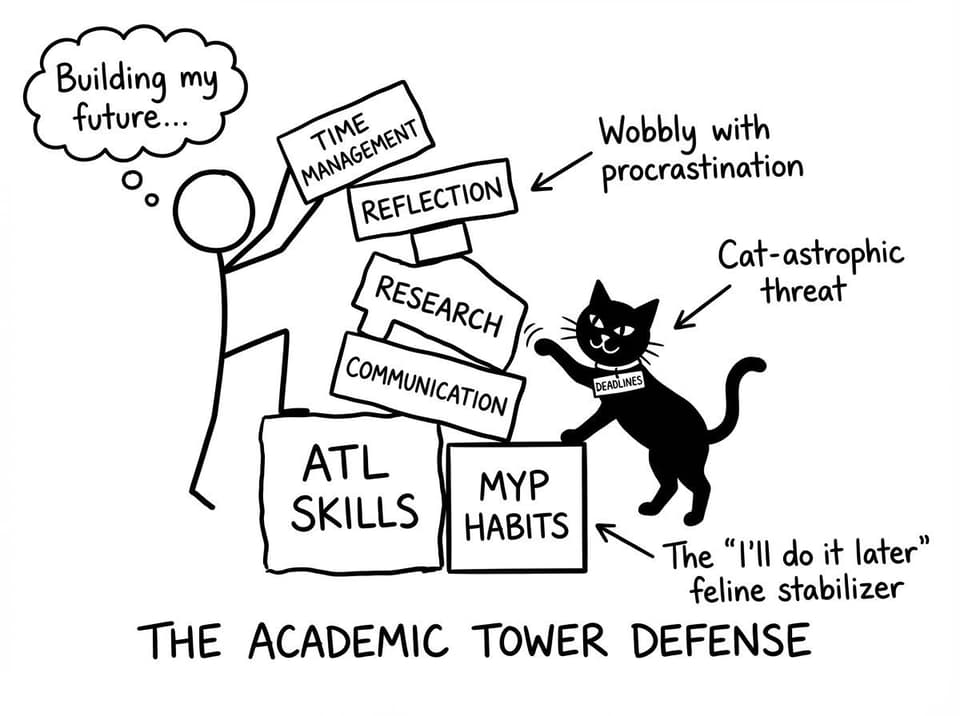
ATL skills sometimes get dismissed as paperwork. But university is basically an ATL test disguised as independence.
- Managing deadlines across subjects becomes managing deadlines across modules.
- Group work becomes group work with higher stakes.
- Reflection becomes revision and rewriting.
If you want to keep those habits sharp as you move into DP exam mode, a simple system helps: combine Study Notes with Flashcards so your learning stays active instead of passive.
Where MYP can fall short (and how to patch the gaps)
Saying MYP is good preparation for university does not mean it is complete preparation.
Universities are not just asking for skills. They are also asking for volume, speed, and depth.
Content load and pace can be a shock
Some MYP programs emphasize projects and broad conceptual understanding, which is excellent, until you hit a university course that expects you to master a large technical vocabulary quickly.
How to patch it:
- Use MYP inquiry habits, but add timed repetition.
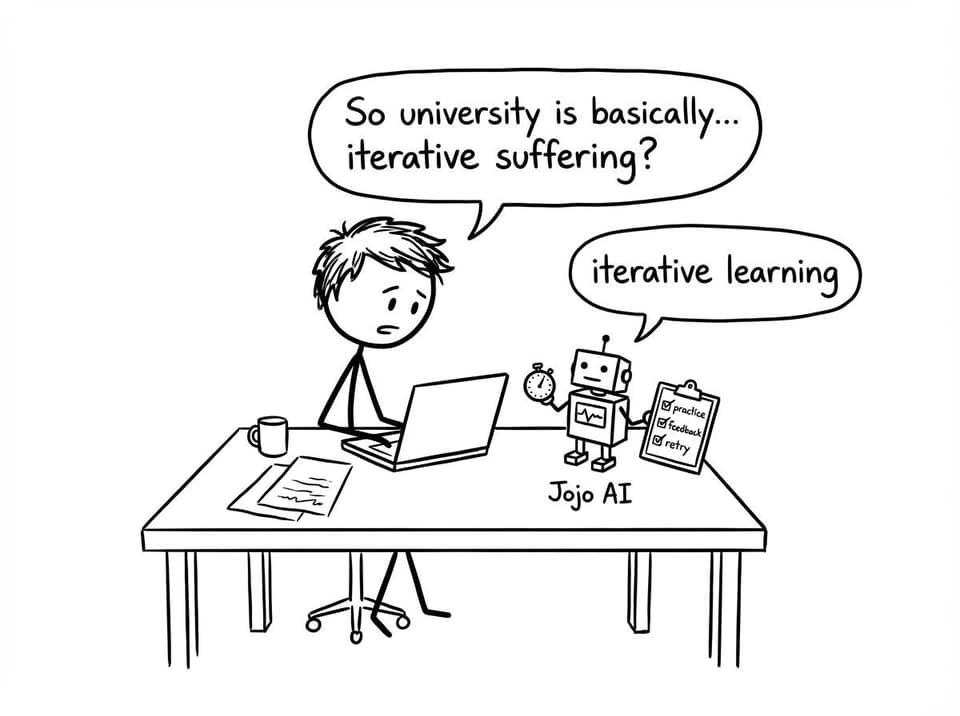
- Build an "exam loop": notes
→ flashcards
→ question practice
→ feedback
→ retry.
RevisionDojo was built around that loop. Start with the platform overview if you have not explored the full workflow: RevisionDojo.
Independent writing is different from "school writing"
MYP often teaches structure and reflection well. University writing, however, can demand:
- denser referencing,
- stronger synthesis of sources,
- clearer argument control,
- multiple draft cycles.
How to patch it:
Use criterion-based feedback early and often. If you are in DP and working on coursework, the fastest way to compress your learning curve is feedback that is specific and rubric-linked: IB Coursework Grader.
Exams feel different from projects
If your MYP experience leaned heavily toward portfolios and projects, university timed exams can feel like a different sport.
How to patch it:
Practice under realistic conditions with feedback. RevisionDojo supports this in two ways:
- build sets of targeted practice with the Questionbank
- run full, timed practice through realistic exam workflows and predicted-style practice, where available, using Predicted Papers
(And yes, those are also excellent for IB students preparing for exams who want fewer surprises.)
The real answer: MYP prepares you for university if you use it like training
There is a story many students live through.
In MYP, you learn to ask good questions and reflect. In DP, you learn to deliver under pressure. In university, you learn to do both at once, with nobody reminding you.
So the best way to think about MYP is not as a guarantee. Think of it as training that works if you keep practicing the right moves.
Use MYP strengths as your DP exam strategy
Here is a simple translation table:
- MYP criteria → DP mark awareness
- MYP inquiry → diagnosing weak topics
- MYP reflection → improving after each timed set
- MYP interdisciplinary thinking → connecting topics in essays and data response
If you want a clean way to keep those habits alive, build your weekly routine around one platform so you are not constantly switching systems.
RevisionDojo's ecosystem makes that easier: Study Notes, Flashcards, AI Chat, Grading tools, Predicted Papers, Mock Exams, a Coursework Library, and Tutors.
If you are exploring the MYP side specifically, start here: Middle Years Program (MYP) | RevisionDojo.
A practical mini-plan for IB students (who did MYP)
If you are an IB student preparing for exams and you did MYP, here is a way to turn that background into points.
Keep the MYP reflection habit, but make it ruthless
After every practice session, write:
- What did I misunderstand?
- What was the command term really asking?
- What will I do next session to fix it?
Then immediately act on it using targeted practice sets.
Convert MYP conceptual understanding into recall speed
Conceptual understanding is not enough in timed exams. Pair it with:
- short daily flashcard sessions
- mixed-topic practice
- timed writing drills
Use Flashcards to keep memory strong, and Study Notes to keep explanations clean.
Add feedback like a university student would
University students improve fast because they iterate.
Use Jojo AI for quick clarification when you are stuck, and use the Questionbank to practice until the mistake pattern disappears.
Conclusion: MYP is preparation, not a promise
So, is MYP good preparation for university?
Yes, when you treat MYP as training in how to think, plan, and improve, not just a phase you completed.
University rewards the student who can learn independently, handle feedback calmly, and keep showing up to the work. Those are deeply MYP skills.
If you are an IB student preparing for exams, the best move is to keep the MYP mindset and upgrade it with exam-specific repetition: practice questions, timed sessions, clear notes, and feedback loops.
Build that system once, and keep it through the DP crunch. RevisionDojo is designed to be that system: Questionbank, Study Notes, Flashcards, Jojo AI Chat, Grading tools, Predicted Papers, Mock Exams, Coursework Library, and Tutors, all in one place.
Start with MYP resources if you are bridging from earlier years, and then move into DP prep as your exam calendar gets real: Middle Years Program (MYP) | RevisionDojo.