

Coasts don’t look “finished.” They look negotiated -- between rock, water, and time. One storm can rewrite a beach profile overnight. A decade can turn a cliff line into a scalloped set of bays and headlands. If you’re studying IB Geography, that constant change is the point: coastal processes explain the story behind every arch, spit, and stack.
Coastal processes (exam checklist for IB Geography)
Use this quick checklist when you revise IB Geography coastal systems:
-
Erosion: hydraulic action, abrasion, solution
-
Transportation: especially longshore drift
-
Deposition: where energy drops and sediment settles
-
Wave type: constructive vs destructive waves
-
Systems thinking: sediment cells and knock-on effects
If you want the syllabus-aligned version, start with Option B: Oceans and Coastal Margins and pair it with Option B Questionbank practice.
Erosion in IB Geography: how cliffs and headlands get “edited”
In IB Geography, erosion is the coastline’s editing tool.
-
Hydraulic action is pressure. Waves force water and air into cracks; repeated compression weakens rock.
-
Abrasion is sandpaper. Waves fling pebbles and sand against cliffs and platforms, grinding them down.
-
Solution is chemistry. In soluble rock (like limestone), seawater reacts and dissolves material.
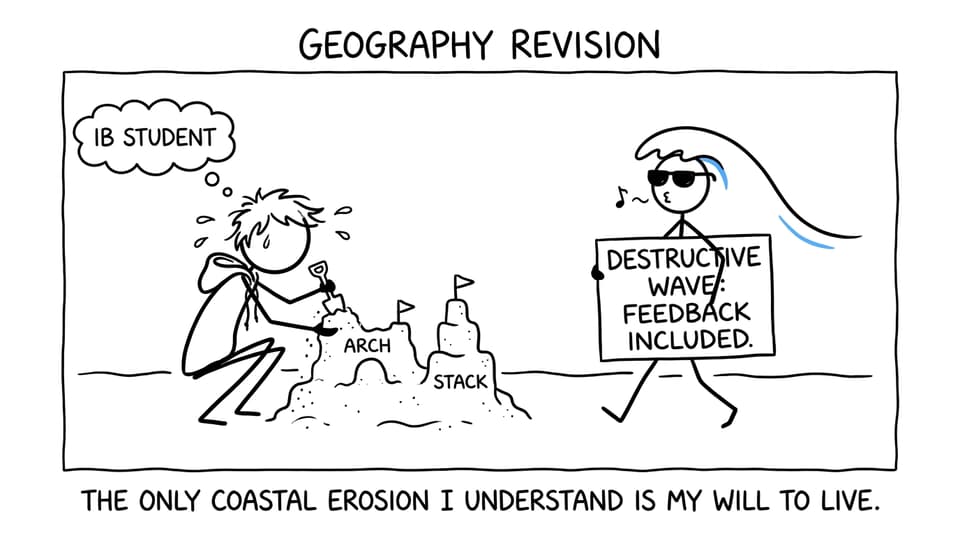
Over time, these processes exploit weaknesses in headlands, producing the classic sequence: caves to arches to stacks to stumps. Differential erosion also matters: softer rock retreats faster than harder rock, leaving bays next to headlands -- a reliable diagram-and-explain moment in IB Geography essays.
To lock in landform links, use B.2.2 Coastal Landforms of Erosion and Deposition plus the matching B.2.2 Study Notes.
Transportation and longshore drift: the zigzag you must describe
Longshore drift is a high-frequency concept in IB Geography because it turns wave direction into predictable sediment movement.
Waves approach the shore at an angle, pushing sediment up the beach (swash) in that same angled direction. Gravity pulls the backwash straight down the slope. The net result is a zigzag transport of sediment along the coast.
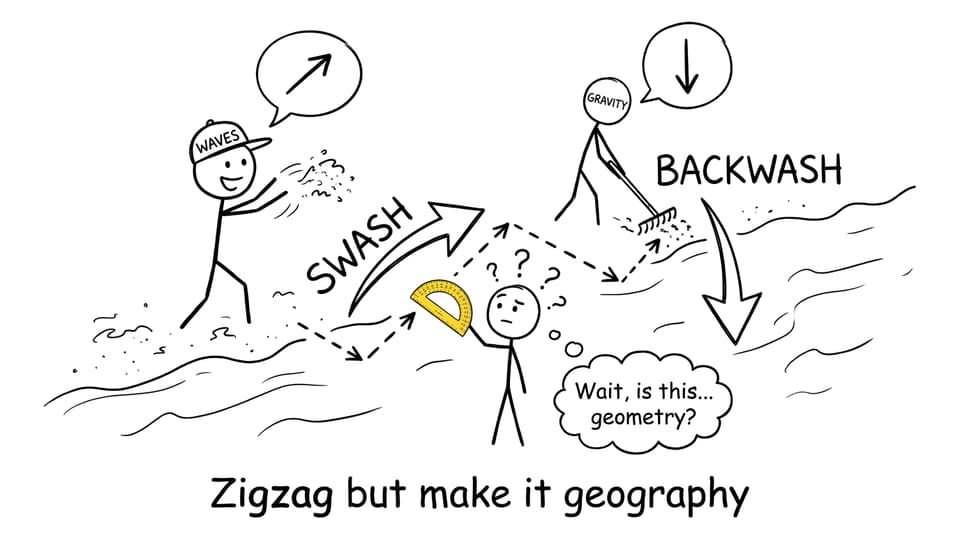
This matters because transport controls where beaches build, where spits extend, and where some stretches of coastline become sediment-starved.
For quick active recall, run a short daily session with Option B Flashcards.
Deposition: where landforms quietly appear
Deposition happens when wave energy falls and sediment is dropped, often in sheltered bays or where currents slow. That’s how we get:
-
Beaches (accumulated sand/shingle)
-
Spits (deposited beyond a bend in the coastline)
-
Bars (a spit extending across a bay, creating a lagoon)
-
Tombolos (a bar linking an island to the mainland)
In IB Geography, the best explanations connect deposition to an energy shift: “sediment is transported, then wave energy decreases, then deposition builds a feature.” Simple chain. High marks.
Wave types and the coastal balance
-
Destructive waves are steep, powerful, and tend to increase erosion by removing beach material.
-
Constructive waves are gentler and tend to promote deposition, building beaches.
Most coasts experience both. The question in IB Geography is often about the balance and what changes it (storm frequency, sea-level rise, seasonal shifts, management).
Coasts as systems: why management can move the problem
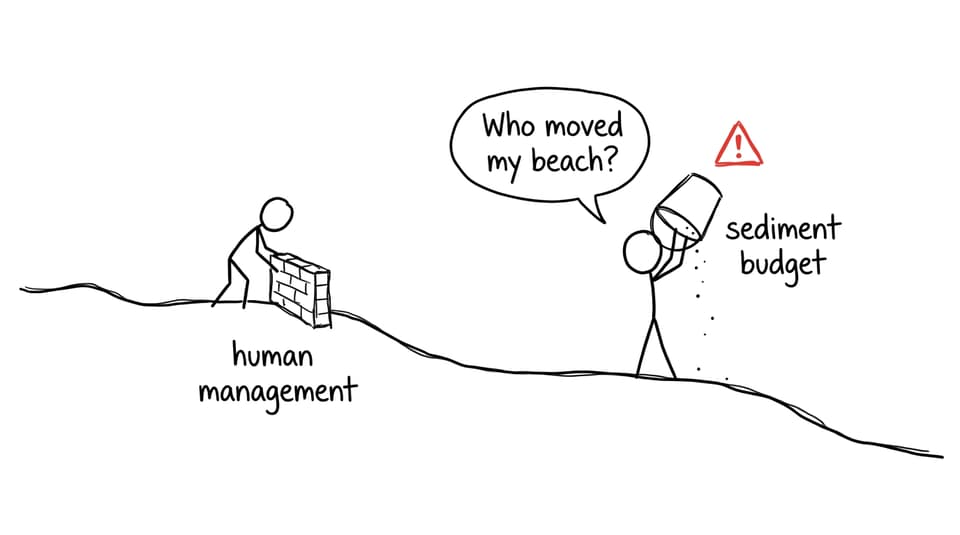
Coastal margins work like connected compartments. Intervene in one place and the sediment budget changes elsewhere.
That’s why IB Geography wants you to discuss coastal margins as systems (often using sediment cells), then evaluate trade-offs. Build your evaluation skills with B.3 Managing Coastal Margins and deepen examples via Managing Coastal Margins Notes and Coastal Management Strategies.
Final takeaway: turn coastal change into exam control
Coasts change because energy moves sediment, and sediment reshapes the coastline. If you can explain erosion, transportation, and deposition as one system, you can answer most IB Geography coastal questions with calm clarity.
Build that confidence on RevisionDojo: use the Questionbank for exam-style practice, Study Notes for clean explanations, Flashcards for definitions, AI Chat to fix misconceptions, Grading tools to improve essays, plus Predicted Papers and Mock Exams when you’re ready to simulate the real thing. When the coastline feels chaotic, your revision process shouldn’t be.