


A quick story about the same programme feeling totally different
On paper, the MYP looks like a single programme with a shared identity. In real life, it can feel like two different worlds.
One student studies Design by prototyping apps for local businesses. Another builds low-cost water filters because their town worries about drought. Both are doing MYP. Both are being assessed with the same kind of criteria language. But the day-to-day content feels local, specific, and strangely personal.
That flexibility is not a loophole. It is one of the core strengths of the MYP framework: global standards, local relevance. And if you are an IB student preparing for exams, understanding how your school customized MYP helps you revise with less confusion and more precision.
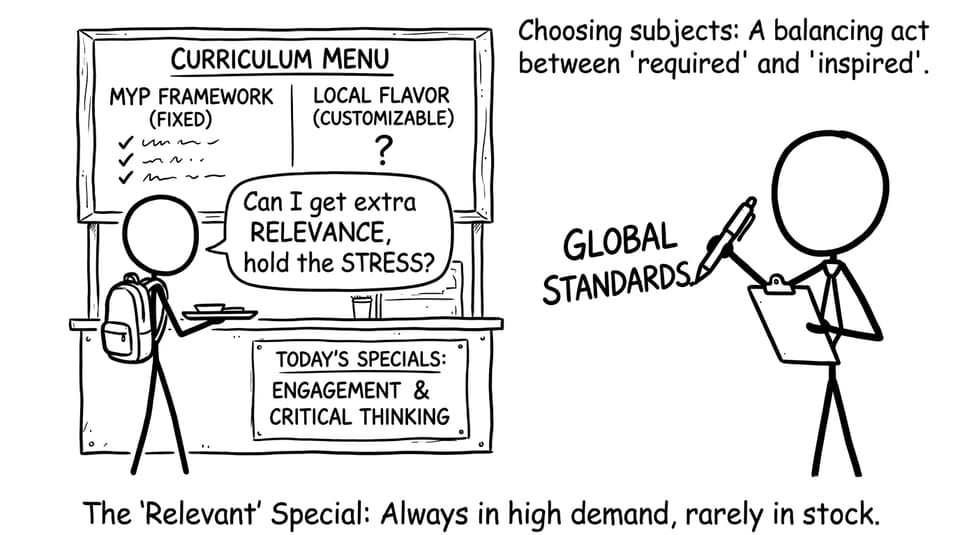
MYP customization checklist (what to notice in your own school)
Use this quick checklist to spot where your MYP experience is “standard” vs locally adapted:
-
Which subject groups are offered as separate courses vs integrated courses?
-
Which languages are available for Language Acquisition?
-
Does Individuals and Societies lean toward local history/civics or global themes?
-
Are Sciences taught as Integrated Science, or split into Biology/Chemistry/Physics?
-
In Years 4 and 5, does your school reduce subject groups to allow specialization?
-
Which local requirements (national curriculum, mandatory subjects) are blended into MYP units?
When you can answer these, your revision becomes easier because you stop searching for a “universal” MYP syllabus that doesn’t exist in the way students imagine.
The MYP framework: consistent goals, flexible content
The International Baccalaureate sets the MYP as a framework, not a scripted curriculum. That means schools must meet shared expectations (skills, concepts, criteria-based assessment), but they have room to choose:
-
which content best fits local culture and priorities
-
how to sequence units across the years
-
what examples, case studies, and texts students learn with
This is why the MYP travels well. A school can stay faithful to the programme while still respecting local identity and local rules.
If you want a clean overview of the programme itself, start here: Middle Years Program (MYP) overview. It is the simplest way to anchor your understanding before you zoom back in to your own school’s version.
The eight MYP subject groups (and where schools can adjust)
Every MYP school teaches learning across the eight subject groups:
-
Language and Literature
-
Language Acquisition
-
Individuals and Societies
-
Sciences
-
Mathematics
-
Arts
-
Physical and Health Education
-
Design
The “customization” usually happens in the shape of those groups:
Integrated vs discrete teaching
A common example is Sciences. Some schools teach Integrated Science for longer, weaving Biology, Chemistry, and Physics into thematic units. Other schools separate disciplines earlier. Either way, the MYP criteria and inquiry skills still apply.
For a student, the revision implication is practical: you might need to revise by skills and concepts (data analysis, evaluation, modelling) rather than by “the chapter order” you see in someone else’s notes.
If you want a subject-specific breakdown, this helps: MYP Sciences curriculum breakdown.
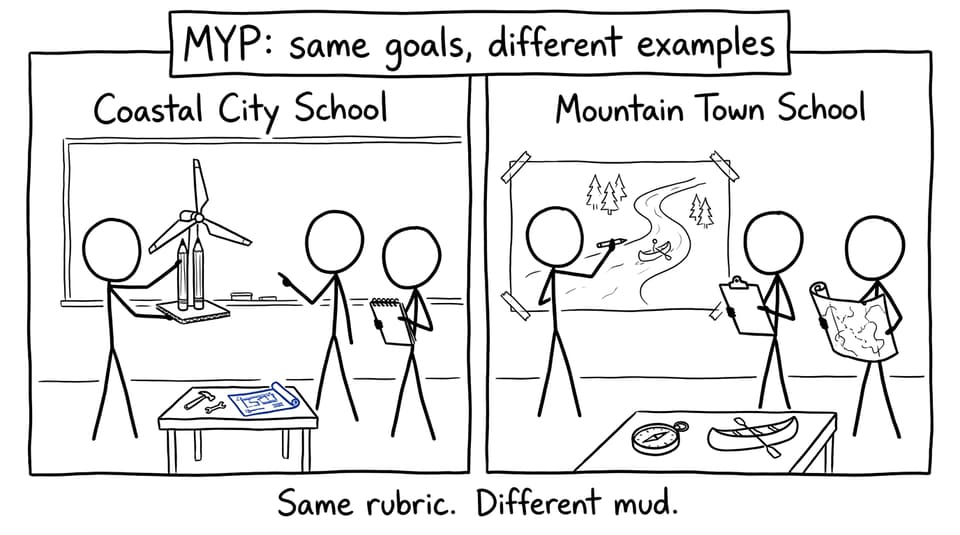
Local requirements blended into global learning
Many schools must meet government or national standards. The MYP allows that integration as long as the programme’s teaching and assessment principles remain intact.
So a school might:
-
emphasize national history topics inside Individuals and Societies
-
include a required civic education course but assess it using MYP criteria
-
choose literature texts that reflect local authors and cultural heritage
To you, this can feel like “we do more content than other schools.” Sometimes that is true. But in MYP, your exam advantage comes from turning local examples into globally assessable responses: clear claims, evidence, reasoning, and criteria language.
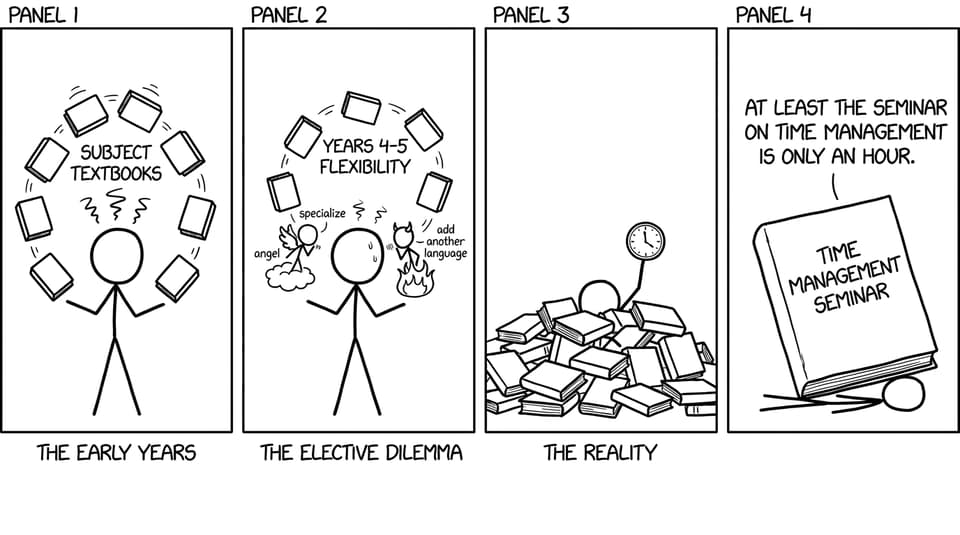
Years 4 and 5: where MYP choice can narrow (and focus)
In the final years, schools can sometimes reduce the number of subject groups (with IB rules and school policy guiding what is possible) so students can specialize or prepare for what comes next.
In practice, this is when MYP can start to resemble a runway to DP or national exams: more time on Mathematics and Sciences for some students, or deeper Arts pathways for others.
Your revision move: treat subject choice as a strategy problem, not a personality test. More subjects does not automatically mean “better.” The best choice is the one you can sustain with high-quality practice and consistent feedback.
For eAssessment structure and what to expect, this article is useful: IB MYP Certificate: ePortfolio subjects and expectations.
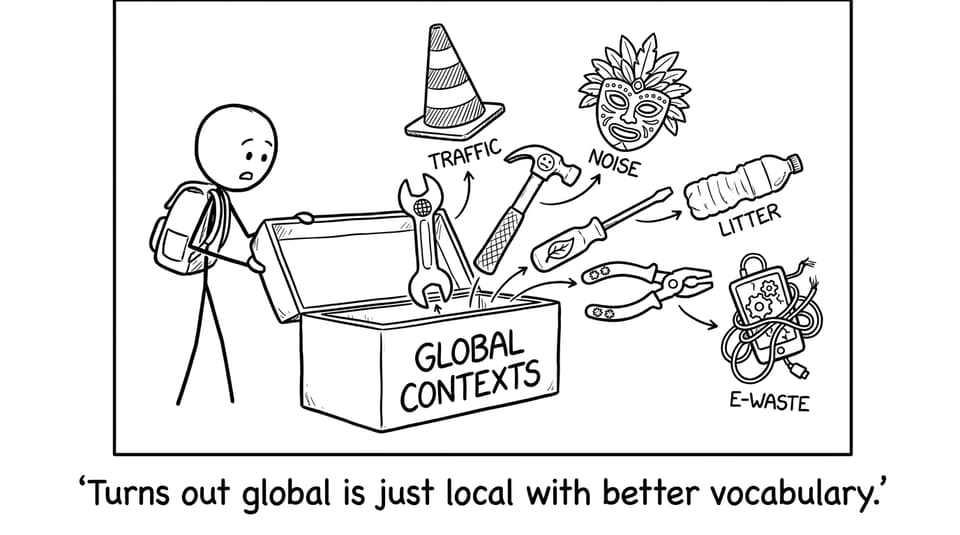
Global Contexts: the bridge between local identity and international thinking
Even when content is local, MYP keeps an international orientation through the Global Contexts:
-
Identities and Relationships
-
Orientation in Space and Time
-
Personal and Cultural Expression
-
Scientific and Technical Innovation
-
Fairness and Development
-
Globalization and Sustainability
Schools often localize these on purpose. “Globalization and Sustainability” might become a unit about local air quality. “Orientation in Space and Time” might become migration stories in your city. The goal is not to make everything abstract. The goal is to make big ideas visible in the place you live.
This matters for exams because it trains you to do something graders reward: connect concepts to relevant contexts without losing clarity.
What this flexibility means for MYP exam prep (and how RevisionDojo fits)
Here is the quiet truth: when your school customizes MYP, the content examples change, but the performance expectations stay recognizable.
So revise like this:
-
Build your foundation fast using MYP revision strategies.
-
Practice by skill and command term, not only by topic order.
-
Use targeted question sets to reveal gaps (RevisionDojo Questionbank is built for this): Questionbank feature page.
-
Turn mistakes into a system: review, rewrite, reattempt.
RevisionDojo is designed for that loop: Study Notes when you need clarity, Flashcards when you need retention, AI Chat when you need a quick explanation, and Grading tools when your writing needs criteria alignment. When exam pressure rises, you can shift into Mock Exams and Predicted Papers to train timing and decision-making, and use the Coursework Library plus Tutors when you need models and human feedback.
If you want a structured plan that feels realistic during school weeks, use: MYP eAssessments: 30-day study plan.
Closing: use MYP flexibility as your advantage
The MYP is designed to travel, to bend, to fit the place you live without losing its standards. That is why subject choice can look different from school to school, and why your units might sound nothing like your friend’s across the world.
For exam prep, treat that as a strength: learn the shared MYP skills, practice with criteria in mind, and use local examples as your evidence toolkit. When you are ready to make revision feel structured instead of improvised, start from the RevisionDojo MYP hub and build your loop with Questionbank practice, Study Notes, Flashcards, AI Chat feedback, and timed Mock Exams.