If you’ve ever sat in a library with friends, all of you “working” on your IA, you know the feeling: collaboration makes the work lighter… until you wonder whether it’s even allowed in the IB.
That tension is real. The IB encourages discussion and learning together, but it also expects the final Internal Assessment to be authentic and independently produced. The line between “helpful” and “risky” isn’t always obvious when deadlines get loud.
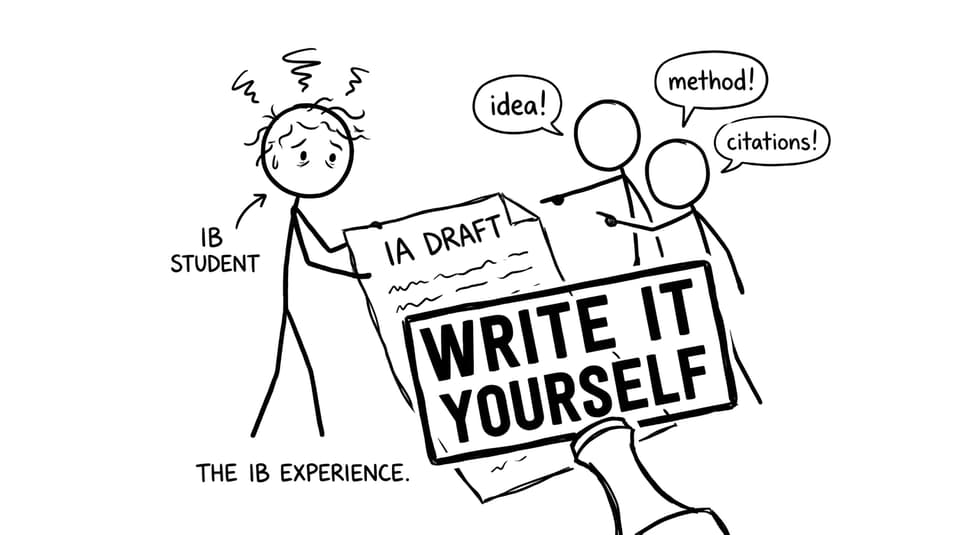
The IB rule of thumb: collaborate on thinking, not on writing
In the IB, you can collaborate with classmates in ways that improve your understanding, sharpen your research question, and stress-test your method. But the work you submit must be your own: your write-up, your analysis, and your interpretation.
A practical way to remember it is this: you can share the “why” and “how,” but you cannot share the “final.” If your IA starts to look like someone else’s document (or vice versa), you’ve moved from collaboration into collusion.
If you want a deeper safety net, keep this page bookmarked: IB Academic Misconduct Explained: How to Avoid Plagiarism and Collusion.
Quick checklist: what’s usually OK vs not OK (IB IA collaboration)
Usually OK
-
Brainstorming topics and narrowing choices (without copying each other’s exact phrasing).
-
Talking through methodology, variables, and feasibility.
-
Comparing which sources are credible (then reading and citing them yourself).
-
Receiving high-level feedback like “your argument jumps here” or “your graph isn’t labeled clearly.”
Usually NOT OK
-
Writing sections together, even “just the intro.”
-
Sharing drafts for line-by-line editing or rewriting.
-
Copying analysis steps, calculations, or paragraph structure.
-
Submitting work that is substantially similar to a classmate’s.
For citation and originality pitfalls (especially common in an IB IA), see: How to Avoid Plagiarism in Your IA.
Where collaboration is most helpful (and safest)
Brainstorming the research question
In the IB, a strong IA starts with a question that’s narrow enough to finish and deep enough to analyze. Classmates can help by asking annoying (useful) questions like: “What exactly will you measure?” or “How will you show evaluation?”
A strong guide for this stage: How to Write a Strong IA Research Question.
Data collection (sometimes) but separate processing
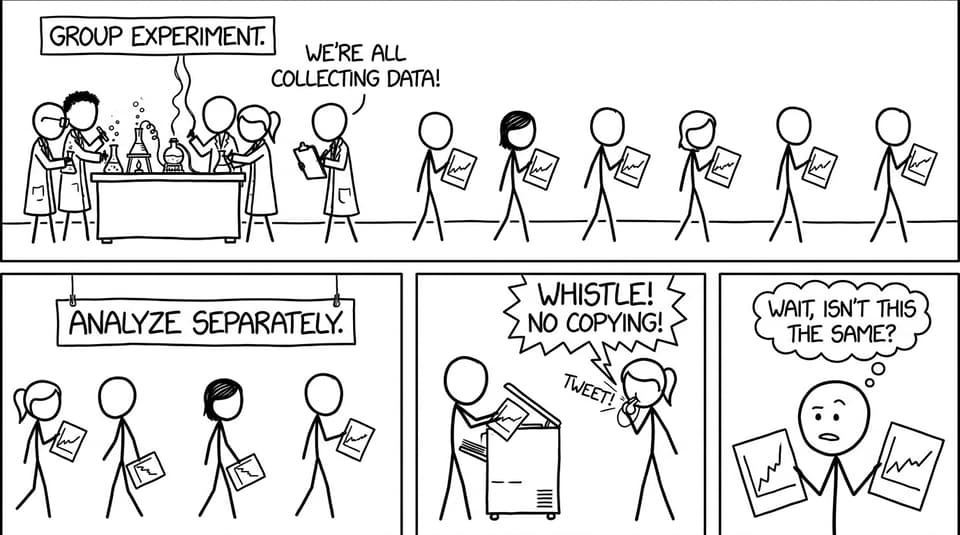
In some IB science contexts, you might collect data together as a class or group setup. That can be acceptable, but your processing, analysis, graphs, and conclusions must be yours. Same raw numbers doesn’t mean same thinking.
Feedback that doesn’t become editing
Peer feedback is powerful when it targets clarity and logic, not wording. Ask classmates to respond like examiners: “What claim is this paragraph making?” rather than “Let me rewrite that sentence.”
For what examiners actually reward in an IB IA, read: What IB Examiners Actually Look For in an IA.
How RevisionDojo helps you collaborate ethically (and still improve fast)
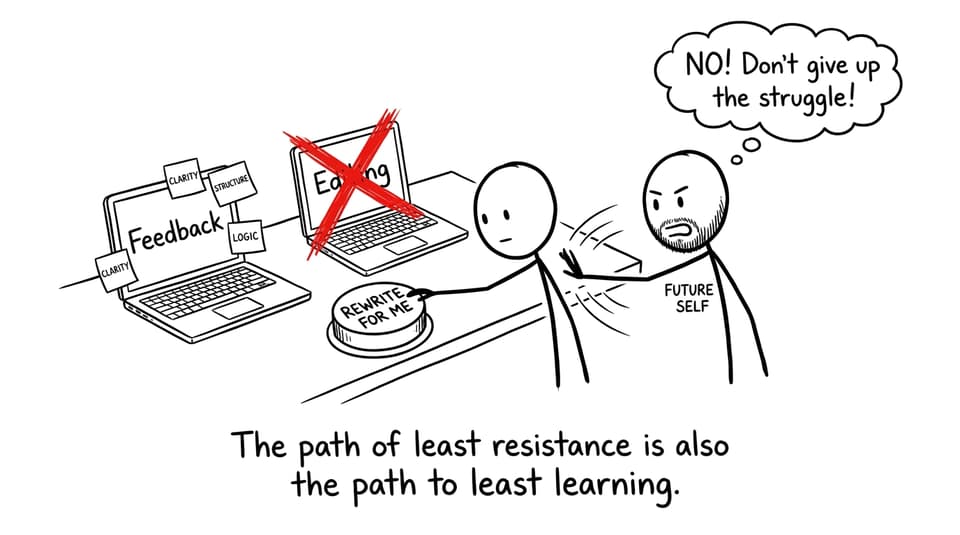
The trick in IB is getting support without borrowing someone else’s work. RevisionDojo is built for that.
-
Use IB IA Guides to align your structure to the rubric before you write.
-
Run your draft through the IB Coursework Grader for rubric-aligned feedback you don’t have to “borrow” from friends.
-
If you get stuck, use AI Chat to clarify a criterion or concept, then write it in your own words.
-
Reinforce the content behind your IA using Study Notes and Flashcards, then test it in the Questionbank so your analysis becomes easier to produce under pressure.
For a clean integrity mindset while studying in the IB, see: How RevisionDojo Helps You Maintain Academic Integrity While Studying.
Final takeaway: collaborate, but keep your IB IA unmistakably yours
Collaboration can absolutely make you sharper in the IB, especially when it stays in the zone of discussion, planning, and feedback. But your IA is assessed as your independent thinking, in your independent voice, supported by your independent analysis.
If you want the fastest way to improve while staying safe, use RevisionDojo as your “third teammate”, the one that offers structure (IA Guides), practice (Questionbank), memory support (Flashcards), instant clarification (AI Chat), and rubric-calibrated improvement (Grading tools), plus Predicted Papers, Mock Exams, the Coursework Library, and Tutors when you need extra momentum.
Start here: IB IA Guides: Internal Assessment Structure, Rubrics & Examples.


