


The night before a big IB exam, your brain can do a strange trick: it takes one messy quiz score from three weeks ago and treats it like a prophecy.
You can feel it in your chest. A small failure becomes a story: I’m not a “math person.” I always mess up Paper 2.
Academic resilience is the skill that breaks that spell. And in the IB, where the workload is real and the standards are high, resilience isn’t motivational fluff. It’s a practical advantage. The students who finish strong aren’t the ones who never struggle. They’re the ones who recover faster, adjust sooner, and keep showing up with a better strategy.
This guide is for IB students preparing for exams who want growth mindset strategies that actually work in revision week, not just in posters.
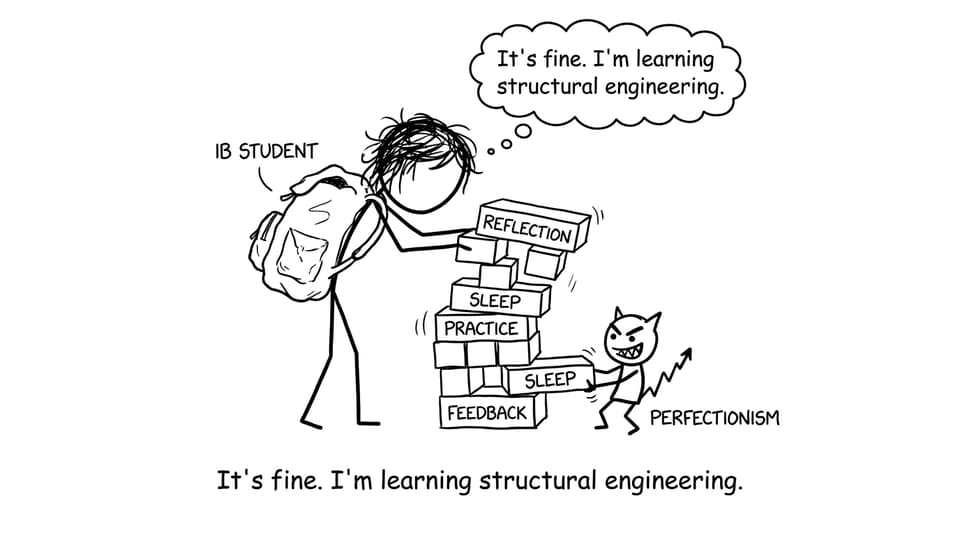
IB resilience checklist (save this for exam season)
If you only do five things to build academic resilience in the IB, do these:
-
Name the setback clearly (not dramatically)
-
Extract one lesson and one next step
-
Practice the exact weakness within 48 hours
-
Use feedback language that points to strategies, not identity
-
Run at least one timed simulation weekly to train calm under pressure
You can do all five inside RevisionDojo by linking Study Notes to Flashcards, then to the Questionbank, then to Mock Exams or Predicted Papers, and finally using AI Chat and Grading tools to close the loop.
What academic resilience looks like in the IB (and what it doesn’t)
In the IB, resilience is not pretending you’re fine. It’s being honest without being helpless.
Resilient IB students tend to do three quiet things after a setback:
-
They treat results as information rather than a verdict.
-
They change their revision plan based on patterns, not moods.
-
They keep contact with the work, even if it’s a smaller dose (15 minutes still counts).
That matters because IB revision is a long game. You don’t just need knowledge. You need stamina, consistency, and the ability to restart after a bad day.
If you’re building a home base for that system, start here: RevisionDojo for IB.
Growth mindset strategies that make IB setbacks useful
Growth mindset in the IB isn’t repeating “I can do it.” It’s changing what you do next.
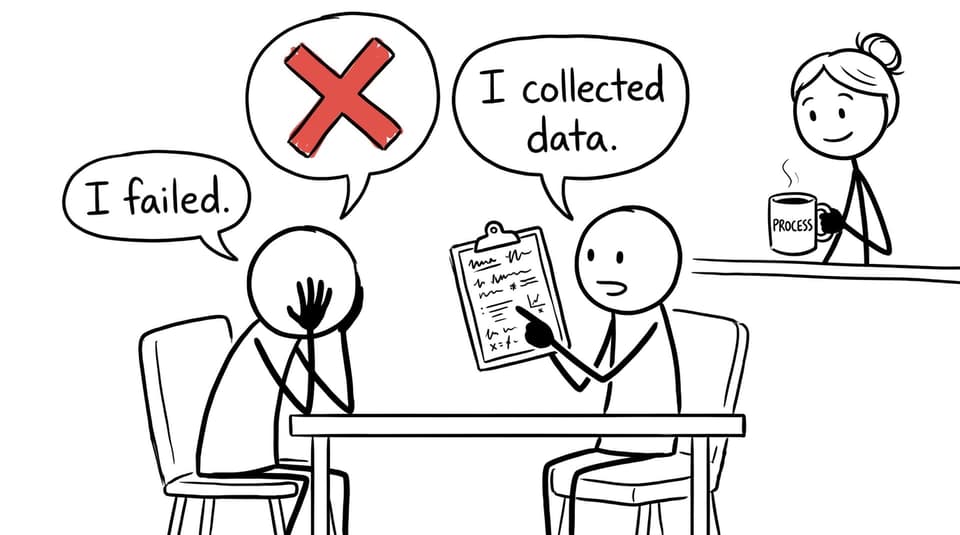
Replace identity labels with process labels
When you say “I’m bad at Chemistry,” your brain hears a closed door.
Try: “I lose marks on explanation questions because my answers aren’t structured to the command term.”
That sentence contains a plan.
A practical way to train this is to keep a two-line mistake log:
-
What happened? (one sentence)
-
What do I do next time? (one sentence)
Then convert the pattern into quick active recall using Flashcards. If you repeatedly forget definitions, make definition cards. If you repeatedly misread “evaluate,” make command-term cards.
Normalize productive struggle (with a timer)
Resilience grows when your brain learns that discomfort is survivable.
Try this in IB revision:
-
Set a 20-minute timer.
-
Do one tough set from the Questionbank.
-
Stop when the timer ends.
-
Write a “next attempt note” for tomorrow.
This creates controlled exposure. You practise staying calm while not knowing everything yet, which is basically the emotional core of IB exams.
For question practice that’s structured by topic and built around mark-scheme logic, use the Comprehensive IB Question Bank guide.
Use feedback that points to strategy, not worth
In the IB, feedback is everywhere: teachers, rubrics, mark schemes, self-marking, peer review.
Resilient students translate feedback into one of three categories:
-
Content gap (I don’t know it yet)
-
Technique gap (I know it, but I don’t show it the way marks are awarded)
-
Timing gap (I could do it, but not fast enough)
Then they choose the right tool:
-
Content gap: Study Notes and targeted flashcards
-
Technique gap: ask Jojo AI Chat to mark your response and show what earns marks: Jojo AI
-
Timing gap: weekly timed runs using IB Predicted Papers
That’s growth mindset in action: the belief that outcomes move when strategies improve.
Building an IB “bounce-back” routine for bad scores
A bad score isn’t dangerous. The spiral afterward is.
Here’s a simple IB bounce-back routine you can run the same day you get a disappointing result:
Do a 15-minute debrief (no more)
Write:
-
1 reason the result happened (be specific)
-
1 thing you did well (proof you’re not starting from zero)
-
1 adjustment to your next practice session
Then stop. Over-analyzing feels productive, but it often becomes avoidance.
Do a 30-minute repair session within 48 hours
Choose one weakness and repair it quickly:
-
Review the relevant section in Digital IB Study Notes
-
Drill 10-15 targeted questions
-
Turn the most common error into 3 flashcards
This is how you teach your brain a powerful lesson: setbacks lead to action, not shame.
Schedule one timed proof each week
The IB doesn’t just test what you know. It tests what you can do under time pressure.
If you want your confidence to be earned (and therefore stable), run weekly timed practice using:
-
How to Run Timed IB Mock Exams (workflow and pacing ideas)
-
RevisionDojo App for IB Exam Prep (a full system that links notes, practice, feedback, and analytics)
How RevisionDojo supports IB resilience (without adding more work)
The tricky part of the IB isn’t only difficulty. It’s decision fatigue: What should I revise? Am I doing enough? What if I’m revising the wrong thing?
RevisionDojo reduces that uncertainty by connecting the pieces:
-
Questionbank practice shows what you’re missing
-
Study Notes help you fix the gap fast
-
Flashcards keep it from slipping again
-
AI Chat helps you get unstuck and refine technique
-
Mock Exams and Predicted Papers build timing and calm
-
Grading tools support coursework improvement so exams don’t carry all your stress
-
Coursework Library shows models when you need clarity
-
Tutors add a human layer when you want targeted coaching
That stack matters because resilience is easier when the next step is obvious.
Conclusion: IB resilience is built in the restart
The defining moment in IB exam prep isn’t the perfect study day. It’s the day you don’t want to revise, you feel behind, you remember a bad score, and you still do a small, focused session anyway.
That restart is academic resilience. Growth mindset is simply the set of strategies that makes the restart easier, faster, and more repeatable.
If you want a calmer system that turns IB setbacks into clear next steps, build your loop with RevisionDojo: notes for understanding, flashcards for memory, the questionbank for technique, and timed mocks and predicted papers for confidence under pressure. Start here: RevisionDojo for IB.