
When people talk about the IB, they usually talk about students: revision schedules, stress, deadlines, and that strange moment when a two-mark question steals twenty minutes.
But the quiet truth is that the IB experience you live every day is shaped by leadership you may never see. A calm deadline calendar. A clear policy. A teacher who knows exactly how to standardize feedback. A coordinator who can resolve confusion before it becomes panic.
That is why building a mentorship pipeline for aspiring IB Coordinators matters, and yes, even if you are “just” an IB student preparing for exams. Better leadership upstream usually means fewer surprises downstream. And fewer surprises is almost always what raises IB scores.
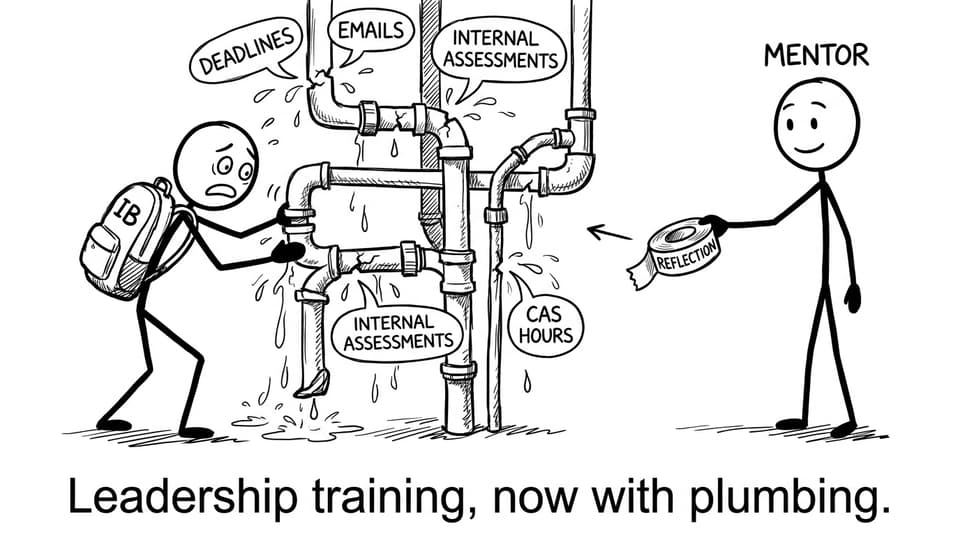
The student-facing checklist: what a strong IB mentorship pipeline creates
If your school builds an IB mentorship pipeline well, you will notice it in practical, exam-relevant ways:
-
Clear timelines for internal deadlines and exam logistics (less last-minute chaos)
-
Consistent feedback language across teachers (more reliable improvement)
-
Stronger subject coordination and revision planning (fewer gaps)
-
Better use of data from formative assessments (smarter next steps)
-
More stable support when staff change mid-year (continuity)
If you are revising right now, that list reads like oxygen.
To make this tangible, it helps to think about mentorship pipelines as a system that protects student learning. The IB is demanding, but it should not be unpredictable.
Why leadership mentorship changes your IB exam outcomes
The IB does not reward effort in the abstract. It rewards performance under constraints: time, command terms, structure, and markscheme logic.
A strong coordinator helps your school turn “we covered the content” into “students can produce answers the IB rewards.” Mentorship matters because coordinators are not trained overnight. They learn by watching decisions, making small decisions, reflecting, and gradually holding responsibility.
When that learning is missing, students often feel it as:
-
unclear expectations
-
mixed messages about assessment
-
inconsistent moderation practices
-
last-minute policy shifts
When mentorship is present, students feel it as alignment. Not perfection. Just fewer avoidable problems.
Spotting future IB coordinators: what students can notice
You cannot appoint an IB Coordinator. But you can often spot the teachers who could become great ones.
They are usually the teachers who:
-
ask “why” before “what”
-
translate the IB language into simple steps
-
run meetings that end with decisions, not confusion
-
care about consistency across classes
-
model calm when deadlines pile up
If a school identifies those people early and supports them, students benefit quickly, because those teachers start spreading good systems long before they get the title.
What an IB mentorship pipeline looks like (and why it’s not just admin)
A mentorship pipeline works best when it moves in stages. Each stage builds skill, judgment, and trust.
Exploration: seeing the work behind the curtain
In this stage, aspiring coordinators observe. They sit in on planning discussions, notice patterns, and learn which problems repeat every year.
For students, the impact is subtle but real: better planning, fewer contradictory instructions, and a sense that adults are coordinated.
Apprenticeship: doing small but real coordination tasks
Here, the mentee starts helping with specific tasks: documenting processes, organizing resources, supporting standardization conversations, or helping run revision planning.
This is where a school’s IB ecosystem often improves fast, because small systems have compounding effects.
Shadowing: being present for decisions and their tradeoffs
Shadowing is where leadership becomes real. The mentee sees how decisions are made when there is no perfect option. They learn what must be communicated, what must be documented, and what must be followed up.
Students feel this as clarity: fewer rumors, fewer “I think the policy is…” moments.
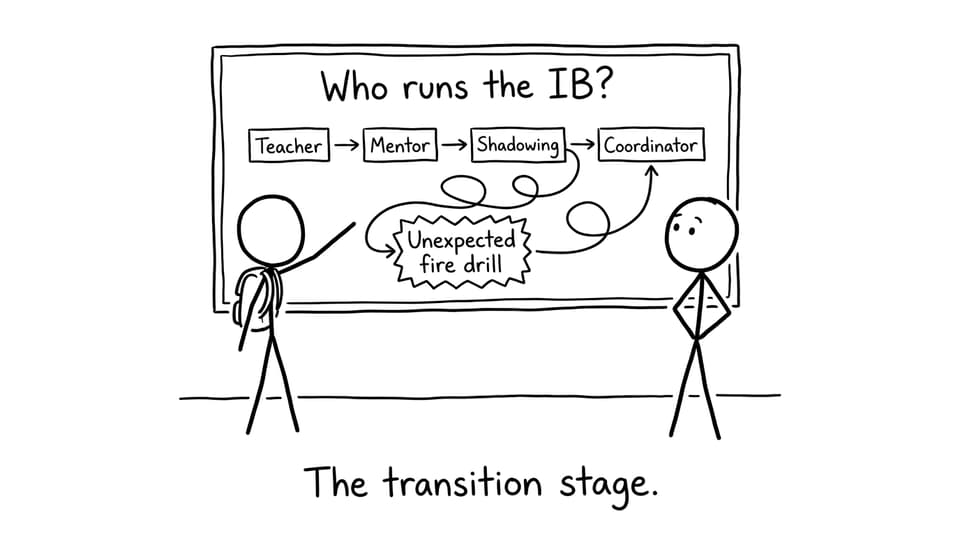
Transition: gradually holding responsibility
This is the handover phase. The aspiring coordinator leads parts of the work with support, then reflects on what happened.
A good transition stage protects students. It prevents the classic problem where a leadership shift happens right before exams and suddenly nobody knows what is happening.
Reflection: the ingredient that makes IB mentorship actually work
Without reflection, mentorship becomes task training. With reflection, it becomes judgment training.
Good mentors ask questions that force the mentee to connect daily work to the IB mission and to student outcomes:
-
What problem were we solving, really?
-
Which student group benefits or suffers from this decision?
-
What would “consistency” look like across departments?
-
What communication would reduce stress without lowering standards?
This is not abstract philosophy. Reflection becomes a practical tool for reducing friction in the IB student experience.
Practice opportunities that improve the whole IB learning environment
A mentorship pipeline should include real, hands-on practice. For aspiring coordinators, that might mean:
-
facilitating teacher conversations about assessment clarity
-
building shared revision resources
-
organizing standard routines for feedback and student support
-
drafting parts of self-study documentation
And here is the student connection: when adults agree on what “good” looks like, students can train toward it.
That is also why platforms like RevisionDojo quietly matter in the background. When schools and students use the same kind of structured support, Study Notes, Flashcards, and a Questionbank with fast feedback, the IB becomes more navigable.
If you are building your own structure, these are strong starting points:
-
Use the RevisionDojo IB hub to orient your subjects and expectations.
-
Build daily recall with IB Flashcards with Spaced Repetition (SRS).
-
Train exam skill with the Questionbank feature.
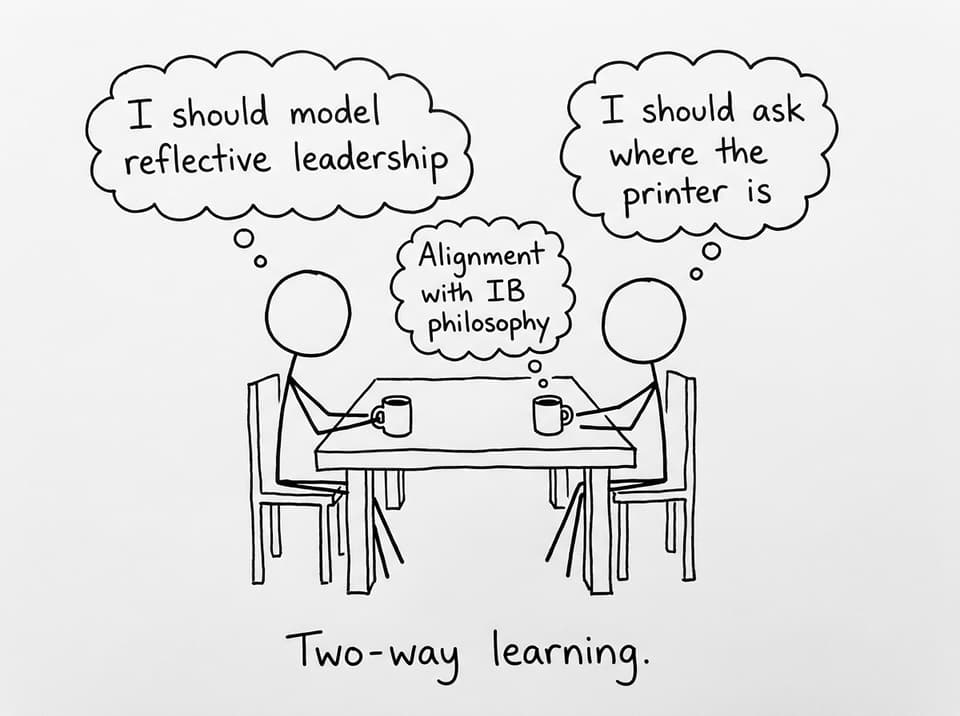
The “two-way” effect: mentorship helps mentors too
One of the most underrated truths in the IB world is that mentors improve when they mentor. Explaining a process forces clarity. Coaching someone through conflict forces empathy. Supporting someone’s growth forces patience.
When that happens, students gain a school culture that feels less like survival and more like a steady set of routines.
How students can “use” an IB mentorship pipeline (without being in it)
You cannot control leadership development. But you can benefit from it intentionally.
Here are student moves that work in almost every IB school:
-
Ask for clarity using shared language: “What does a top answer include?” “Which command terms matter here?”
-
Track patterns in feedback and turn them into targets.
-
Use consistent tools so your progress is visible.
On RevisionDojo, that looks like:
-
Study fast with Digital IB Study Notes
-
Turn information into memory with the Flashcards feature
-
Pressure-test your understanding with the Comprehensive IB Question Bank guide
-
Build routines with How to Study for IB Exams: Step-by-Step Guide
-
Keep your strategy grounded with How to Prepare for IB Final Exams Efficiently
-
Fix the last 24 hours with What to Do the Night Before IB Exams
Closing: the quiet advantage you can choose
The IB rewards the visible things, your answers, your structure, your timing. But those visible things are built by invisible systems: consistent leadership, clear expectations, and schools that plan for continuity.
A mentorship pipeline for aspiring IB Coordinators is one of those systems. It makes the programme sturdier. It makes learning calmer. And it makes exam preparation feel less like improvisation.
If you want to build your own stability inside the IB, use RevisionDojo as your steady loop: Study Notes for clarity, Flashcards for memory, Questionbank for exam skill, AI Chat for quick explanations, and when you want to simulate pressure, use Mock Exams and Predicted Papers to train timing and confidence. Start small today, and let the system carry you when motivation can’t.
If your school wants structured support for the IB ecosystem, explore RevisionDojo for Schools.

