
The biological preparedness psychology definition is an evolved predisposition to learn some associations more easily than others because they may have supported survival. It does not mean a fear or behavior is fully inherited. Instead, biology makes certain connections, such as taste with illness or snakes with danger, especially easy to acquire.
That distinction matters in IB Psychology. Preparedness is not the opposite of learning. It explains why learning is selective: organisms enter the learning process with biological tendencies rather than as blank slates.
Biological preparedness at a glance
- Core idea: Some stimulus-response associations are learned more readily than others.
- Key theorist: Martin Seligman developed preparedness theory in 1971.
- Evolutionary logic: Associations that helped organisms avoid danger or illness may have been favored by natural selection.
- Classic evidence: Garcia and Koelling's research on conditioned taste aversion.
- Common application: The acquisition of certain fears and phobias.
- Essential caution: A predisposition increases ease of learning; it does not guarantee a behavior.
Students should check which course applies to their cohort. The previous IB Psychology course has its final assessment in 2026, while the redesigned course is first assessed in 2027. Preparedness can support discussions of biological influences, classical conditioning, learning, and explanations of fear, but the exact assessment context depends on your syllabus. RevisionDojo provides both syllabus-aligned IB Psychology revision notes and IB Psychology resources for the redesigned course.
What biological preparedness actually means
The biological preparedness psychology definition becomes clearer when separated into three parts.
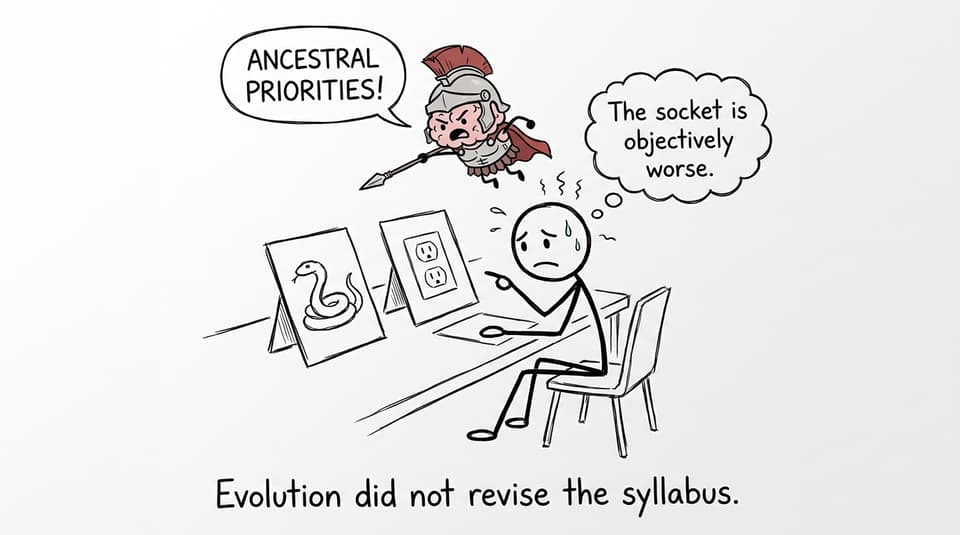
First, biological means the tendency is connected to an organism's evolved characteristics. Second, preparedness means the organism is especially ready to form a particular association. Third, the theory still concerns learning: experience activates or strengthens the association.
Imagine two people encountering a harmless snake. Preparedness theory does not predict that both must develop a phobia. It predicts that an association between snakes and danger may be acquired more readily than an association between an equally noticeable but historically harmless object and danger.
Seligman described associations along a continuum:
- Prepared associations are acquired relatively easily.
- Unprepared associations can be learned but may require ordinary conditioning.
- Contraprepared associations are difficult to establish because they conflict with an organism's biological tendencies.
This challenges the strongest behaviorist assumption that any stimulus can be associated with any response equally easily. Biology constrains learning without eliminating the effects of experience. You can explore that interaction further in RevisionDojo's biological approach study notes and classical conditioning notes.
Garcia and Koelling: the study you should know
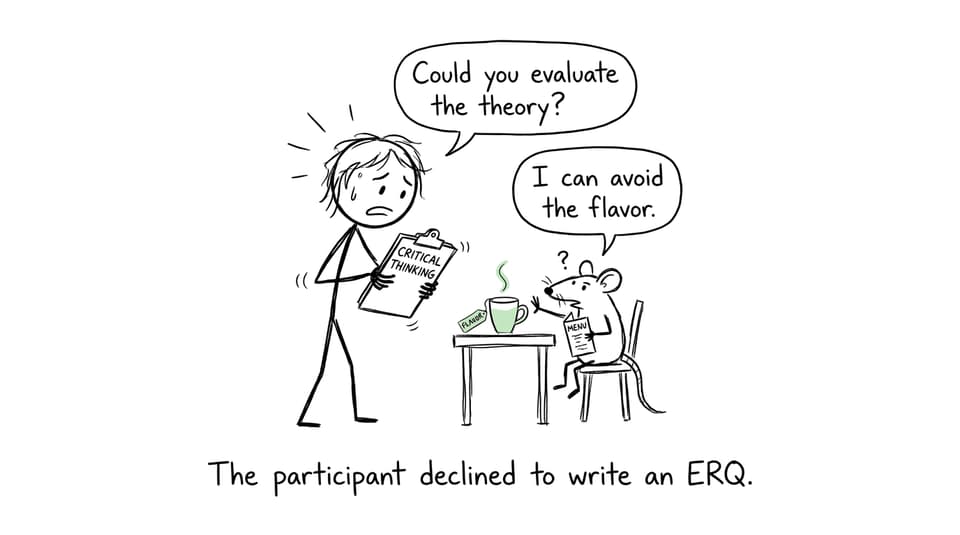
Garcia and Koelling's 1966 research provides a memorable example of preparedness. Rats consumed flavored water presented with audiovisual cues. The researchers then exposed different groups to consequences involving illness or shock.
The crucial result was selective association. Rats experiencing nausea readily associated illness with the taste of the water. Rats experiencing shock more readily associated danger with the audiovisual cues. The animals did not learn every available cue-consequence pairing equally well.
The evolutionary interpretation is practical. For an animal, internal sickness is plausibly connected to something consumed, whereas immediate external pain is more plausibly predicted by sights or sounds in the environment. Taste-illness learning can also occur after a substantial delay, unlike the close timing often expected in standard accounts of classical conditioning.
The study therefore supports two useful claims:
- Learning is constrained by biological relevance.
- Classical conditioning cannot always be explained only through repeated, closely timed pairings.
However, be precise. Animal research can demonstrate a general learning mechanism, but conclusions about complex human phobias require caution. Species differences and controlled laboratory conditions limit direct generalization.
Biological preparedness and phobias
Preparedness theory is often used to explain why fears involving snakes, spiders, heights, darkness, or enclosed spaces may be learned readily. Such stimuli could have presented recurring threats during human evolutionary history.
This does not mean people inherit a complete phobia. A better explanation is that humans may inherit a predisposition that makes certain fear associations easier to acquire. Conditioning, observation, cognition, culture, and individual experience can still influence whether a clinical fear develops and persists.
Nor can preparedness explain every specific phobia. Intense fears can involve modern or unusual objects with no obvious ancestral significance. This is a valuable evaluation point: the theory explains selective vulnerability better than it provides a complete account of all phobias. RevisionDojo's notes on the etiology of abnormal psychology can help you compare biological, cognitive, and sociocultural explanations.
How to answer an IB Psychology exam question
Suppose a question asks:
Explain biological preparedness using one relevant study.
A strong response can follow four moves.
Define the concept
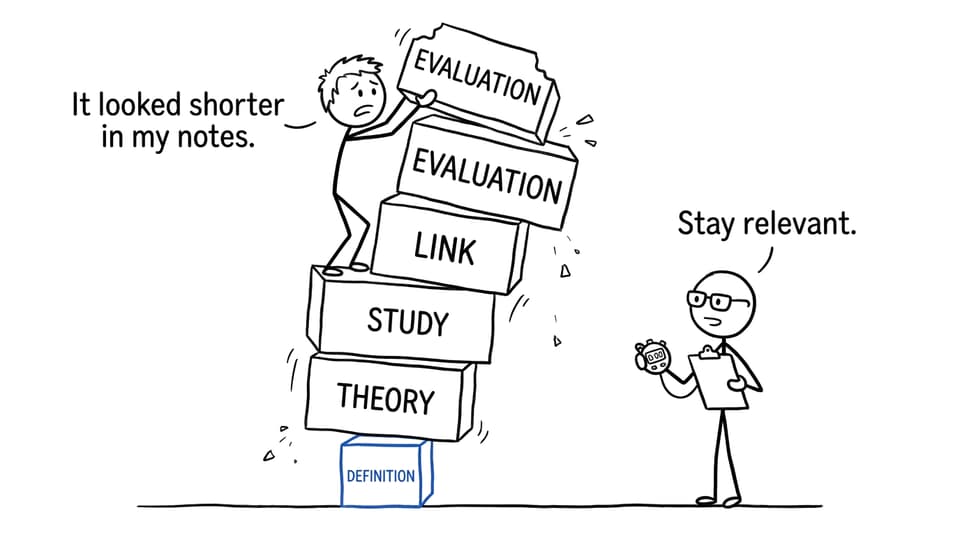
Begin directly: biological preparedness is an evolved predisposition to form some associations more readily than others because those associations may have had adaptive value.
Explain the mechanism
State that experience is still required, but the organism is not equally receptive to every possible association. Link preparedness to selective learning rather than biological determinism.
Use evidence
Describe the aim, essential procedure, relevant result, and conclusion of Garcia and Koelling. Do not spend most of the response listing procedural details. The result matters because taste was selectively associated with nausea, while audiovisual cues were more readily associated with shock.
Link the evidence back
End the paragraph by explaining why the result supports the theory: biologically relevant cue-consequence combinations were acquired more readily than arbitrary combinations.
For a command such as evaluate, add a reasoned judgment. Animal research offers control over cues and consequences, but generalization to human fears is limited. Preparedness also struggles to explain fears without an obvious evolutionary basis. Review how IB command terms shape answers before deciding how much description, explanation, or evaluation to include.
Students on the earlier course can refine concise responses with RevisionDojo's guide to writing a strong Psychology SAQ. Whatever your cohort, use the question wording and current assessment criteria rather than forcing a memorized essay into an unsuitable prompt.
Common mistakes and misconceptions
Saying that the fear itself is inherited
Preparedness is a predisposition to learn an association. Avoid claiming that every person is born afraid of snakes or heights.
Treating preparedness and classical conditioning as rivals
Preparedness modifies the conditioning explanation. It proposes that some associations are easier to condition because of biological constraints.
Describing a study without using it
A study earns its place through its connection to the argument. After each result, write a sentence beginning with: "This supports biological preparedness because..."
Assuming evolutionary plausibility proves the theory
An adaptive explanation can be persuasive without being directly proven. Distinguish an interpretation about ancestral survival from the observed evidence about learning.
Ignoring alternative explanations
Human fear may involve cognitive appraisals, observation, culture, prior experience, and avoidance. A balanced answer recognizes interaction rather than reducing behavior to one cause.
Quick-reference revision summary
| Exam element | What to remember |
|---|---|
| Definition | An evolved predisposition to learn certain associations more easily than others |
| Theorist | Seligman, 1971 |
| Key evidence | Garcia and Koelling, 1966 |
| Central finding | Rats selectively connected taste with nausea and audiovisual cues with shock |
| Phobia application | Some evolutionarily relevant fears may be acquired especially readily |
| Strength | Explains why conditioning is selective rather than uniform |
| Limitation | Does not fully explain every phobia or the complexity of human learning |
| Best exam habit | Define, explain, support with evidence, link, and evaluate when required |
Turn the table into active recall rather than rereading it. Cover the right column and reconstruct each point, then use the IB Psychology Questionbank to practise applying the concept. Check your responses against the priorities explained in the IB Psychology mark scheme guide.
Make the definition usable
Knowing the biological preparedness psychology definition is only the first step. Exam performance comes from moving cleanly from definition to mechanism, evidence, application, and judgment.
RevisionDojo brings that process together as the ultimate IB resource. Use its Study Notes and Flashcards to learn the theory, the Questionbank, Predicted Papers, and Mock Exams to retrieve it under pressure, and AI Chat and Grading tools to identify weak links in your reasoning. When deeper support is needed, the Coursework Library and experienced Tutors help turn isolated knowledge into disciplined psychological analysis.