
Assessment in the MYP can feel like living in two timelines.
In one, you are constantly “almost there”: drafts, practice tasks, teacher comments, peer feedback, another revision, another attempt. In the other, everything suddenly hardens into a final product that gets judged. The MYP is built to make those two timelines work together. When it works, formative assessment becomes the quiet engine of improvement, and summative assessment becomes proof you can use under pressure.
For IB students preparing for exams, this balance matters because it changes what revision looks like. You stop chasing more work and start chasing better evidence.
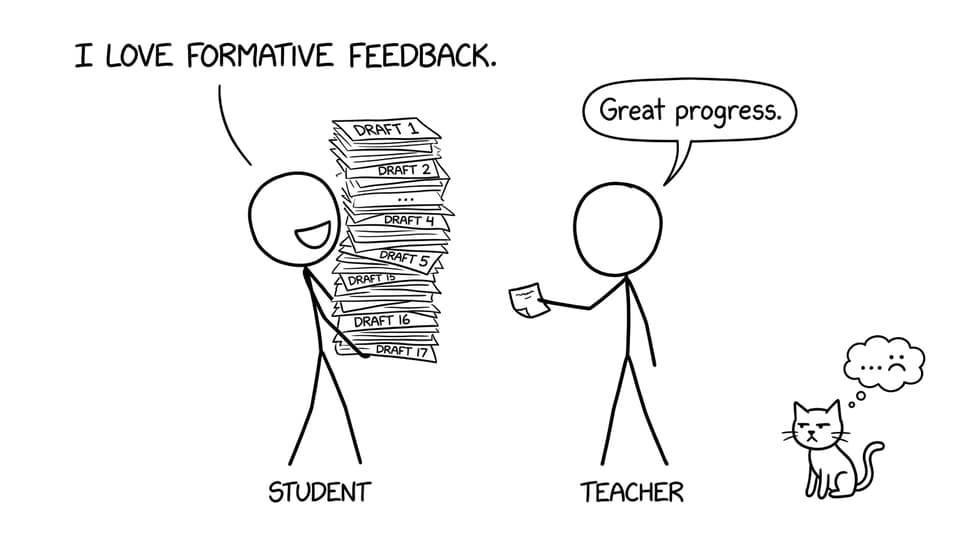
Quick checklist: the MYP balance that actually helps you score higher
Use this short checklist to keep your MYP assessment routine practical:
-
Identify which MYP criteria (A--D) you are being assessed on before you start.
-
Treat formative tasks as “practice with a purpose,” not as mini finals.
-
Convert feedback into one visible action list for the next attempt.
-
Make summatives match the unit’s inquiry (Statement of Inquiry and Global Context), not random content.
-
Build a reflection step between formative and summative so improvement is traceable.
If you want a clear picture of how criteria scoring works, keep this guide open while you work: How Are IB MYP Students Graded? Criteria Explained.
Formative vs summative in MYP (in student language)
Formative assessment in MYP: feedback you can still use
Formative assessment in MYP is assessment for learning. It happens while the learning is still flexible. The key feature is not the format (quiz, draft, discussion, prototype). The key feature is timing: you still have time to change what you do next.
High-value formative examples include:
-
A draft paragraph where your teacher marks only Criterion B structure
-
A mini lab where you practice processing data before the full report
-
A peer review that focuses on the criterion descriptors, not compliments
-
A short timed response that you rewrite after feedback
Summative assessment in MYP: evidence at the end of the loop
Summative assessment in MYP is assessment of learning. It usually comes near the end of a unit, when you are expected to bring skills together and perform with independence.
Good summatives tend to:
-
Assess multiple criteria (often more than one, sometimes A--D)
-
Require transfer, not copy-paste recall
-
Feel like a complete product (report, presentation, analysis, performance, design solution)
The simplest way to remember the difference is this: formative shapes the aim; summative shows the result.
Why balancing formative and summative matters in MYP exam prep
A common student mistake is treating the MYP like a checklist of tasks to survive. That mindset creates two problems.
First, you do lots of work but don’t get systematically better. Feedback stays in the margins, not in your habits. Second, summatives become “snapshots” of that moment’s stress level rather than evidence of your actual ability.
The MYP is designed as a loop: attempt, feedback, reflection, improved attempt, then final performance. When you respect that loop, your exam preparation becomes calmer because improvement is no longer mysterious.
If you want a broader strategy for building that loop across subjects, this helps: MYP Revision Guide: Study Tips for Success.
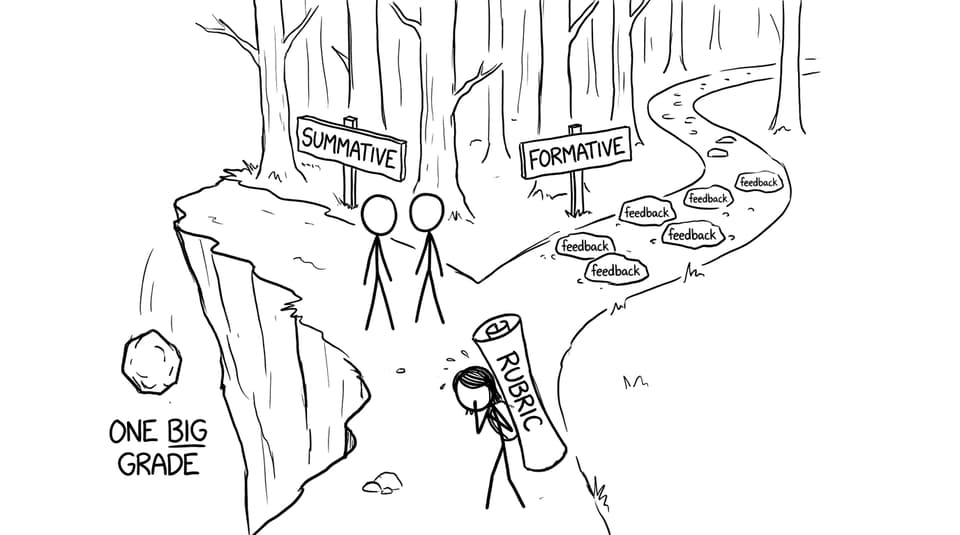
Designing formative tasks that improve your MYP summatives
Here’s the student-friendly rule: in MYP, formative tasks should be small, specific, and criteria-aligned.
Make formative work “single-criterion on purpose”
When a formative task tries to test everything at once, the feedback becomes vague. Instead, choose one main criterion focus.
Examples:
-
Individuals & Societies: practice source evaluation for Criterion A or B before the full investigation (see criteria expectations here: MYP Individuals & Societies Criteria Explained).
-
Language & Literature: do one introduction + one paragraph and get feedback on organisation and control of style (use: MYP Language and Literature Assessment Criteria Explained).
Turn feedback into “one next move”
After any formative comment, write a single sentence:
“Next time, I will __________ to improve Criterion ___.”
That one sentence is how formative assessment becomes real improvement in MYP. It also trains you for exam reflection, where you must diagnose performance quickly.
Use RevisionDojo to tighten the feedback loop
RevisionDojo is built around the practice-feedback-repeat rhythm that the MYP is aiming for.
-
Use Study Notes when you need clarity fast: Study Notes
-
Use Flashcards for daily recall (especially definitions, command terms, and formulas)
-
Use AI Chat when you’re stuck and need a “why” explanation without losing momentum
-
Use Grading tools to understand what criteria descriptors look like in real student work
-
Use Questionbank to practice applying skills under time limits
If you’re preparing for on-screen exams, this structured plan is gold: MYP eAssessments: 30-Day Study Plan That Works.
Aligning summative assessment to inquiry (so you don’t revise the wrong thing)
Summatives in MYP are supposed to feel like inquiry, not like trivia collection. That means your best prep is not memorising more pages. It’s understanding what the task is truly asking you to do.
A strong summative usually connects to:
-
Statement of Inquiry
-
Global Context
-
Conceptual understanding (key and related concepts)
-
Criteria descriptors (what “high achievement” actually looks like)
If you want a shortcut to reading tasks the way top students do, practice with this approach: Sample MYP Assessment Tasks for Every Subject Group.
A simple MYP assessment flow you can copy this week
Try this in any MYP subject:
-
Formative 1 (10--20 min): isolate one micro-skill (for example, analysing a source, structuring a paragraph, processing a data table).
-
Formative 2 (25--40 min): do a timed mini-task that resembles the summative product.
-
Feedback + reflection (15 min): write 3 “error rules” (mistakes you will not repeat).
-
Summative prep (30--60 min): create a criteria-mapped outline (headings match what the criteria reward).
That last step is where many students quietly level up in MYP: you stop writing “from vibes” and start writing from criteria.
Common pitfalls that break the MYP balance
Over-assessing yourself
More tasks can feel productive, but in MYP it often creates shallow learning. Two strong formative tasks with real reflection beat six rushed ones.
Treating formative scores like final identity
Formative work is information, not destiny. If you treat every practice attempt like a verdict, you avoid risks and your growth slows.
Switching criteria language mid-unit
If your teacher is using Criterion B wording and you’re describing your work in unrelated terms, you’ll struggle to improve. Anchor everything in MYP criteria language, consistently.
Closing: make MYP assessment feel like training, not judgement
The MYP isn’t asking you to be perfect on the first try. It’s asking you to run a loop: practice, feedback, reflection, improved performance. Formative assessment is the training session. Summative assessment is the match.
If you want that loop to feel simpler, build it inside RevisionDojo: start from the MYP hub, learn quickly with Study Notes, drill with the Questionbank, keep recall alive with Flashcards, ask AI Chat to challenge misconceptions, and use Grading tools to translate criteria into concrete upgrades. When you treat every formative moment as fuel for your next summative, the MYP becomes less about pressure and more about progress.
