


If you have ever heard a school describe itself as “IB-aligned,” you have probably felt a quiet doubt. Not because you are cynical, but because MYP assessment is picky in a very specific way. It is not “good teaching” in general. It is a shared language of criteria, unit planning, and consistent standards that should feel similar whether you are in Nairobi, New York, or Nagoya.
That is exactly why MYP accreditation matters. A school does not become an IB World School by downloading a framework and putting a logo on the website. It earns authorization through a multi-stage process that checks whether the school can actually deliver the MYP with fidelity: curriculum design, teacher training, assessment policies, and day-to-day learning culture.
For students preparing for exams, this is more than background trivia. Understanding how MYP schools are accredited helps you understand why your teachers keep talking about criteria, why feedback sounds standardized, and why your revision should be built around skills and command terms, not just content.
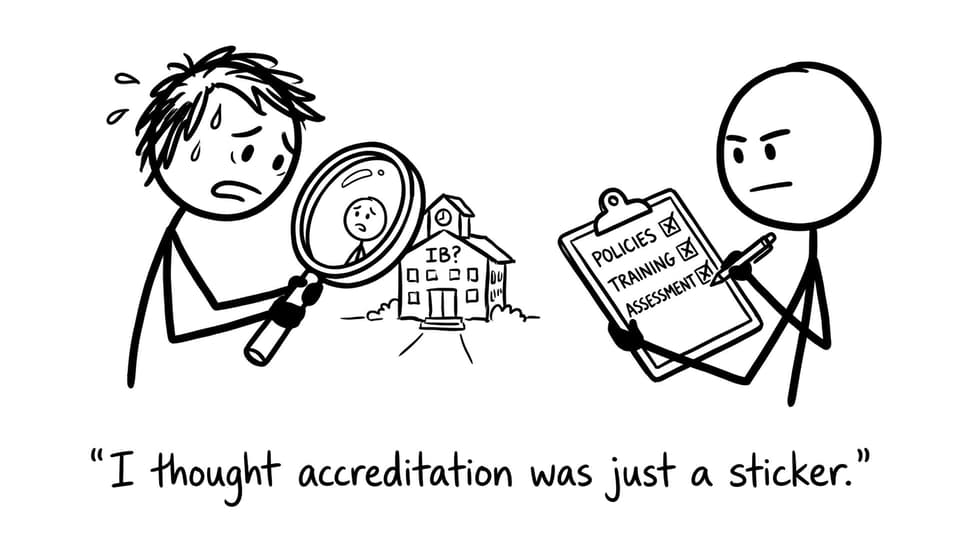
MYP accreditation at a glance (student-friendly checklist)
Here is the simplest way to remember the authorization logic. To run the MYP, a school must show it can do four things reliably:
-
Teach the programme, not a lookalike: concepts, global contexts, interdisciplinary learning, and approaches to learning.
-
Assess the MYP way: criteria-based assessment with consistent tasks, feedback, and reporting.
-
Train teachers and coordinate the system: an MYP coordinator plus ongoing professional development.
-
Prove it with evidence: policies, unit plans, student work samples, and a verification visit.
If you want to see what “programme delivery” looks like when translated into practical revision habits, start with the MYP hub on RevisionDojo and compare the skills language you see there to the language your teachers use in class.
What is an IB World School (and what it is not)
An IB World School is a school officially authorized by the International Baccalaureate to deliver one or more IB programmes, including the MYP.
What it is not:
-
A school that “uses IB resources” sometimes.
-
A school that copies MYP unit templates without the full assessment system.
-
A school that teaches internationally but cannot show it meets IB standards.
From a student perspective, the difference shows up in consistency. In a strong MYP environment, rubrics are not mysterious, feedback references the criteria strands, and tasks feel connected to skills you can practice.
This is also why RevisionDojo builds revision around repeatable loops: review concept, apply with questions, check against criteria language, and refine. That is the underlying rhythm of MYP learning, not just an exam-season hack. Use the MYP Revision Guide to build that rhythm early.
How schools become authorized to offer the MYP
The authorization journey is designed to protect consistency. It usually takes around 2-3 years, because the IB is not only checking paperwork. It is checking whether a school can make the MYP work in real classrooms.
Expression of interest (the school raises its hand)
A school begins by formally indicating it wants to pursue MYP authorization. This step clarifies the school’s intent, leadership readiness, and capacity to align with the IB mission.
For students, this phase is invisible. But it matters because it sets the tone: leadership commitment is often the difference between “we do projects sometimes” and a real MYP culture where assessment is coherent across subjects.
Candidate school phase (building the engine)
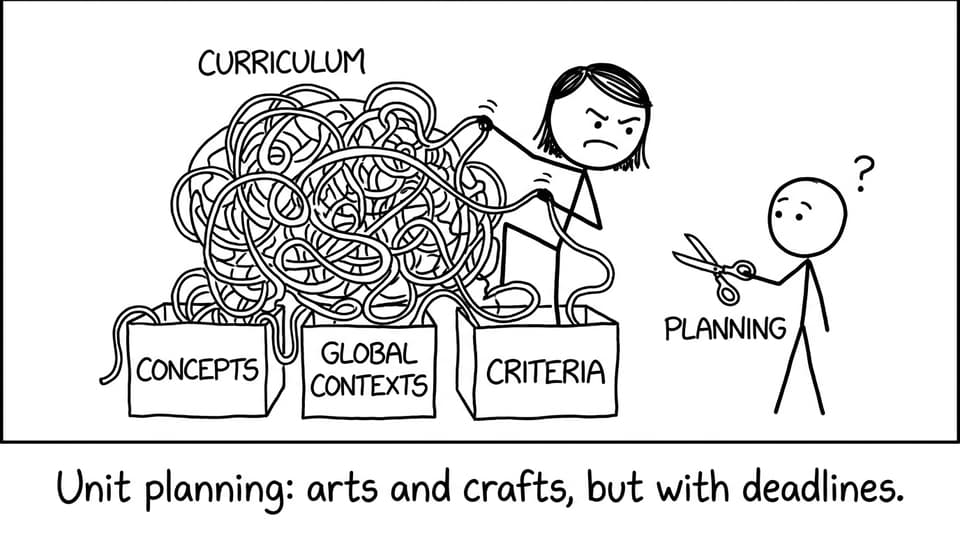
Once accepted as a candidate, the school starts the heavy lifting. This is when systems get built:
-
The school aligns curriculum planning to MYP requirements.
-
An MYP coordinator is appointed.
-
Teachers begin IB professional development.
-
Policies are written and implemented (assessment, inclusion, academic honesty).
-
Units are developed with concepts, global contexts, and inquiry.
Think of this like training for a marathon. Nobody sees the early mornings. But those early sessions decide whether race day feels manageable.
Students can mirror the same logic in revision: build the foundation before you chase speed. RevisionDojo makes this easier because you can move from understanding to application quickly with Study Notes and subject resources and then reinforce memory through Flashcards.
Request for authorization (evidence, not promises)
When the school believes it meets the standards, it submits a formal request for authorization. This includes evidence that MYP is actually functioning:
-
Curriculum documentation and unit plans
-
Proof of teacher training
-
Assessment approaches and examples
-
Policy documents and mission alignment
-
Evidence of interdisciplinary learning and service as action
If you are an exam student, notice what the IB is really testing here: not “Do you have smart teachers?” but “Can your school produce consistent, criteria-based outcomes?”
That is also the logic behind RevisionDojo’s Grading tools and AI Chat: they push you to explain your thinking, correct misconceptions, and align with the language marks are actually awarded for.
Verification visit (does the school walk the talk?)
After reviewing documentation, the IB conducts a verification visit. Evaluators typically:
-
Observe teaching and learning
-
Talk to leadership, teachers, and students
-
Review student work and assessment design
-
Check whether the school environment supports the programme
This is where a school’s “paper MYP” either becomes real or gets exposed.
What IB evaluators are looking for in MYP schools
The IB authorization process is anchored in standards and practices. In plain language, evaluators look for signals of consistency across the whole school.
Philosophy and culture
Does the school genuinely share the IB mission and learner profile values? In the MYP, this shows up in reflection, international-mindedness, and a willingness to learn from feedback rather than hide mistakes.
Organization and resources
A school needs time, staffing, and systems. Without protected planning time, the MYP becomes a patchwork.
Curriculum and assessment
This is the heart of it: are units built around inquiry, concepts, and global contexts? Are students assessed through criteria-based tasks that match IB expectations?
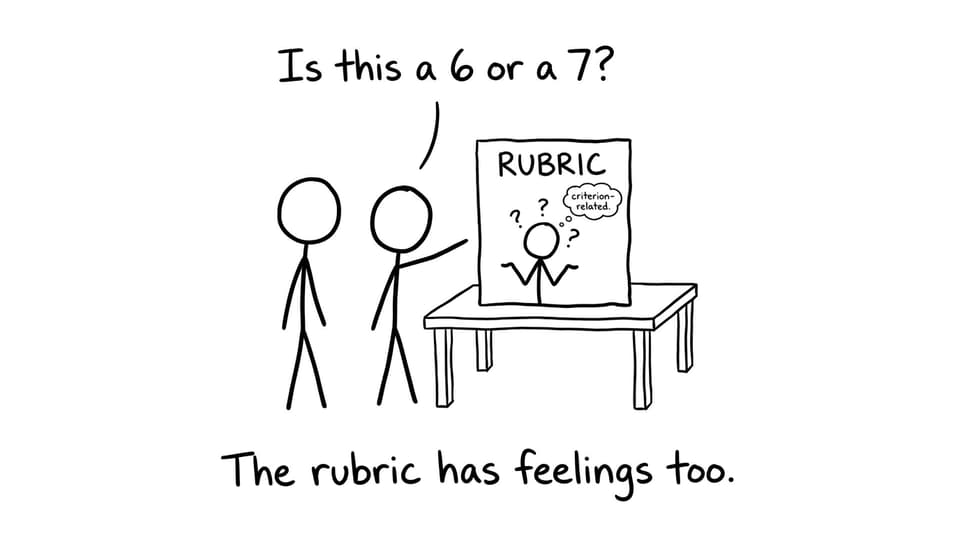
If you want to understand what “criteria-based” looks like in practice, read How Are IB MYP Students Graded? Criteria Explained. It helps you translate teacher feedback into actionable revision steps.
Maintaining MYP authorization (it is not a one-time badge)
Authorization is not permanent. Schools undergo regular evaluation cycles (often every five years). The goal is continuous improvement: the IB checks whether the school still meets standards and responds to recommendations.
For students, this matters because it reinforces a core MYP truth: quality is not a moment. It is a system. Your grades rise the same way. Not through one heroic weekend, but through small loops repeated until they become boring.
If you need a structured loop for exam season, use MYP eAssessments: 30-Day Study Plan That Works. It integrates RevisionDojo’s Questionbank, Study Notes, Flashcards, AI Chat, Mock Exams, Predicted Papers, and Grading tools in a repeatable schedule.
How to verify a school is authorized for MYP
If a school claims it offers the MYP, the simplest verification method is the IB’s official “Find an IB World School” directory on ibo.org.
Why this matters: “IB-style” is not authorization. If the school is not listed, it is not officially recognized as an IB World School for MYP.
Closing: treat MYP accreditation like a signal you can use
MYP accreditation is not a marketing label. It is a promise that a school has built the structures needed to teach, assess, and improve in a consistent IB way. For exam-focused students, that promise is useful because it turns “working hard” into “working with a target.”
If you want your revision to feel just as structured, start at the RevisionDojo MYP hub, then build a weekly loop using Questionbank practice, Study Notes, Flashcards, AI Chat, and timed Mock Exams. When MYP expectations are clear, you do not need motivation speeches. You need repetition, feedback, and calm follow-through.


