

Interdisciplinary tasks in the MYP can feel like a trick question.
You walk in thinking you’re being tested on two subjects. Then the real markscheme quietly asks something bigger: Can you connect them in a way that creates new understanding? That’s the heart of interdisciplinary learning in the MYP -- and it’s also why assessment can feel confusing when you’re revising for exams.
The good news: interdisciplinary assessment is not mysterious. It’s structured. It has criteria. And once you learn what “synthesis” looks like on paper (and on-screen), you can practise it like any other exam skill.
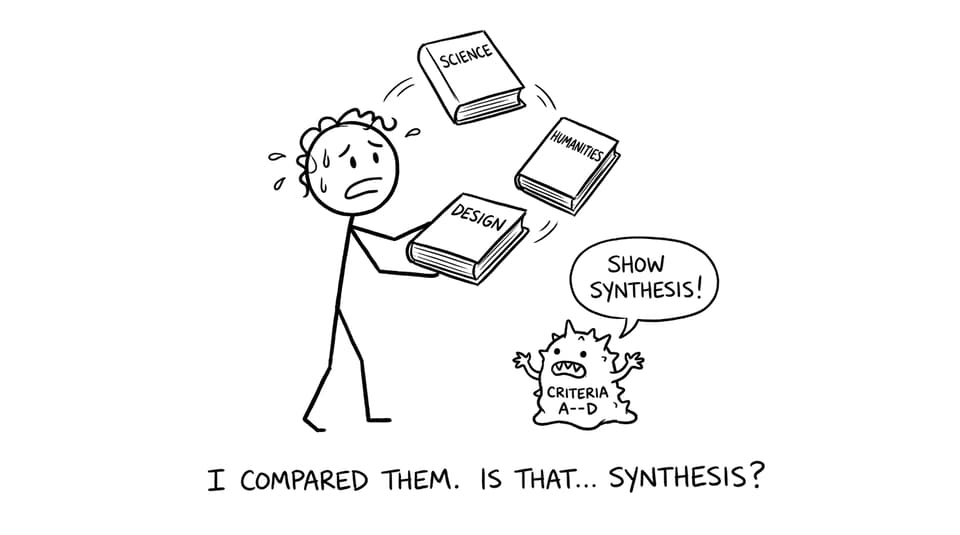
Quick checklist for MYP interdisciplinary success
Use this right before you start an interdisciplinary task or timed practice:
-
Identify the two disciplines (and what each must contribute)
-
Re-read the Statement of Inquiry and Global Context (your “why”)
-
Plan evidence for Criteria A--D (don’t wait until the end)
-
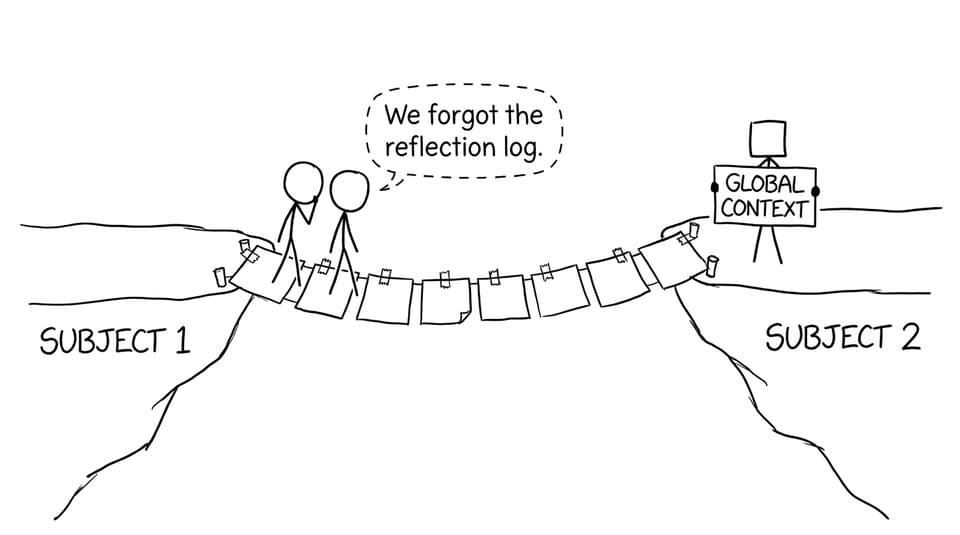
Build one explicit “bridge paragraph” where you combine ideas (this is usually Criterion B gold)
-
Add reflection notes as you work (so Criterion D is real, not rushed)
If you want broader exam structure around this, pair the checklist with the MYP eAssessments: 30-Day Study Plan That Works to turn interdisciplinary skills into a weekly habit.
What “interdisciplinary” really means in the MYP
In the MYP, interdisciplinary learning isn’t just doing two subjects next to each other. It’s using two disciplines to answer a single inquiry in a deeper way than either subject could manage alone.
A quick way to test whether your work is truly interdisciplinary:
-
Not interdisciplinary: “Here is what science says. Here is what individuals and societies says.”
-
Interdisciplinary: “Because science shows X and individuals and societies shows Y, the best solution is Z -- and here’s why the trade-off matters.”
That “because” sentence is where your marks often live.
To ground your understanding of the programme itself, it helps to start from the Middle Years Program (MYP) hub and keep your criteria language consistent across subjects.
The MYP interdisciplinary criteria (A--D) students are marked on
Interdisciplinary assessment in the MYP uses four criteria. Each criterion is scored on a 0--8 scale, and teachers use best-fit judging.
Criterion A: Disciplinary grounding
This is your proof that you actually understand each subject involved. In exam terms, Criterion A is where you show correct concepts, accurate terminology, and subject-appropriate methods.
Student tip: when you revise, practise writing two short “mini explanations” -- one per subject -- before you even try to connect them.
If you’re still unsure how criteria-based grading works across the programme, read How Are IB MYP Students Graded? Criteria Explained.
Criterion B: Synthesizing disciplinary knowledge
Criterion B is the difference between two good answers and one excellent answer. You’re rewarded for building a connection that changes the conclusion, the solution, or the insight.
High-scoring synthesis usually includes:
-
a clear link (cause/effect, compare/contrast with purpose, systems thinking)
-
a combined claim (new understanding, not two separate summaries)
-
a decision or implication (what the connection means)
Criterion C: Communicating understanding
This is about clarity and control. You can have brilliant synthesis and still lose marks if it’s messy.
In the MYP, “communication” often means:
-
choosing an appropriate format (report, presentation script, infographic rationale)
-
using subject vocabulary correctly
-
structuring ideas so a stranger can follow your logic
If you want a very practical criteria breakdown example, see how it’s done in a subject context like MYP Language and Literature Assessment Criteria Explained.
Criterion D: Reflecting
Reflection in MYP interdisciplinary work is not a diary entry. It’s an evaluation of how the integration worked, what you would improve, and what you learned about learning.
The fastest way to upgrade Criterion D is to reflect on:
-
what each discipline contributed (and what it couldn’t)
-
which connection was strongest (and why)
-
what you’d do differently next time (with one concrete change)
How to design (and revise for) MYP interdisciplinary tasks that score well
Even though students aren’t “designing” the school’s assessment, you are designing your performance. Here’s how to practise in a way that matches how interdisciplinary tasks are assessed in the MYP.
Start from the Statement of Inquiry (not the topic)
A strong Statement of Inquiry tells you what kind of connection the task wants. If you treat it like decoration, your work becomes two parallel projects.
To get sharper at recognising what a good SOI demands, use Creating Meaningful Statements of Inquiry in the MYP.
Build a “synthesis step” into your plan
Most students plan research, content, and presentation. Then they hope synthesis happens naturally.
Instead, schedule a deliberate step:
-
write one paragraph (or slide) titled “Combined insight”
-
force yourself to use: because, therefore, however, this implies
-
end with a decision, recommendation, or new perspective
That step trains Criterion B in the MYP the same way timed drills train algebra.
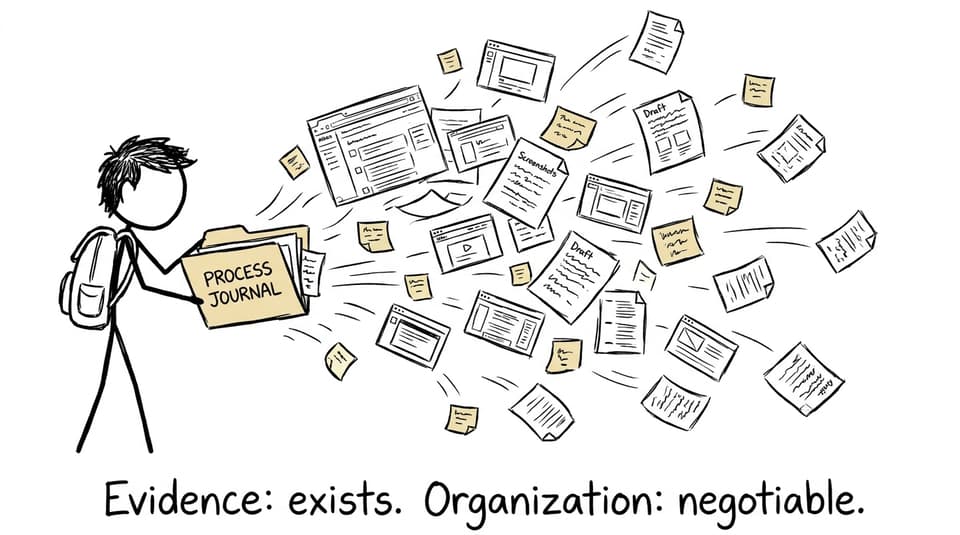
Collect evidence while you work (not after)
Interdisciplinary tasks often involve drafts, research notes, prototypes, or planning documents. These are not just “process.” They help you prove Criteria A, B, and D.
A useful companion read is Sample MYP Assessment Tasks for Every Subject Group -- it shows how tasks signal what criteria will reward.
Practising MYP interdisciplinary assessment like exam prep
Here’s what a realistic practice loop looks like for MYP students preparing for exams:
-
Study Notes (10 min): refresh the key ideas from both subjects
-
Questionbank (20--30 min): practise short-response or scenario questions that force application
-
Mock Exams / Exam Mode (20--40 min): simulate time pressure and digital habits
-
Grading tools (10 min): check whether your synthesis is actually visible
-
Reflection (5 min): write two sentences for Criterion D-style thinking
RevisionDojo is built around this loop. Use the Questionbank to practise frequently, then tighten your work with AI Chat, Flashcards, and rubric-aligned feedback so the MYP criteria stop feeling abstract.
For general revision structure, the MYP Revision Guide: Study Tips for Success pairs well with interdisciplinary prep because it keeps your routine steady across subjects.
Bringing it home: MYP interdisciplinary assessment is a skill you can train
Interdisciplinary learning in the MYP is really a promise: school won’t just test what you remember, but how you think when ideas collide.
When you understand Criteria A--D, you stop guessing. You start building answers that are grounded, connected, clearly communicated, and honestly reflected on. And when you practise that loop with RevisionDojo -- using Questionbank, Study Notes, Flashcards, AI Chat, Grading tools, Predicted Papers, Mock Exams, the Coursework Library, and Tutors -- interdisciplinary assessment in the MYP turns from stressful to predictable.
If you’re revising right now, pick one upcoming task and rewrite it in criteria language: “To score well in the MYP, I must show A, then prove B, then communicate C, then reflect D.” That single sentence can change how you work tomorrow.