


If you have ever watched your calendar fill up with deadlines, you already understand the quiet power of anything you can control. That is what the IB Math Internal Assessment is: a rare section of the course where your final result is shaped less by exam-day nerves and more by choices you make over weeks. In a subject as unforgiving as IB Math, that difference matters.
The quick checklist: what the IB Math IA really does
Before we get into the reasons, keep this simple overview in mind:
-
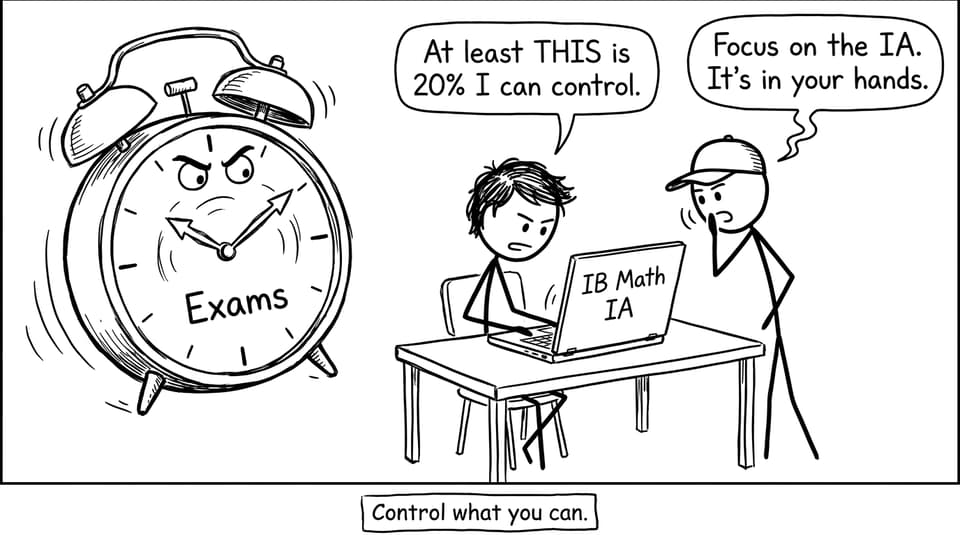
The IB Math IA is worth 20% of your final Mathematics grade (AA and AI).
-
Exams still decide the other 80%, but the IA can raise or sink your outcome.
-
It rewards clear structure, correct mathematics, reflection, and personal engagement.
-
Done well, it becomes a study tool for the exam syllabus, not a distraction from it.
If you want a solid foundation before you write, start with How to Write a Top-Scoring Math IA (2025 Guide).
Why the IB Math IA is so important: 5 key reasons
It counts for 20% of your IB Math grade (and it is controllable)
In IB Math, a lot of students treat the IA like a side quest. Then results day arrives and they realize that 20% is not “small” at all. It is the difference between being safely on a boundary and missing it.
The deeper reason this matters is psychological. Your IA mark is built across drafts, feedback, and revision. That means you can improve it deliberately. Exams measure performance under pressure; the IA measures your ability to refine thinking.
To keep that 20% from becoming guesswork, use rubric tools early, not at the end. RevisionDojo’s IB Maths AI IA Grader is designed for exactly this kind of checkpointing.
It turns “school math” into real IB Math thinking
The IA pushes you past repeating procedures. You have to choose assumptions, justify a method, interpret results, and admit limitations. That is what IB Math examiners mean by mathematical communication and reflection.
A good exploration feels like a small story: you begin with curiosity, hit a wall, change approach, and explain why. That narrative is not fluff; it is evidence of thinking.
If you are unsure how to build that narrative, the structure matters more than most students expect. This guide helps: How to Structure Your IB Math IA Logically.
It lets you choose a topic you actually care about (and scores reward that)
Your topic is not just decoration. In IB Math, examiners reward personal engagement when it shows ownership: why this question, why these choices, why this interpretation.
That is why “safe” topics copied from vague online templates often underperform. They read like someone else’s thinking. When you build an IA around something you genuinely notice in the world, your reasoning naturally becomes more specific and more believable.
To brainstorm without drifting into something unmanageable, use The Best IB Math IA Topics for 2025 and then narrow to a single measurable relationship.

It builds exam-ready skills without feeling like exam prep
Here is the quiet secret: strong IA students often become stronger exam students in IB Math.
Why? Because the IA forces you to:
-
explain steps with precision,
-
check whether answers make sense,
-
use notation consistently,
-
interpret graphs and models,
-
and reflect on errors and limitations.
That is basically the skill set behind high-mark solutions.
Keep your exam technique alive while writing by pairing coursework time with short targeted drills. RevisionDojo makes this easy through the How to Use the Questionbank for Targeted Math Revision workflow, plus Flashcards and Study Notes when your brain is too tired for full problems.
It teaches you to communicate mathematics clearly (a huge IB Math differentiator)
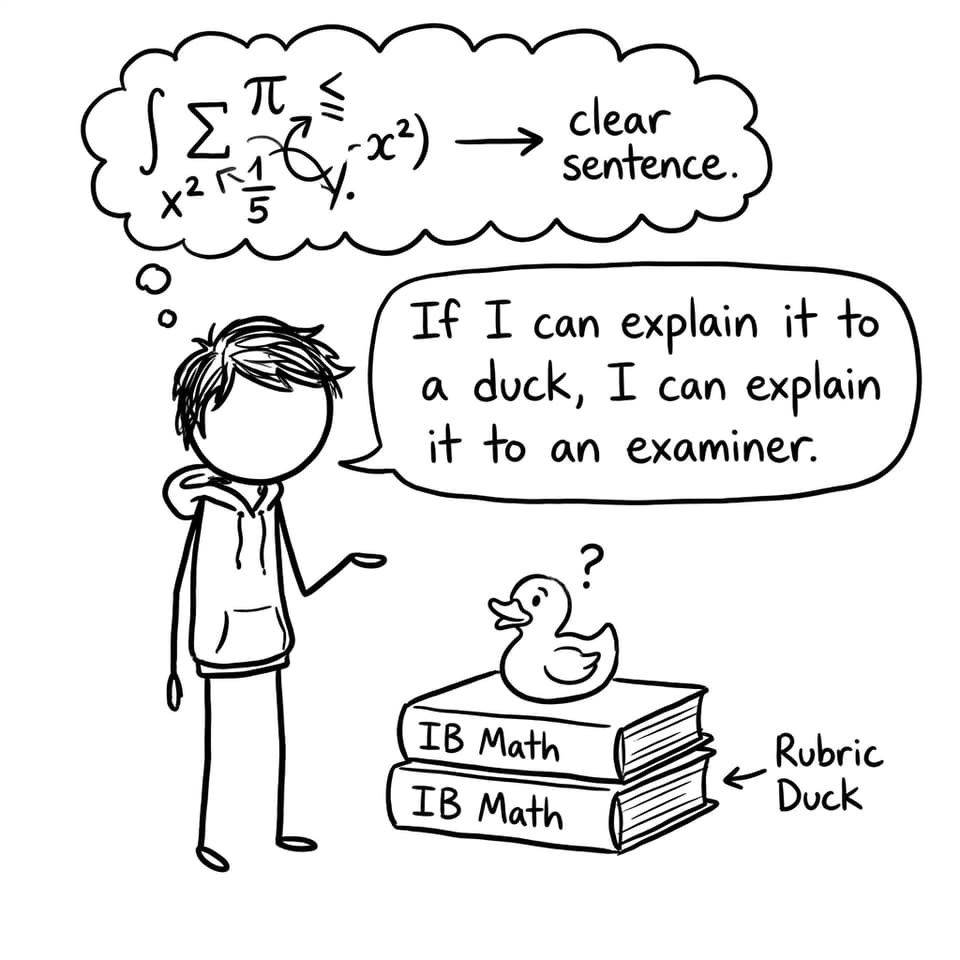
Many students can do the math but lose marks in IB Math because their work is hard to follow. The IA is communication training: headings, graphs, captions, defined variables, and reasoning that connects each step.
If you treat presentation as an afterthought, you end up rewriting everything under deadline pressure. If you treat it as part of the math, your work becomes calmer to produce and easier to assess.
A practical resource: How to Format and Present Your IB Math IA Professionally. For rubric clarity, the criteria breakdown in Essentials of the Internal Assessment is worth keeping open while you write.
A simple way to maximize your IB Math IA impact
Pick a narrow question and commit to one main method
A focused exploration beats an ambitious mess. In IB Math, depth is safer than breadth.
Use exemplars to calibrate what “good” looks like
Reading one strong example can save you hours of uncertainty. Browse RevisionDojo’s IB Maths AA IA Examples or IB Maths AI IA Examples to see how top students explain steps and reflection.
Build feedback loops: AI Chat + grading tools
RevisionDojo’s AI Chat is useful for pressure-testing your reasoning (“Does this assumption hold?”), while Grading tools help you align each section to the rubric early.
Conclusion: treat IB Math IA work as future exam confidence
The IB Math IA is not just “another assignment.” It is 20% of your grade, a rehearsal for mathematical writing, and a chance to prove you can think independently when the question is not pre-written for you.
If you want to turn your IA into an advantage, use RevisionDojo as your basecamp: IA Guides for structure, the Coursework Library for exemplars, AI Chat for thinking support, Grading tools for rubric accuracy, and then keep exam readiness alive with Study Notes, Flashcards, the Questionbank, Mock Exams, and Predicted Papers.
When you do it that way, IB Math stops feeling like a gamble and starts feeling like a system.