

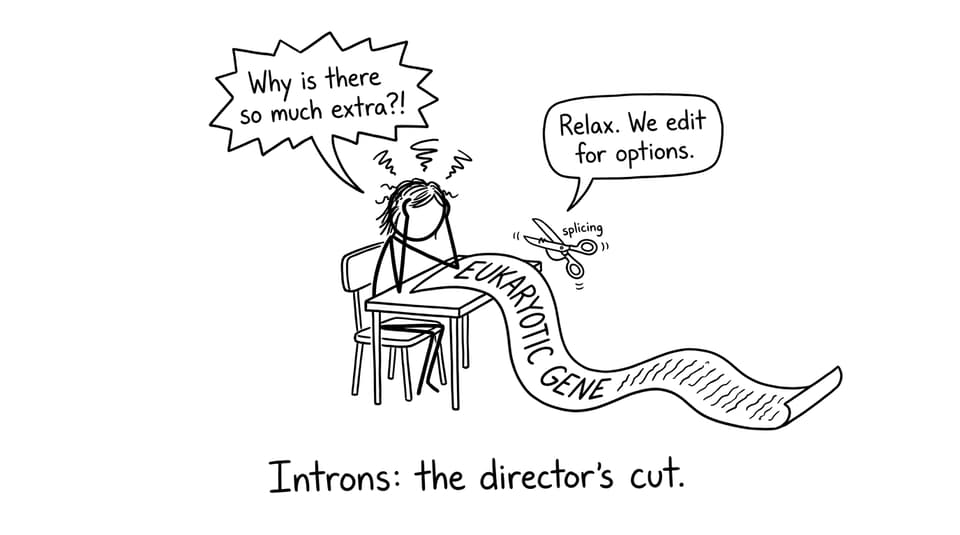
If eukaryotic DNA were a school essay, it would look like a mess: long stretches that get deleted, rearranged, and re-stitched before anyone "hands it in." And yet, that apparent mess is one reason complex organisms work at all. In IB Biology, introns and exons can feel like extra vocabulary to memorize. But once you see that they buy a cell flexibility, control, and room to evolve, the structure stops looking inefficient and starts looking strategic.
Introns vs exons: the 10-second refresher (IB Biology)
Eukaryotic genes are typically split into:
-
Exons: coding sequences that remain in the final mRNA and help determine the amino acid sequence.
-
Introns: non-coding sequences that are transcribed into pre-mRNA but removed during splicing.
If you want the clean, syllabus-aligned version for IB Biology, pair this article with RevisionDojo’s notes on post-transcriptional modification in eukaryotic cells and the core overview of gene expression.
How introns and exons benefit eukaryotic genes
The benefits aren’t "one big reason." They’re a set of small advantages that stack up, like tiny mark gains across a Paper 2.
Alternative splicing: one gene, multiple proteins
The headline advantage (and a favorite in IB Biology) is alternative splicing. Because exons can be joined in different combinations, a single gene can generate multiple mRNA transcripts, leading to multiple protein variants. That’s a big deal for multicellular organisms: a muscle cell and a neuron can use the same DNA, yet produce different proteins.
RevisionDojo breaks this down clearly in Alternative Splicing of Exons, and it’s worth drilling with the IB Biology Topic D1.2: Protein Synthesis hub so you can connect splicing to transcription and translation.
Regulation: more "control panels" for gene expression
Introns often contain sequences that influence when, where, and how much a gene is expressed. Think of them as extra dials and switches embedded inside the gene. For eukaryotes, that fine-tuning matters: development, cell specialization, and response to signals all rely on precise regulation.
To connect gene structure to regulation the way examiners like it, read How Gene Structure Controls Expression and keep the definitions tight using the IB Biology glossary.
Evolutionary flexibility: safer recombination and exon shuffling
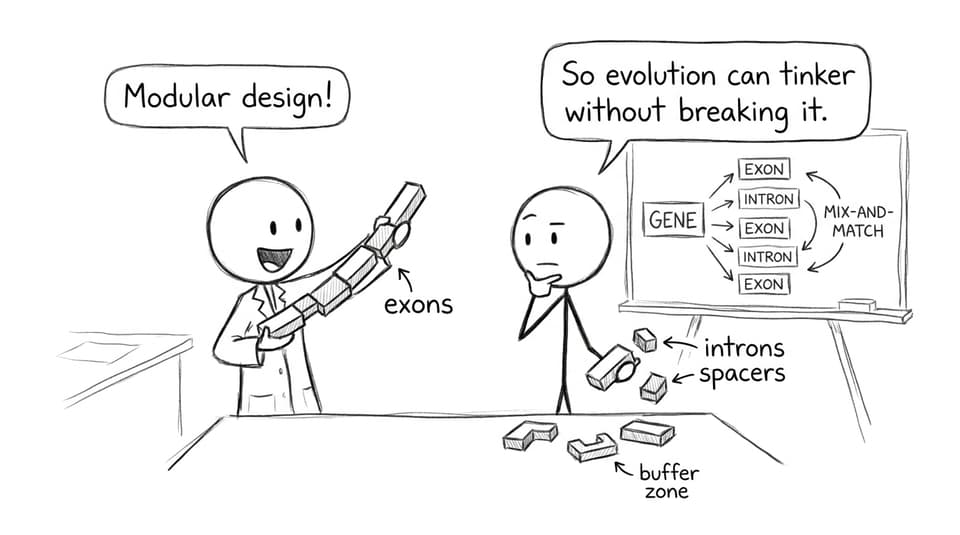
Over long timescales, introns create "buffer zones" that reduce the chance that recombination events destroy essential coding information. Exons can be duplicated or rearranged more safely, increasing the chances of new functional proteins emerging.
In exam terms, this is an elegant justification for why eukaryotic genomes tolerate extra non-coding DNA: it supports innovation without constantly breaking the parts that already work.
mRNA processing as quality control (and efficiency)
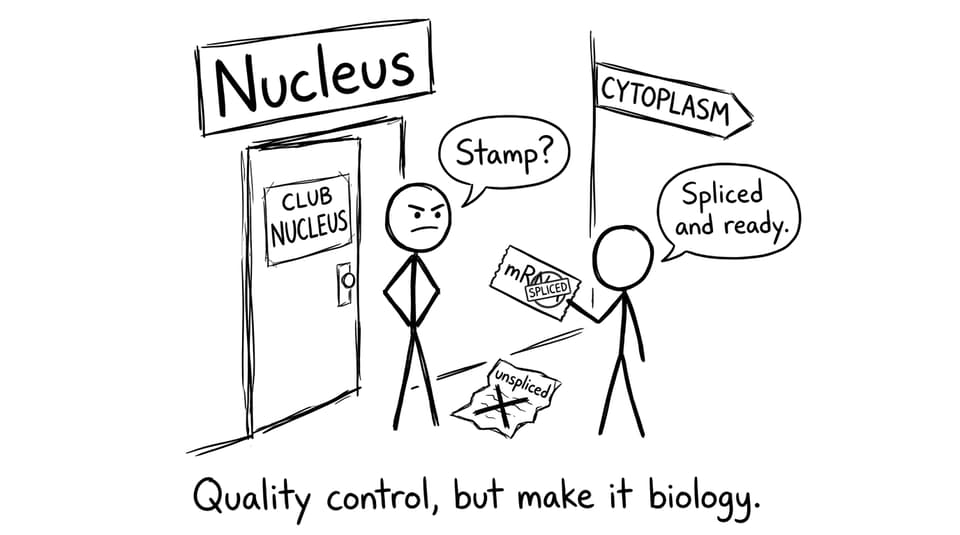
Splicing is not just deletion; it’s also a checkpoint. Eukaryotic cells process pre-mRNA (including adding a 5' cap and poly-A tail) and then export mature mRNA to the cytoplasm. The act of correct splicing helps ensure the transcript is "approved" for export and translation.
For IB Biology revision, anchor this to the bigger story of transcription and processing using Gene Expression HL notes.
Quick exam checklist (IB Biology)
Before you move on, make sure you can do these quickly:
-
Define intron, exon, and splicing in one sentence each.
-
Explain alternative splicing and why it increases protein diversity.
-
Give one regulatory reason introns are useful.
-
Give one evolutionary reason introns are useful.
-
Link splicing to mRNA maturation and nuclear export.
To turn that checklist into marks, practise with RevisionDojo’s Questionbank and then lock it in using Flashcards. If you get stuck explaining your logic, use AI Chat to rehearse full-mark responses and command-term wording.
Bring it home with RevisionDojo
Introns and exons aren’t biological clutter; they’re how eukaryotes buy options: options to splice differently, regulate tightly, and evolve safely. If you’re revising IB Biology, learn the concept once, then turn it into marks by practising it.
On RevisionDojo, you can move from notes to performance fast: use Study Notes to get the model explanations, the Questionbank for exam-style practice, Grading tools to check written responses, and Mock Exams plus Predicted Papers to simulate the pressure. Add Flashcards for retention, the Coursework Library when your IA needs clarity, and Tutors when you want a human to spot what you’re missing. Master introns and exons now, and you’ll feel the difference across gene expression questions in IB Biology.