
If you have ever joined a group chat halfway through the year, you know the feeling: new ideas arrive, old jokes change, and the whole vibe shifts. In IB Biology, gene flow works the same way. One movement event, such as a few migrants, drifting pollen, or a seed carried by wind, can quietly reshape the genetic structure of a population.
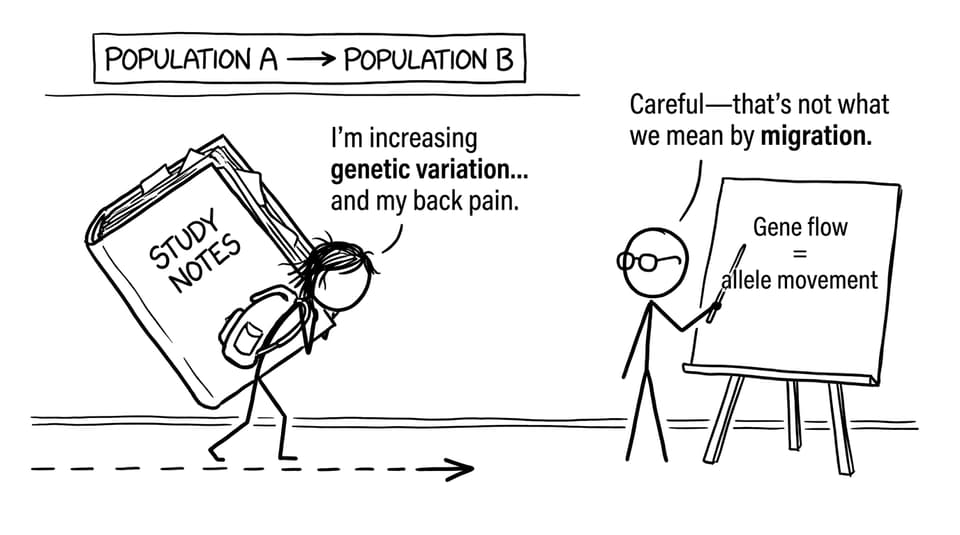
Gene flow (often called migration in population genetics) is the transfer of alleles between populations. It sounds simple, but it pulls on three big exam threads at once: genetic variation, differences between populations, and the tension between local adaptation and outside influence.
IB Biology quick checklist: what gene flow does
Keep these exam-ready statements in your head (and in your flashcards):
-
Gene flow adds alleles to a population, often increasing genetic diversity.
-
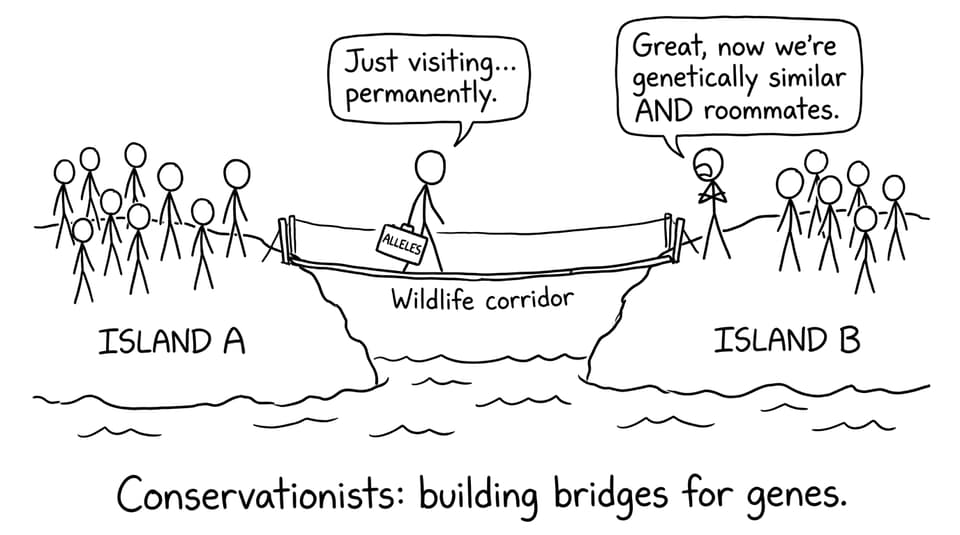
Gene flow reduces genetic differences between populations, making them more similar.
-
Gene flow can oppose genetic drift, especially in small populations.
-
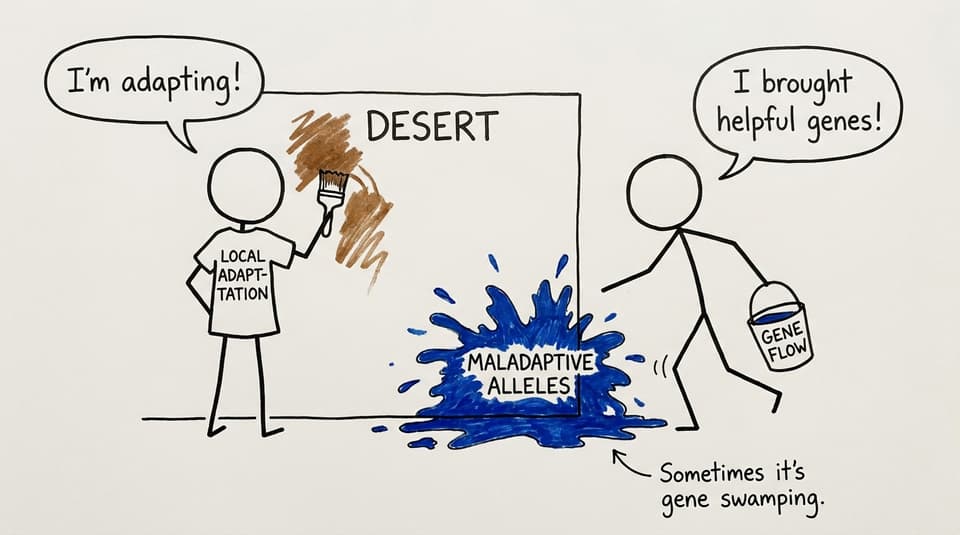
Gene flow can slow local adaptation if incoming alleles are maladaptive (gene swamping).
To lock down the wider evolution context, pair this with What Is Natural Selection in IB Biology? and the core Evolution and Speciation notes.
How gene flow changes genetic structure in IB Biology
Gene flow increases variation within a population
When individuals (or gametes like pollen) move between populations and reproduce, they bring alleles that were previously absent or rare. That matters because selection can only work on existing variation. More variation can mean better disease resistance, less inbreeding depression, and more raw material for evolution.
If you want a fast way to revise allele language, connect gene flow to your basics on genes and alleles using 3.1 Genes Notes.
Gene flow reduces differences between populations
Populations split by distance usually drift apart over time. But if alleles keep moving across that boundary, the populations stay genetically similar. This is why gene flow is often described as creating genetic cohesion within a species.
It also sets up a classic comparison question: drift increases divergence by chance, while gene flow pushes populations back toward similarity. For that contrast, revise with How Natural Selection and Genetic Drift Differ as Evolutionary Mechanisms.
Gene flow can fight drift (especially in small populations)
In small populations, drift can remove alleles quickly just by random sampling. Even occasional gene flow can reintroduce alleles that were lost, increasing heterozygosity and lowering the risks linked to inbreeding.
A good way to practice the wording the IB likes is to drill exam-style questions from the Genetics and evolution (HL) Questionbank.
Gene flow can slow local adaptation (gene swamping)
Here is the twist students forget: gene flow is not automatically “good.” If a population is adapting to local conditions (say, a dry habitat), migration from a wetter habitat might introduce alleles that reduce fitness in the dry environment. The result is gene swamping; selection is trying to push one way, while gene flow keeps pulling the allele frequencies back.
This becomes especially relevant when you revise speciation and reproductive barriers. If gene flow is high, populations struggle to diverge; if gene flow drops, divergence can accelerate. Useful support reading: Roles of Reproductive Isolation and Differential Selection (A4.1.7) Notes.
Study smarter with RevisionDojo (fast, exam-focused)
When gene flow feels slippery, it usually is not the concept: it is the application. RevisionDojo helps you practice it from multiple angles: use the Study Notes to get the clean definitions, then move straight into the Questionbank for data questions that involve allele frequency shifts. Build Flashcards for terms like “genetic cohesion” and “gene swamping,” and use AI Chat to test yourself with: “Explain how gene flow affects divergence between two populations.”
If you are revising across the whole course, start from Biology - IB Resources and add the Biology Cheatsheets - Visual Study Guides for fast recall.
Closing: make gene flow an easy mark
Gene flow is one of those IB Biology topics that looks small until it shows up everywhere: evolution, biodiversity, speciation, and conservation. Remember the core pattern: it tends to increase variation within populations, reduce differences between populations, and sometimes disrupt local adaptation.
If you want this to become automatic under exam pressure, use RevisionDojo’s Questionbank, Study Notes, Flashcards, AI Chat, Grading tools, Predicted Papers, Mock Exams, Coursework Library, and Tutors to turn gene flow from a definition into a skill you can apply in any data set or essay prompt.