


In IB Business Management, stakeholder conflict can feel like the plot of every case study: one decision, five groups, ten opinions. A company announces a new strategy and suddenly the same move is called “essential,” “unfair,” “too expensive,” and “not ethical enough” at the same time. That chaos isn’t a flaw in the syllabus. It’s the point. Businesses are built on trade-offs, and stakeholders are the people who feel those trade-offs first.
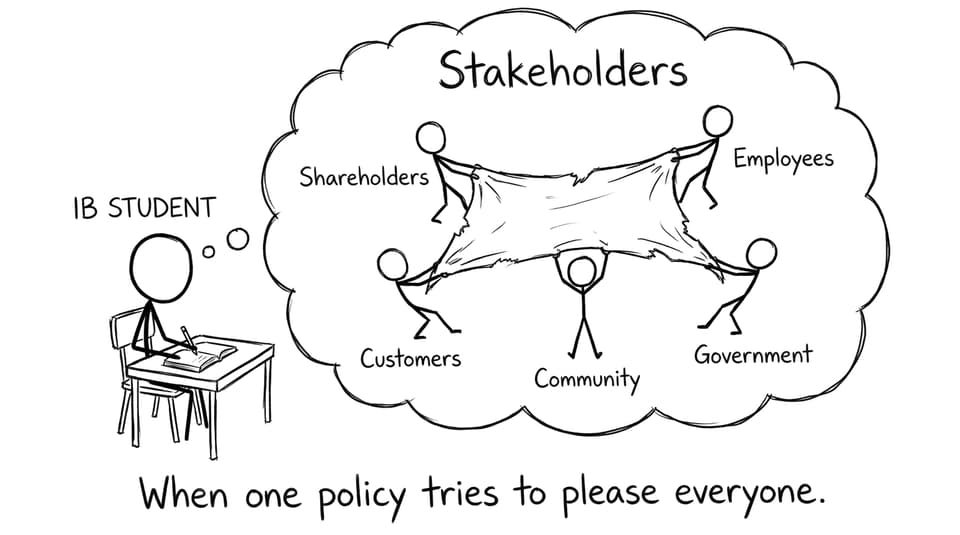
What stakeholders want (quick exam checklist)
For IB Business Management, start by mapping the usual objectives:
-
Shareholders/owners: profit, dividends, growth, lower risk
-
Employees: pay, security, safety, development
-
Customers: value, quality, ethical products, reliable service
-
Suppliers: stable orders, fair terms, long relationships
-
Government/community: taxes, jobs, legal compliance, sustainability
If you need a clean definition-based refresher, RevisionDojo’s 1.4.1 Internal and External Stakeholders notes keep it syllabus-tight.
Why stakeholder groups often disagree in IB Business Management
Their interests collide over limited resources
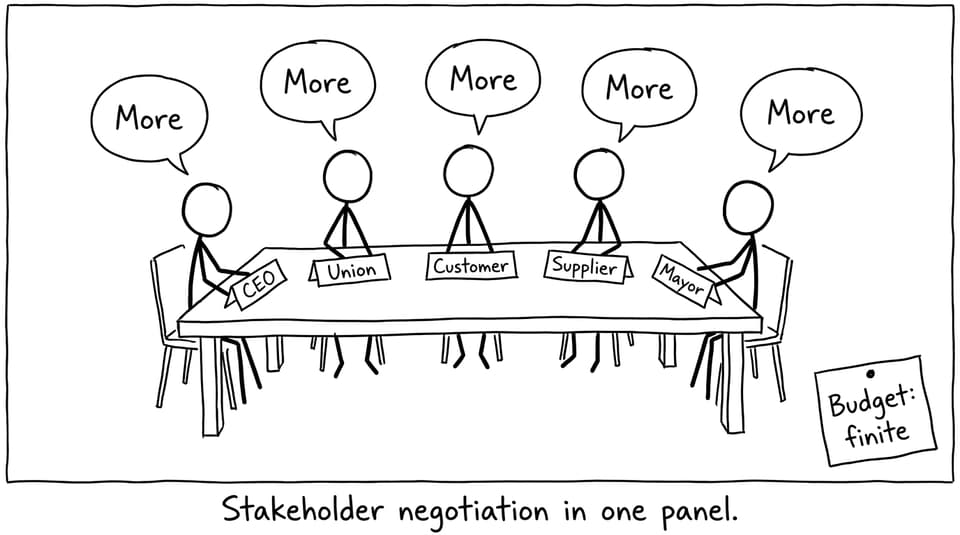
Most conflict is just scarcity wearing a formal suit. If a firm increases wages, that money can’t also be paid out as dividends. If it cuts prices to satisfy customers, margins may shrink and suppliers may be squeezed. In IB Business Management, this is the core logic behind stakeholder conflict: incompatible objectives competing for the same budget.
For exam-ready phrasing and examples, use 1.4.2 Conflict Between Stakeholders notes and then drill the idea with the 1.4 Stakeholders Questionbank.
They think on different timelines
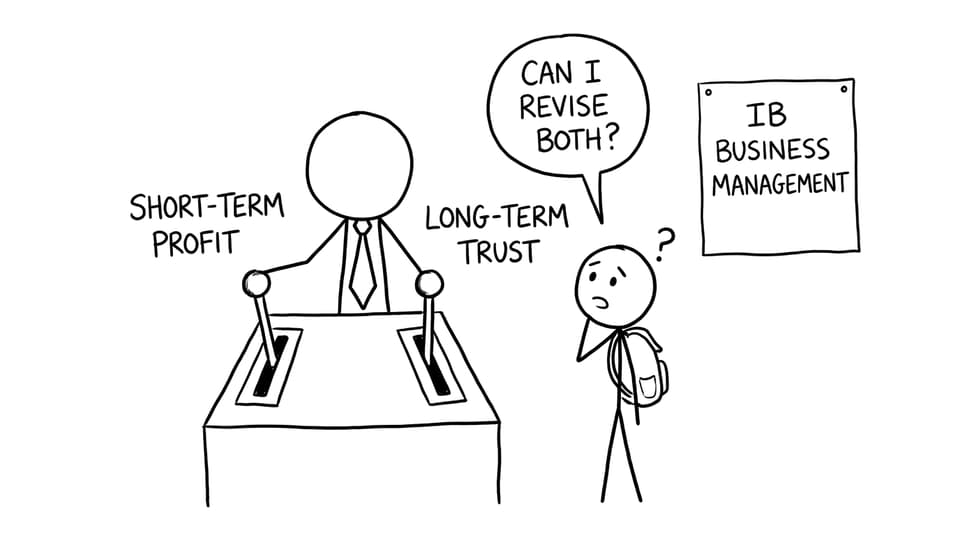
Another reason stakeholders disagree is time horizon. Shareholders might prioritise this year’s returns, while local communities focus on long-term environmental impact and trust. Employees may value stability now, while managers argue for restructuring to stay competitive later. In IB Business Management, strong evaluation often sounds like: “short-term financial gains may undermine long-term reputation and stakeholder loyalty.”
They don’t share the same information
Stakeholders also disagree because they see different slices of reality. Managers may know the cash flow is tight; employees may only see a growing workload. Customers may blame price rises without understanding supply chain constraints. Information gaps create distrust, and distrust turns ordinary trade-offs into open conflict.
How businesses find a balance (and how to write it in exams)
Balancing stakeholders in IB Business Management is rarely “make everyone happy.” It’s more like: choose priorities, explain them clearly, and reduce harm.
Use stakeholder analysis to prioritise influence and impact
A practical method is stakeholder analysis: identifying who is affected, what they want, and how much power they hold. This is especially useful in Paper 1 and Paper 2 when you must justify why a firm listens more to regulators than to a small pressure group (or vice versa). RevisionDojo’s 1.4 Stakeholders topic hub connects the concept to notes, flashcards, and practice.
Communicate early and show the reasoning
Transparency reduces conflict even when the outcome is unpopular. Firms that explain constraints, provide evidence, and involve groups earlier often face less resistance. If you want to practise writing this as evaluation, follow RevisionDojo’s exam technique guidance in How to Maximize Your Score in IB Business Management.
Build compromise into the decision design
Compromise might look like phased wage increases, targeted price promotions, or investing in sustainability while protecting margins through efficiency. In exam answers, this is your “balance” paragraph: propose a realistic middle ground and then judge it with conditions.
Conclusion
Stakeholder groups disagree because they’re responding to real trade-offs: money, time, risk, ethics, and information. In IB Business Management, your job isn’t to pretend conflict can be eliminated. Your job is to explain why it happens, then show how a business can manage it through stakeholder analysis, transparent communication, and thoughtful compromise. When you’re ready to turn this into marks, use RevisionDojo’s Questionbank, Study Notes, Flashcards, AI Chat, Grading tools, Predicted Papers, Mock Exams, Coursework Library, and Tutors to practise stakeholder balance until it feels automatic.


