


The uncomfortable truth behind “good results”
A business can look successful from the outside: strong sales, upbeat headlines, maybe even a healthy profit figure at year-end. Then, suddenly, it closes. For IB Business Management students, this is one of those exam-friendly paradoxes that feels like a trick until you’ve seen it often enough: profitability is not the same thing as survival.
In IB Business Management, this topic sits right at the intersection of finance, strategy, and operations. And it shows up constantly in case studies because it rewards students who can connect numbers to real business decisions.
Quick checklist: why profitable firms still collapse
Use this as a fast IB Business Management scan in any case study:
-
Cash flow is negative even when profit is positive
-
Debt repayments (and interest) squeeze liquidity
-
Costs rise faster than revenue during expansion
-
Forecasting and budgeting are weak or unrealistic
-
Management ignores changing customer needs
-
Short-term profit decisions damage long-term value
Cash flow problems: the classic “profitable but broke” story
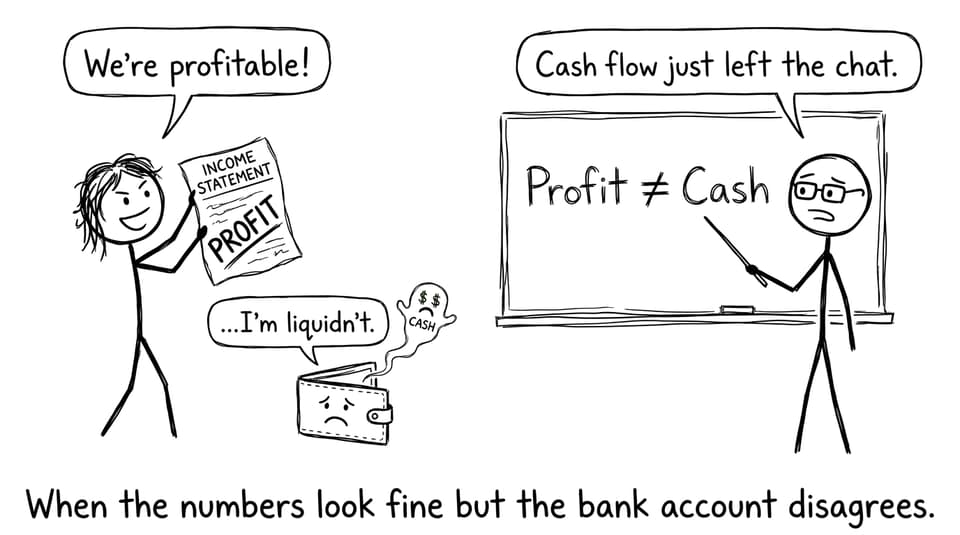
The most common reason is poor cash flow management. A company can record profit on its income statement but still lack cash to pay wages, suppliers, rent, or tax. This happens when customers pay late, when too much money is tied up in inventory, or when the firm has large one-off outflows.
If you want a syllabus-aligned explanation, connect your analysis to the difference between profit and cash flow: Difference Between Profit and Cash Flow (3.7.1 Notes). Then push it further with planning: Cash Flow Forecasts (3.7.4 Notes).
For practice, drill exam-style application using 3.7 Cash Flow Questionbank within the IB Business Management finance unit.
Debt: when growth is financed with pressure
Debt can be rational: it funds equipment, expansion, or short-term working capital. But excessive borrowing turns profit into a fragile illusion. Even if operating profit is positive, repayments are cash outflows, and rising interest rates or tighter credit terms can break a business quickly.
In IB Business Management, link this to sources of finance and risk: 3.2 Sources of Finance. Then show exam-level judgment: debt increases financial risk and reduces flexibility when conditions change.
Overexpansion: growth that outruns control
Overexpansion is what happens when ambition moves faster than systems. New stores, new staff, new capacity, new fixed costs. If demand grows more slowly than expected, cash gets trapped in rent, wages, and inventory. Profit margins compress. Liquidity disappears.
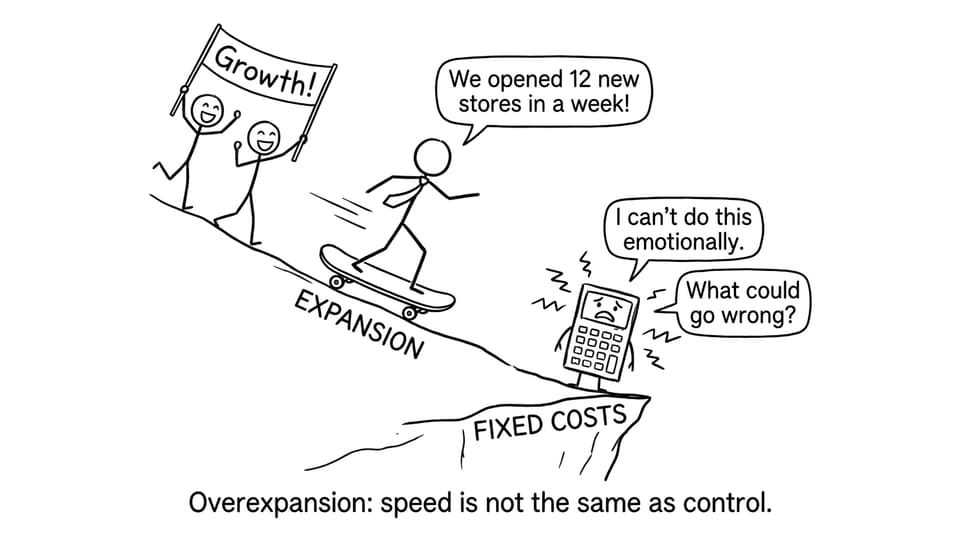
A strong IB Business Management answer often names the mechanism: expansion increases fixed costs and working capital needs, which worsens cash flow even if revenue is rising.
Planning and decision-making: profit can hide weak foundations
Some businesses are “accidentally profitable” for a while: a trend goes their way, a competitor exits, or costs temporarily fall. Without realistic budgets, forecasting, and operational discipline, the firm can’t respond when reality shifts.
Use ratio analysis to spot warning signs beneath profitability. Efficiency and liquidity indicators can reveal problems early: Efficiency Ratios (3.6.1 Notes).
Short-term profit vs long-term success
A final trap: treating profit as the strategy instead of the outcome. Cutting training, lowering product quality, delaying maintenance, or squeezing suppliers might raise short-term profit. But it damages employee morale, customer loyalty, and brand trust.
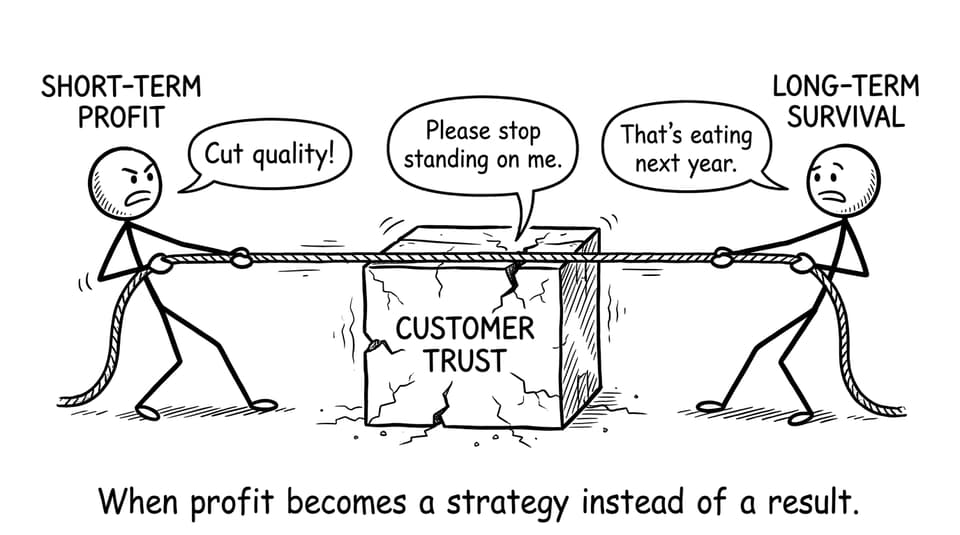
In IB Business Management, this is where evaluation lives: trade-offs, stakeholder impact, and long-term sustainability.
Bring it back to your exam performance
If you can explain why profitable businesses fail, you can usually score well on finance-driven IB Business Management questions because you’re showing real business logic, not just definitions. Build that logic systematically with the IB Business Management subject hub, then practise under pressure using Business Management Predicted Papers and targeted drills in the Questionbank feature.
On RevisionDojo, you can learn the theory with Study Notes and Flashcards, pressure-test it with Mock Exams and Predicted Papers, and tighten your writing with AI Chat and Grading tools. That feedback loop is where IB Business Management stops being “content” and becomes exam-ready judgment.


