


A quick story that explains cooperatives
In one town, the grocery store closed with a polite sign: “Not profitable enough.” People didn’t just lose a place to buy milk. They lost a meeting spot, a source of local jobs, and a sense that the community mattered.
So they built something different: a cooperative. Not because they hated profit, but because they wanted the business to serve people who actually depend on it.
That tension between profit-first and people-first approaches shows up all over IB Business Management, especially in Unit 1 when you compare business entities and stakeholder objectives. Understanding why some communities choose cooperatives can turn a vague definition into real evaluation marks.
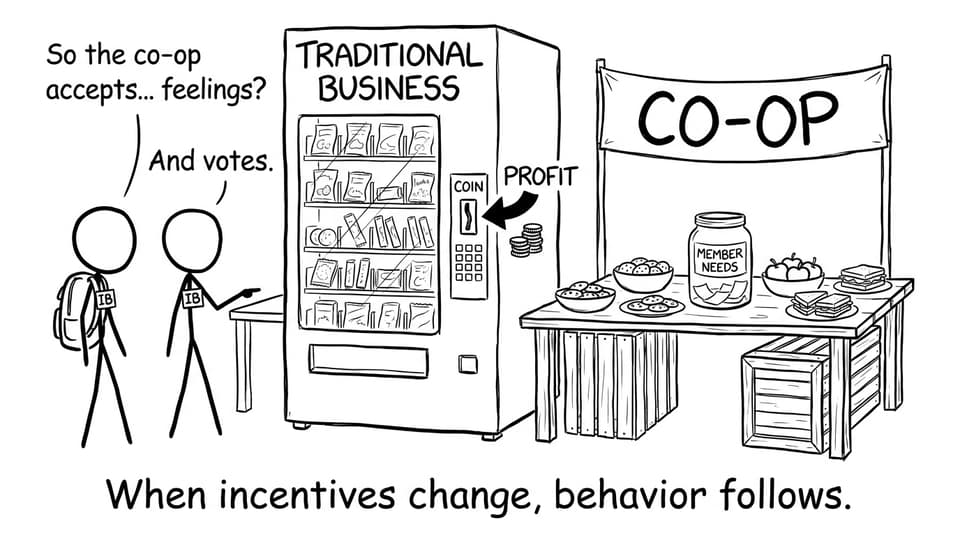
Cooperative vs traditional business: exam checklist
Use this checklist when you see a cooperative in IB Business Management Paper 1-style questions:
-
Ownership: members (customers, workers, producers) own it
-
Control: democratic decision-making (often 1 member = 1 vote)
-
Purpose: meet member needs, not just maximize shareholder returns
-
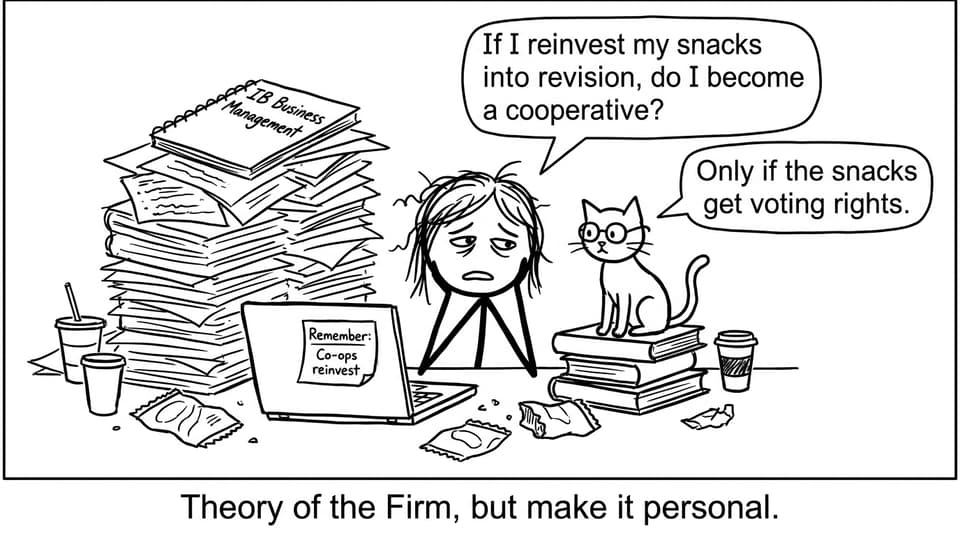
Surplus use: reinvested or shared with members (rather than dividends to external shareholders)
-
Stakeholders: community impact is central, not secondary
For the syllabus definition and exam phrasing, keep the core notes open: IB Business Management 1.2.7 Cooperatives.
Democratic control: why “one vote each” changes everything
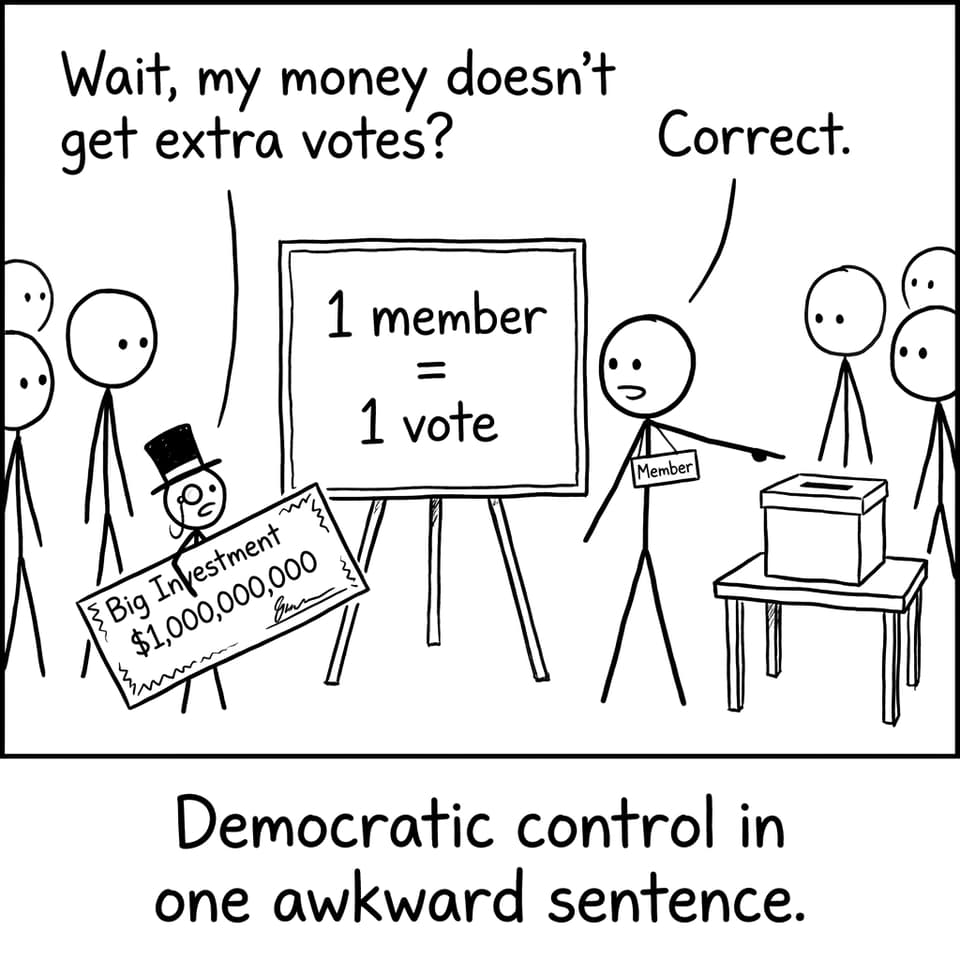
The first reason communities choose cooperatives is governance. In a traditional business, control tends to follow capital: more shares often means more influence. In a cooperative, control tends to follow membership: each member usually has an equal vote.
That single design choice changes incentives. Leaders must keep members satisfied over time, not just deliver short-term returns. In IB Business Management, you can link this directly to stakeholder conflict and decision-making trade-offs using Notes for 1.4 Stakeholders and the broader idea of balancing different objectives.
Economic stability: a business designed to stay
The second reason is stability. Many cooperatives aim to keep essential services reliable: fair prices, steady wages, consistent supply, and long-term presence. Instead of pushing every decision toward maximum profit, they often reinvest surpluses into better service, equipment, training, or member benefits.
This matters in areas where traditional businesses may avoid operating because margins are thin or risks feel high (rural banking, local retail, utilities, agriculture). When you’re writing IB Business Management evaluation, this becomes a strong “why this structure fits this context” argument.
To strengthen finance-linked analysis, connect the idea of surplus/reinvestment to how organizations report performance: IB Business Management 3.4.2 Final Accounts Notes.
Social and ethical reasons: the business is the community
A cooperative often exists because members share a problem: access, affordability, fair work, or local sustainability. That’s why cooperatives can feel “more ethical” in practice: not magically perfect, but structurally nudged toward transparency and member welfare.
In IB Business Management, you can treat this as stakeholder alignment. Customers, employees, and the local community overlap rather than compete. If you want practice applying stakeholder language to a case, use: 1.4 Stakeholders Questionbank.
How to turn this into exam marks (fast)
When you see “cooperative” in IB Business Management, write like an examiner is timing you:
-
Define cooperative clearly (ownership + democratic control)
-
Apply to the scenario (who are the members?)
-
Analyse benefits and limitations (investment limits, slower decisions, but higher trust)
-
Evaluate against context (community needs, ethics, long-term stability)
RevisionDojo helps you do this quickly with Business Management Cheatsheets, topic notes like 1.2 Types of business entities, and exam practice inside the Business Management - IB Resources hub.
Conclusion: the structure is the strategy
Communities choose cooperatives when they want the business itself to reflect shared priorities: democratic control, local stability, and benefits that stay close to the people creating them. In IB Business Management, that’s not a feel-good detail; it’s a strategic choice of business entity that reshapes objectives, stakeholders, and long-term performance.
If you want to lock this down before exams, use RevisionDojo’s Questionbank, Study Notes, Flashcards, AI Chat, and Grading tools inside the Business Management - IB Resources hub to practise cooperative questions until your evaluation feels automatic.


