


A profitable business can still feel broke
Picture a café that’s "doing well". The tables are full. The sales are up. The owner even shows a tidy profit in the accounts. Then, on Friday, the payroll hits and the bank balance drops to… almost nothing.
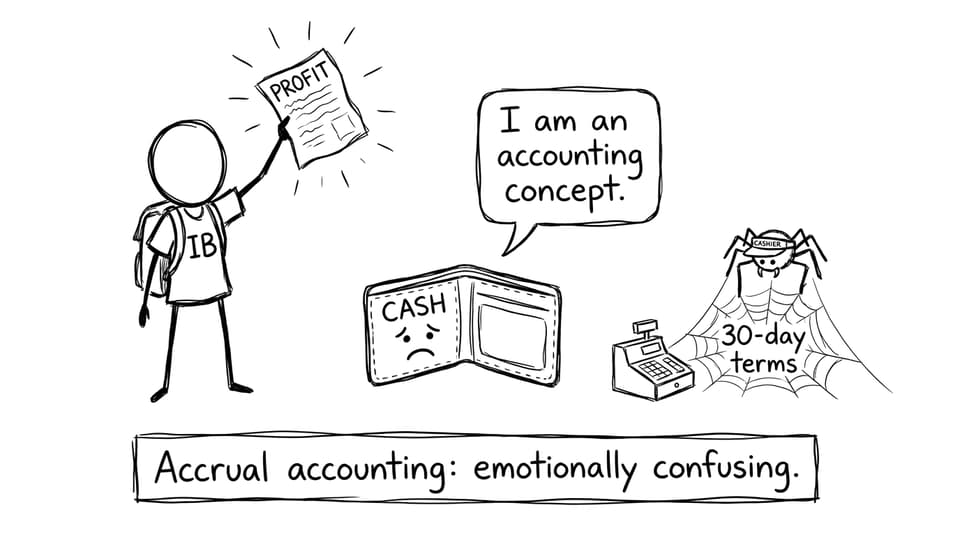
That confusion is a classic IB Business Management moment: profit and cash flow are not the same thing. Profit is an accounting outcome (based on revenue and costs over a period). Cash flow is the real-time movement of money in and out. A business can be profitable, but if cash arrives late or leaves too fast, it can still face cash flow problems.
Quick exam checklist: why cash flow problems happen
Use this IB Business Management checklist in Paper 1 or Paper 2 explanations:
-
Cash inflows are delayed (trade credit, late payments)
-
Cash is tied up (inventory/stock, accounts receivable)
-
Cash outflows spike (fixed costs, one-off expenses)
-
Growth creates a timing trap (overtrading)
-
Forecasting is weak (poor planning and control)
For syllabus-aligned definitions and examples, keep the topic hub open: IB Business Management 3.7 Cash Flow.
Timing is the villain: profit on paper, cash later
In IB Business Management, the simplest explanation is usually the best: cash flow problems are often timing problems.
A business can record revenue when a sale is made, even if the customer pays 30 or 60 days later. Meanwhile, wages, rent, and suppliers may need paying now. That gap can drain liquidity even while profitability looks strong.
If you want a clean way to phrase this in exams, revise: Difference Between Profit and Cash Flow.
Inventory: the silent cash trap
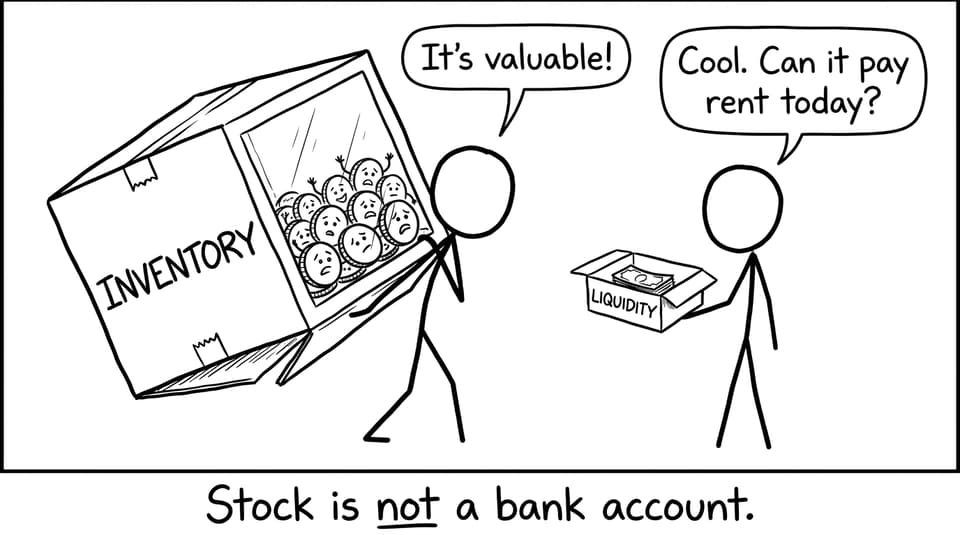
Stock can make a business look prepared and ambitious. But in cash terms, inventory is money parked on a shelf.
When a firm over-orders, cash is converted into goods that cannot pay bills today. Even if those goods will eventually sell at a profit, the short-term liquidity position worsens.
Link this to efficiency thinking using: Efficiency Ratios Notes.
Growth can cause cash flow problems (overtrading)
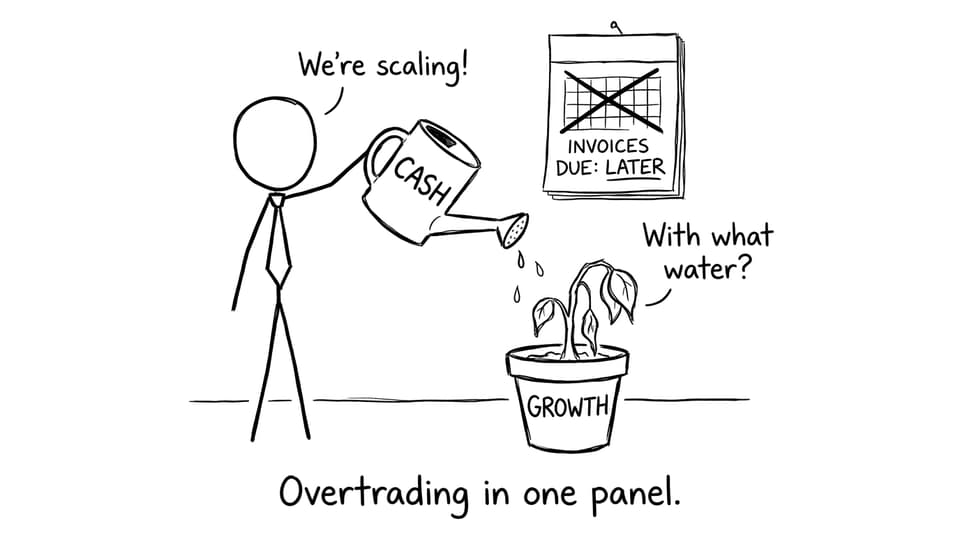
Fast growth feels like success, but it often demands cash before it generates cash.
More sales can mean higher variable costs (materials, distribution) and sometimes higher fixed costs (new staff, bigger premises). If receivables grow faster than cash inflows, the business becomes profitable and stressed at the same time. In IB Business Management, this is your overtrading paragraph.
To connect growth, investment, and liquidity, see: Relationship Between Investment, Profit, and Cash Flow.
Forecasting: where good businesses still slip
Many cash crises are not caused by bad products, but by bad planning.
A strong cash flow forecast helps managers anticipate low-cash months (tax bills, seasonal demand dips, loan repayments) and take action early: negotiate supplier terms, reduce inventory, delay capital expenditure, or arrange short-term finance.
Use RevisionDojo’s exam-ready structure here: Cash Flow Forecasts Notes.
Bring it home with RevisionDojo
If you can explain this in one sentence, you’re already thinking like an examiner: a business can be profitable but still have cash flow problems because cash timing, stock, and growth pressures can drain liquidity before money arrives.
To turn that understanding into marks, use RevisionDojo as your IB Business Management practice loop: drill this topic with the Cash Flow Questionbank, lock in key terms with Cash Flow Flashcards, and tighten exam technique with structured Cash Flow Lessons. For a wider revision plan, start at IB Business Management Resources.


