


Outliers feel like the kind of detail you notice, shrug at, and move on from.
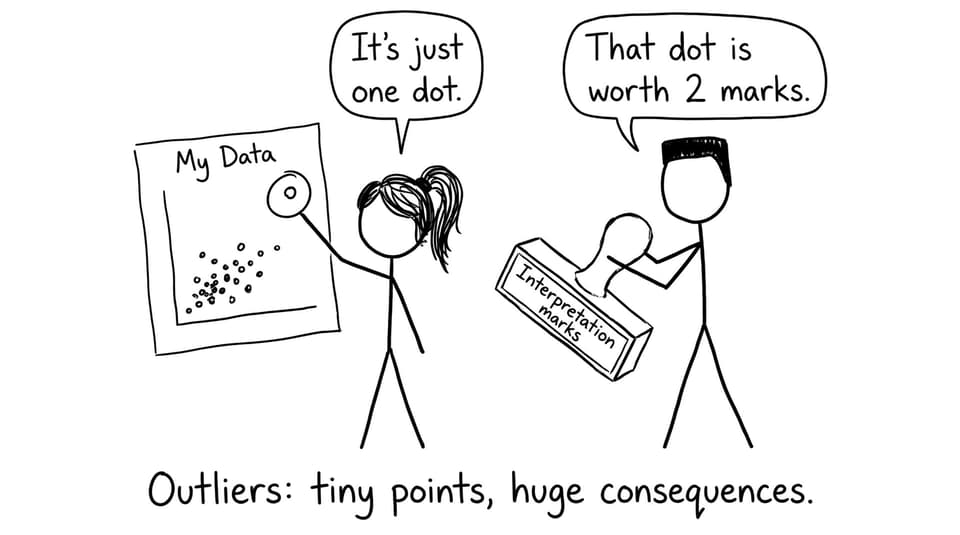
Then you sit an IB Math AI exam, write a clean regression line, and still lose marks because you didn’t mention the one point that looked “a bit weird.” In data questions, that “bit weird” point is often the entire point.
In IB Math, outliers matter because they test something deeper than button-pressing. They test whether you can think like a cautious analyst: someone who knows that real-world data rarely behaves, and that one extreme value can rewrite your conclusion.
Quick checklist: what to do when you spot an outlier in IB Math
Before you calculate anything fancy, run this quick loop:
-
Spot it: identify unusual values visually (scatter plot, box plot) and numerically.
-
Name the impact: say what it could change (mean, correlation, regression, trend).
-
Suggest reasons: measurement error, data entry error, rare-but-real event.
-
Decide (don’t delete): keep it unless you have a justified reason to remove it.
-
Write cautiously: “may,” “could,” “might reduce reliability,” “within this range.”
If you want the course-aligned place to practise these skills, start at the main IB Mathematics Applications & Interpretation (AI) hub.
What an outlier actually is (and what it isn’t)
In IB Math AI, an outlier is a data value that sits far away from the pattern of the rest of the dataset.
Crucially: an outlier is not automatically “wrong.” IB expects you to treat it like a question.
Common causes include:
-
measurement or instrument error
-
data recording mistakes
-
unusual but valid circumstances
-
genuine extreme behaviour
To review the statistics foundations that sit behind these questions, use the Introduction to Statistics notes and the wider Statistics and Probability topic page.
Why outliers change the story in IB Math AI
A quiet truth about IB Math is that many statistics tools are “fragile.” They assume data is reasonably consistent. Outliers break that assumption.
Outliers can pull the mean hard
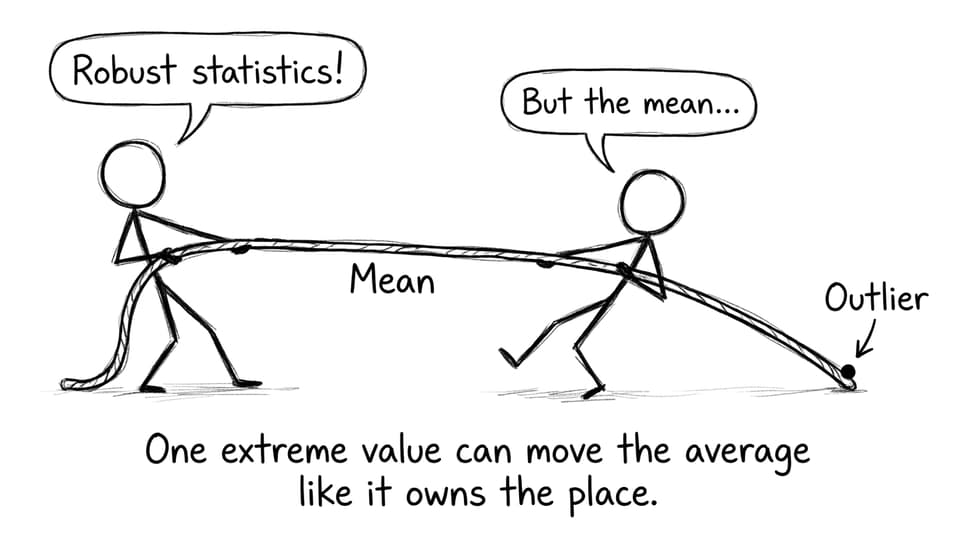
The mean is sensitive because it listens to every value. One extreme data point can drag the average away from what most observations suggest.
That’s why examiners love asking you for conclusions based on the mean, then rewarding the student who adds: “however, the mean may be influenced by an outlier, so the median might better represent a typical value.”
Outliers can tilt correlation and regression
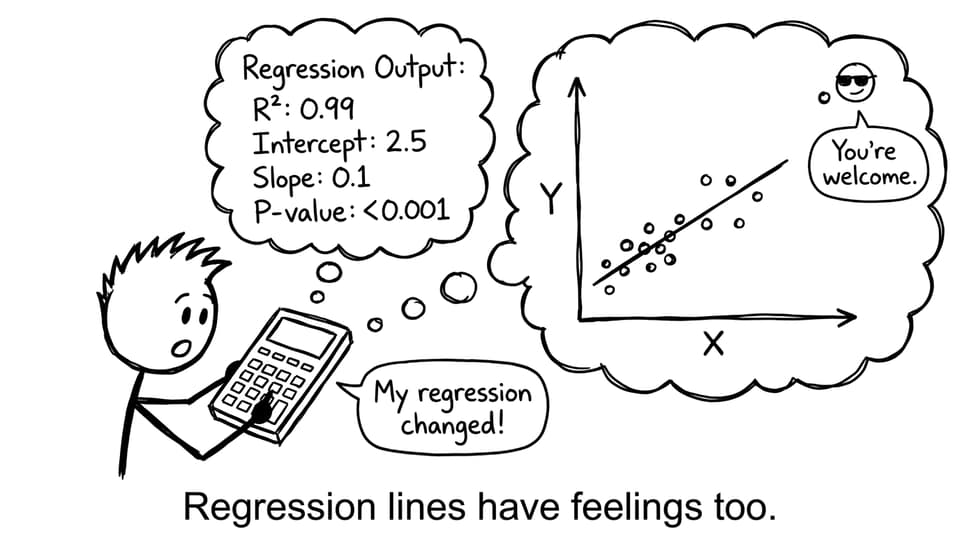
In IB Math AI, regression and correlation are interpretation-heavy. A single influential point can:
-
steepen or flatten a regression line
-
inflate or weaken the correlation coefficient
-
create the illusion of a relationship that isn’t really there
If you’re revising correlation specifically, pair the SL 4.4 Correlation topic page with the Correlation notes, then practise with the SL 4.4 Questionbank. For the bigger idea of reliability, this article on why strong correlations still lead to poor predictions makes the examiner logic feel obvious.
Why outliers matter more in AI than AA
Students often ask why IB Math AI seems “stricter” about outliers.
Because AI is the strand where the IB cares most about data realism. You’re expected to notice when the data is messy, when the model is limited, and when your conclusion should be cautious.
That’s also why Paper 2 often rewards interpretation more than computation. If you’re revising for that style, keep Ace IB Math AI Paper 2 open during your weekly planning.
What IB examiners want you to say (exam-ready phrasing)
A high-scoring IB Math outlier comment often includes three parts:
-
Identify: “There is an outlier at (x, y) which does not follow the overall trend.”
-
Impact: “This may affect the regression line and reduce the reliability of predictions.”
-
Context: “A possible reason is ____, so conclusions should be treated with caution.”
You can train this quickly by doing short, targeted sets in RevisionDojo’s Questionbank, then checking how your explanation compares to examiner-style feedback. If you need a structured routine, use How to Use the Questionbank for Targeted Math Revision.
A calmer way to earn marks: treat outliers like a signal
In IB Math AI, outliers aren’t distractions. They’re signals that your model has limits, your data has a story, and your conclusion needs humility.
If you want to make that skill automatic, build a simple loop with RevisionDojo: learn the concept in Study Notes, drill it in the Questionbank, check phrasing with AI Chat, and finish with Mock Exams and Predicted Papers for exam realism. Outliers will still show up. But you’ll start seeing them as easy interpretation marks waiting to be collected in IB Math.