



Modern conflict rarely announces itself politely. It shows up as a headline about a border dispute, then quietly expands into cyberattacks, militia funding, identity politics, and global media narratives. That complexity is exactly why IB Global Politics treats theory less like a verdict and more like a flashlight: you move it around to see what becomes visible.
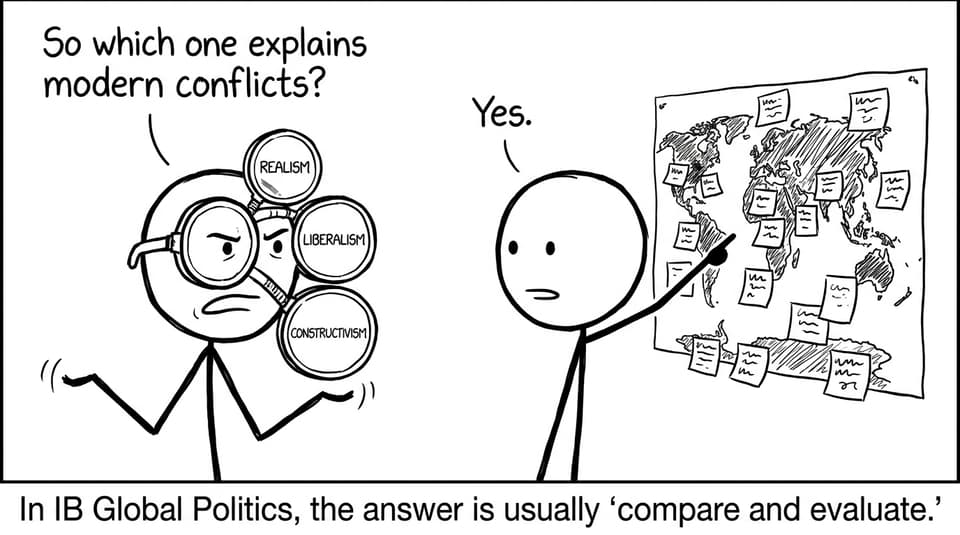
In exams, the highest-scoring IB Global Politics answers usually don’t “pick a winner.” They compare what each theory explains well, then evaluate where it fails.
A quick theory checklist for IB Global Politics essays
Use this as a fast planning tool (especially for Paper 2):
-
Realism: Who fears whom? What capabilities matter? Where is the security dilemma?
-
Liberalism: Which institutions fail? What interdependence breaks? What domestic incentives drive leaders?
-
Constructivism: Which identities, narratives, and norms shape behaviour?
For syllabus-aligned support, keep the IB Global Politics Resources hub open while you practise.
Realism in IB Global Politics: power and insecurity first
Realism explains modern conflicts through competition in an anarchic international system. States (or state-like actors) pursue survival. When one side arms itself “defensively,” the other side reads it as threat, and escalation becomes rational.
This lens is strong for interstate rivalry, deterrence, alliances, arms races, and strategic territory. It also links neatly to the course concept of power (see Power: types and definitions).
But realism can feel blunt when conflict is fuelled by ideology, identity, or fragmented actors. It explains why fighting is useful for security, yet can struggle to explain why the cause feels sacred.
Liberalism in IB Global Politics: cooperation that breaks
Liberalism starts with a calmer assumption: cooperation is possible, and conflict often emerges when institutions are weak, incentives are misaligned, or governance collapses. It’s a strong framework for examining civil conflict drivers like corruption, inequality, and democratic backsliding.
Liberalism also helps you write about conflict resolution: peace processes, mediation, international law, and development policies. That is especially handy when you’re working through Peace and conflict and building evaluative conclusions.
The limitation is that liberalism can underestimate coercion. Sometimes institutions don’t fail accidentally; they are blocked by actors who benefit from instability.
Constructivism in IB Global Politics: the story people believe
Constructivism argues that ideas shape interests. Identity, norms, and shared meanings influence what actors see as possible, legitimate, or humiliating. Many contemporary conflicts make more sense once you track narratives: historical grievances, religious framing, ethnic boundaries, propaganda, and “who belongs.”
If you want a clean, exam-ready explanation, RevisionDojo’s What is constructivism in global politics? is a solid reference point.
Constructivism’s weakness is predictability. It can explain why something matters deeply, but it can be harder to translate into concrete forecasts or policy tools.
So which theory best explains modern conflict in IB Global Politics?
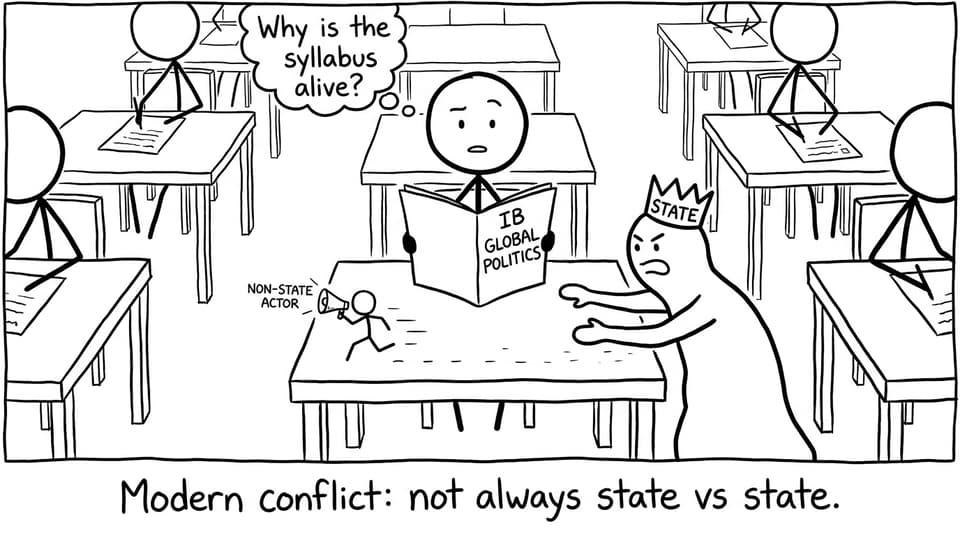
Most modern conflicts mix state interests, institutional breakdown, and identity-driven mobilisation. That’s why the safest high-mark judgement in IB Global Politics is conditional: the best theory depends on the conflict type and the level of analysis.
A strong exam line sounds like this: realism explains the strategic incentives, liberalism explains the governance and cooperation gaps, and constructivism explains how identities and norms turn tensions into sustained violence.
To sharpen evaluation, see Strengths and weaknesses of global politics theories.
How to turn theory into marks (fast)
If you’re writing Paper 2, structure matters as much as knowledge. Use:
-
Claim (theory’s explanation)
-
Evidence (case study detail)
-
Limit (what theory misses)
-
Mini-judgement (when it works best)
RevisionDojo’s How to structure IB Global Politics Paper 2 essays and Paper 2 guide make that repeatable under time pressure.
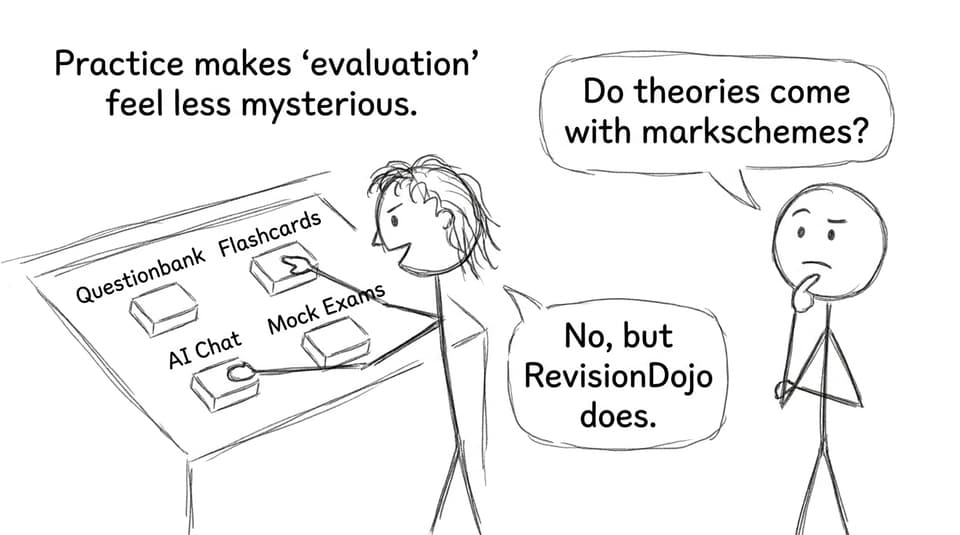
For practice, RevisionDojo’s Questionbank, Study Notes, Flashcards, AI Chat, Grading tools, Predicted Papers, Mock Exams, Coursework Library, and Tutors all work best when you treat theory like a skill: apply, compare, evaluate, repeat.
Conclusion: the best theory is the one you can evaluate
The exam-friendly truth is simple: IB Global Politics isn’t asking you to choose a single theory forever. It’s asking you to think like an analyst, applying realism, liberalism, and constructivism with discipline and honesty about their limits.
If you want that confidence under timed conditions, use RevisionDojo to practise the full loop: learn with Study Notes, drill with Flashcards, test with Questionbank and Mock Exams, then refine with AI Chat and Grading tools. The more you practise evaluation, the more modern conflict starts to look understandable, not because it’s simple, but because you’ve trained the right lenses.