



Military power used to be the simplest kind of argument: you have tanks, I don’t, so you win.
But modern conflict rarely rewards simple stories.
In IB Global Politics, the role of military power today sits in a messier space between between deterrence and escalation, security and legitimacy, humanitarian claims and sovereignty costs, visible force and invisible cyber operations. If you can explain that tension clearly, you’re already writing like an examiner.
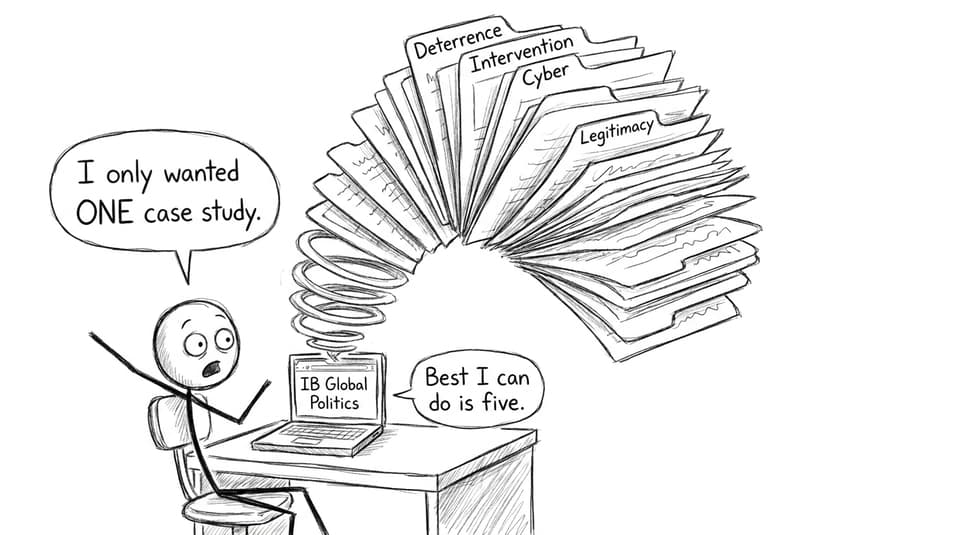
IB Global Politics quick checklist: what to say about military power
Use this as a fast plan for Paper 1 or Paper 2 paragraphs in IB Global Politics:
-
Define military power as the capacity to use or threaten force
-
Explain mechanisms: deterrence, signalling, coercion, defence, intervention
-
Evaluate with costs: legitimacy, sovereignty, civilian harm, long-term effectiveness
-
Update your answer with technology: drones, surveillance, cyber, hybrid tactics
-
Compare with other power forms (economic, diplomatic, ideational)
If you need the wider framing, keep How Is Power Exercised in International Relations? IB Guide open while you practise.
Deterrence: influence without firing a shot
A strange truth in IB Global Politics is that some of the most important uses of military power happen when nothing happens.
That’s deterrence: you build credible capability so an opponent decides the price of aggression is too high. Nuclear weapons are the classic example, but the logic also shows up in conventional military build-ups, alliance commitments, and visible exercises designed to signal readiness.
For exam evaluation, don’t just say “deterrence works.” Ask what makes it credible: clear red lines, capability, and a reputation for following through. Then add the downside: deterrence can push arms races, misperception, and security dilemmas.
To connect this to the bigger course debate, link deterrence to hard power in IB Global Politics: Hard Power vs Soft Power.
National and collective security: protection, alliances, and trade-offs
Another role of military power today is still the most intuitive one: defence of territory and sovereignty.
States fund armed forces to protect borders, deter attack, and respond to threats. Yet modern security is rarely purely national. Alliances and defence arrangements turn military power into a shared tool, where credibility depends on whether partners believe help will actually arrive.
This is where IB Global Politics rewards conceptual precision. Security is not only about survival; it is also about legitimacy. Heavy militarisation may protect a government while increasing domestic repression or regional mistrust.
If you want to tighten your definitions in revision, use the IB Global Politics Key Definitions and the Notes for Types and definitions of power - IB.
Intervention: the hardest marks live in the aftermath
Military intervention is the role of military power that sounds most morally clear in headlines and becomes most complicated in essays.
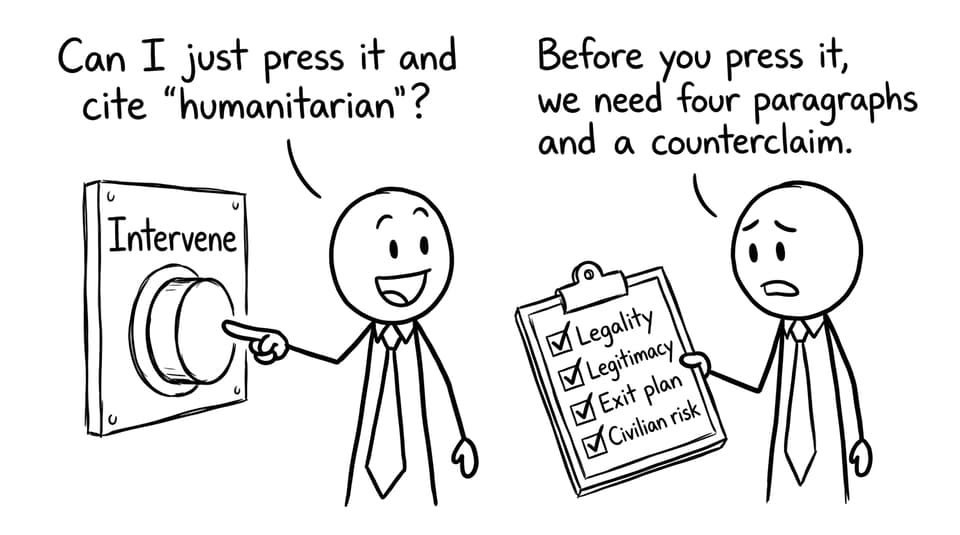
Intervention may be framed as protecting civilians, restoring order, or defending international peace. But IB Global Politics asks you to evaluate legitimacy and outcomes, not just intentions. Was there consent? A legal mandate? A workable exit plan? Did violence drop short term but governance collapse later?
A strong way to build this into your writing is to pair intervention with sovereignty. Read What Is Sovereignty in Global Politics? for language you can reuse in definitions and evaluation.
For a deeper intervention-focused argument, practise planning paragraphs using How Effective Is International Intervention in Conflicts?.
Limits of military power: costly, blunt, and sometimes counterproductive
Military power remains central, but it is not an all-purpose problem solver.
Force is expensive, destructive, and often weak at delivering lasting political goals. You can remove a threat and still fail to build legitimacy. You can win battles and still lose public support. And many threats shaping today’s world: climate change, pandemics, economic instability; don’t surrender to armies.
In IB Global Politics, this becomes your evaluation layer: military power can create space for diplomacy, but it rarely replaces it.
Technology and “grey-zone” conflict: war without the declared war
Modern military power has expanded beyond conventional battlefields.
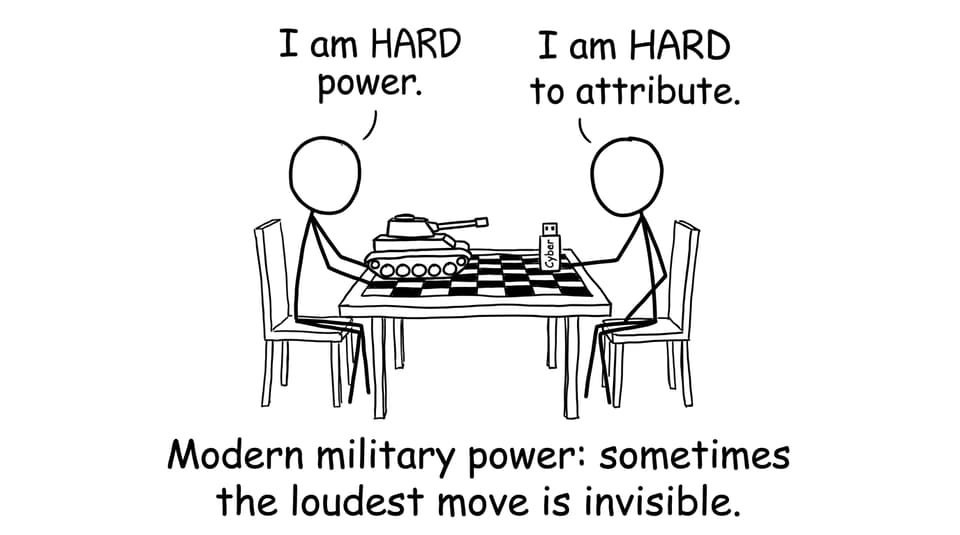
Cyber operations, drones, surveillance, disinformation, and proxy forces blur war and peace. This matters because it complicates attribution and accountability. If you can’t confidently prove who attacked you, retaliation becomes ethically and strategically risky.
For exam relevance, treat technology as a “how” not a “what.” The concept is still power; the mechanism just changed.
To revise the full course context, start at the Global Politics - IB Resources hub and the IB Global Politics Revision Notes (SL/HL).
Conclusion: write like power is a trade-off, not a trophy
Military power still matters in IB Global Politics, but its role today is rarely a clean win-or-lose story. It deters, defends, and sometimes intervenes; while also creating legitimacy problems, sovereignty tensions, and technological grey zones.
If you want to turn these ideas into marks, use RevisionDojo as your home base: revise concepts with Study Notes and Flashcards, test yourself in the Questionbank, and sharpen evaluation with AI Chat and grading tools. Build timed practice sets with Mock Exams and Predicted Papers, and when you need targeted help, tap into Tutors and the Coursework Library.
For more exam-ready Global Politics support, browse All IB Global Politics Posts and keep IB Global Politics as the lens that turns current events into structured arguments.