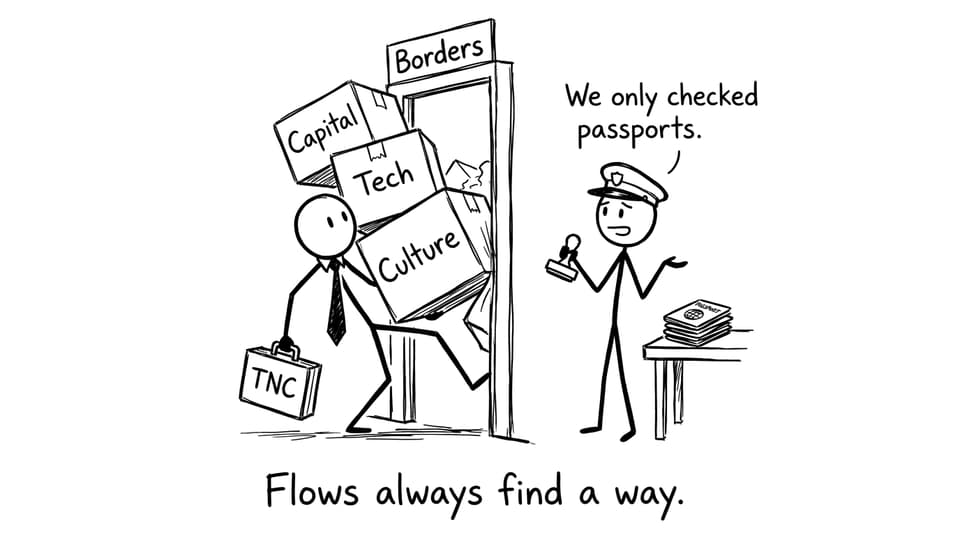

In IB Geography, transnational corporations (TNCs) can feel like invisible hands moving pieces across the world map. One minute you are revising “global flows,” the next you realise your trainers were designed in one country, assembled in another, marketed everywhere, and taxed somewhere else entirely. That feeling of being surrounded by systems you can’t fully see is exactly why TNCs matter in global interactions.
A quick IB Geography checklist: what TNCs actually do
Use this mini-checklist when you build an exam paragraph in IB Geography:
-
Link places through global production networks (supply chains)
-
Move capital via foreign direct investment (FDI)
-
Shift technology and skills through training, R&D, and management systems
-
Shape power (who decides, who benefits, who pays the costs)
-
Influence culture through branding and consumption patterns
For topic framing, start from 4.1 Global interactions and global power and zoom into 4.2 Global networks and flows.
IB Geography: How TNCs build global networks and flows
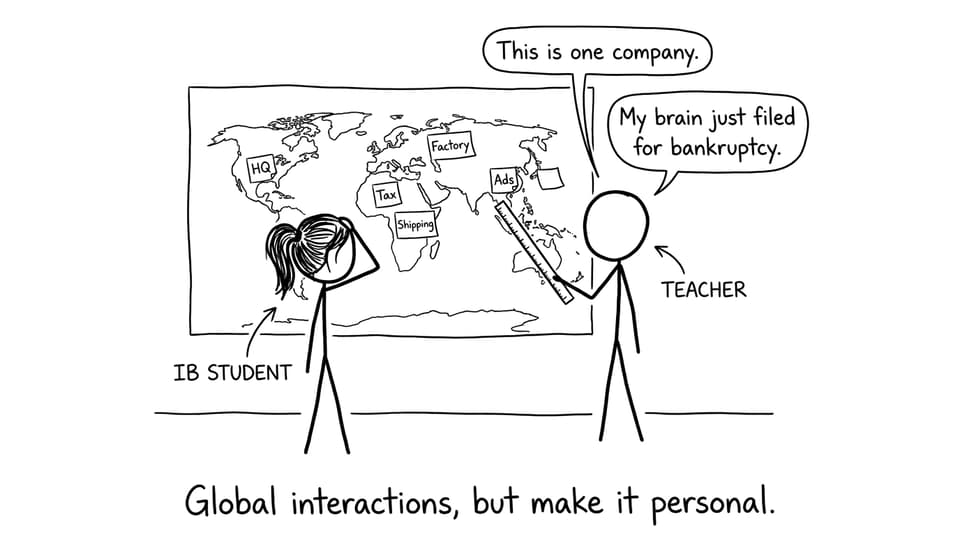
In IB Geography, TNCs are a clean example of how networks create interdependence. Many companies split production into stages across countries to reduce costs, access resources, or reach consumers faster. The result is a global production network where raw materials, components, labour, data, and finance move between nodes.
If you want a syllabus-aligned explanation you can adapt into a Paper response, revise TNCs and global supply chains (4.2.2). It gives you the language examiners reward: flows, nodes, connections, and power over places.

IB Geography evaluation: benefits vs costs of TNC influence
A strong IB Geography answer doesn’t just describe TNCs. It evaluates how impacts vary by context and governance.
Potential benefits (especially for LICs and MICs)
TNC investment can bring jobs, wages, training, and infrastructure, especially where domestic capital is limited. FDI may also integrate a country into global trade, raising export earnings and building industrial capacity. In exam terms: you are linking global interaction to development opportunities.
Potential costs (power, inequality, environment)
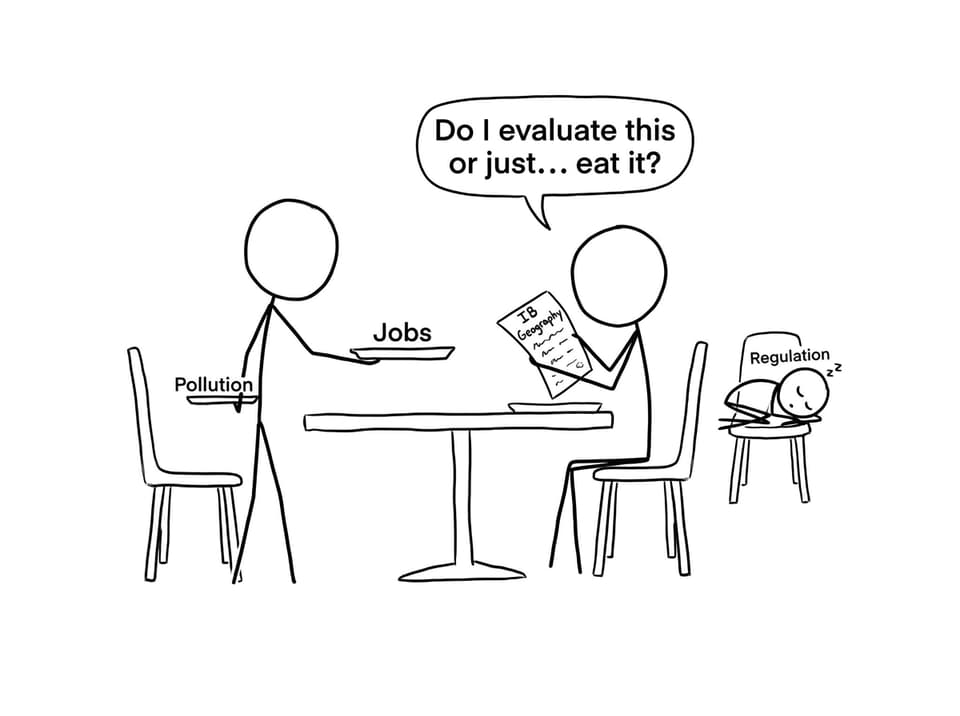
TNCs can also create “uneven development.” Profits may be repatriated to headquarters, while environmental damage and weaker labour protections concentrate in host regions. In some places, TNC bargaining power is so large that regulation becomes a race to the bottom.
Here’s a memorable evaluation line for IB Geography: TNCs don’t create the same outcome everywhere; governance decides whether connectivity becomes capability.

Culture and consumption: the quieter kind of global interaction
TNCs don’t only move products. They move ideas. Branding, media, and global retail reshape food choices, lifestyles, and expectations, sometimes producing cultural homogenisation, sometimes producing hybrid local adaptations.
For a clear, exam-ready example of this cultural-economic overlap, see Influence of TNCs on food and health (F.3.2).
Exam strategy (Paper-friendly): build a 30-second TNC paragraph
Try this structure in IB Geography:
-
Define TNC (operates in more than one country)
-
Process (global production network + FDI)
-
Impact (jobs/skills/infrastructure vs leakage/exploitation/environmental costs)
-
Evaluation (impacts depend on regulation, labour laws, and enforcement)
To practise under pressure, pull prompts from the Power, Places and Networks Questionbank and then tighten your paragraphs with the 4.1 Questionbank.
Final takeaway: why this topic scores well in IB Geography
TNCs sit at the crossroads of everything IB Geography wants you to understand: networks, power, flows, and unequal outcomes. If you can explain how a single company links distant places--and then evaluate who gains and who loses--you are already writing at a higher band.
To make this exam-ready, revise the concepts with Power, Places and Networks, drill retrieval with IB Geography Flashcards, and build timed practice using RevisionDojo’s Mock Exams, Predicted Papers, Study Notes, Grading tools, and Tutors. That’s how IB Geography stops being a set of definitions and becomes a set of arguments you can deploy on demand.