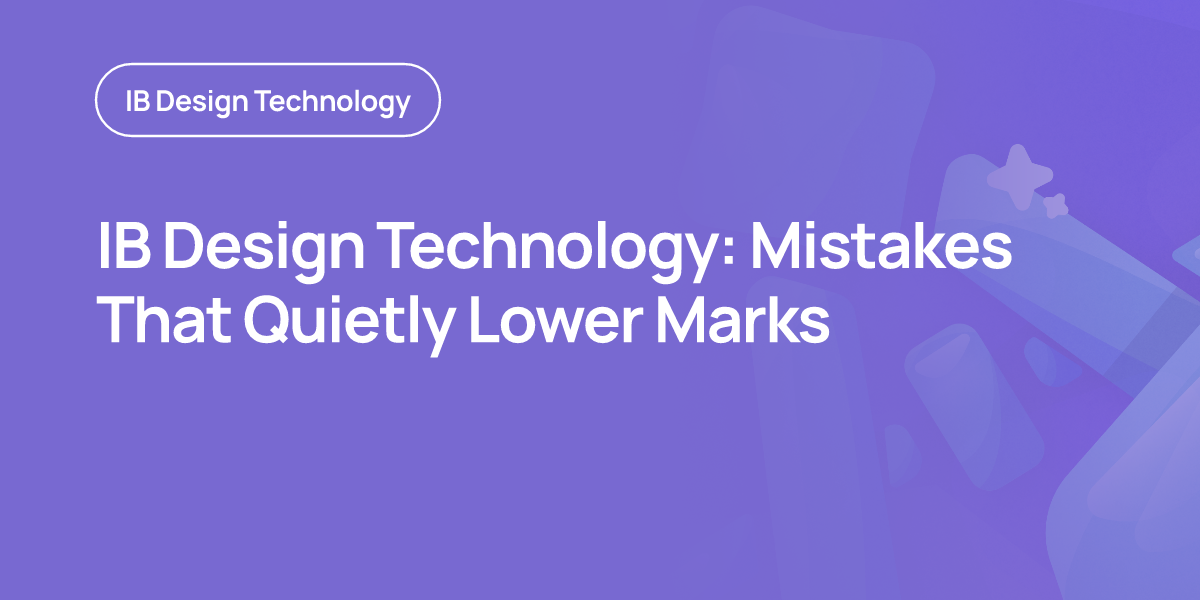




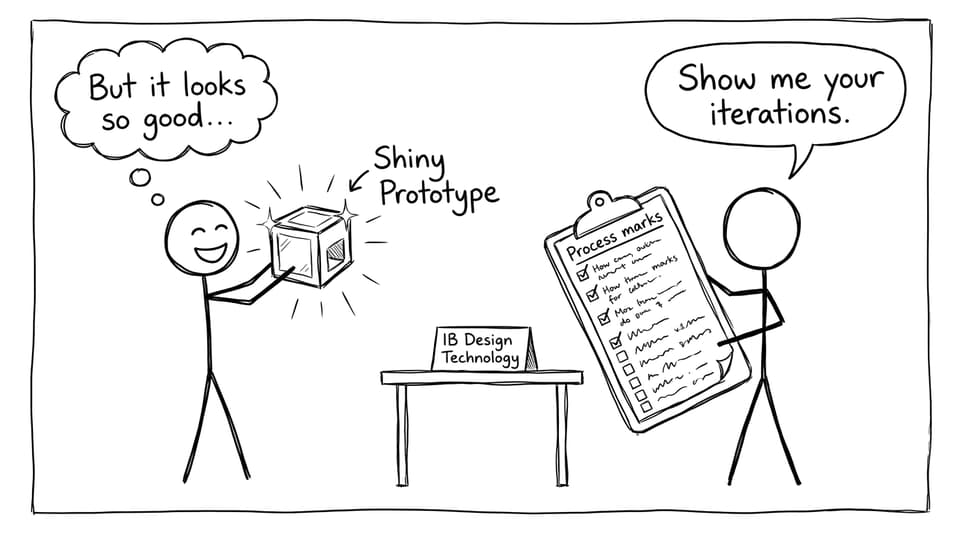
Every IB Design Technology student has a moment like this: you look at your project and think, This is good. The prototype works. The pages are filled. The hours were real.
Then the mark comes back lower than you expected.
In IB Design Technology, that drop is rarely about talent. It is usually about alignment. The assessment is less impressed by a polished outcome and far more convinced by visible thinking: decisions, evidence, iteration, and evaluation. When those links are missing, marks leak quietly.
If you are preparing for exams and still finishing coursework, this matters doubly: the same habits that lower IA marks also weaken Paper 2 and Paper 3 responses. So let’s name the mistakes clearly and fix them.
Quick checklist: the fastest way to protect marks in IB Design Technology
Use this 90-second scan before you submit any section:
-
Does each major choice have a reason (not just a description)?
-
Does your research directly change your design requirements?
-
Do you show iteration as test data to change to justification?
-
Is the user present throughout, not only at the start?
-
Is your evaluation tied to measurable specs and limitations?
For more structure, keep the IB Design Technology hub open while you work: IB Design Technology Resources.
Mistake: treating IB Design Technology like a product showcase
A high-scoring IB Design Technology project is not a product pitch. It is a documented process.
Students lose marks when they spend energy on surface complexity (extra features, fancy finishing, intricate manufacturing) but do not show the reasoning chain that the examiner is marking. A simple solution with clear trade-offs, controlled testing, and honest iteration often outperforms a complicated build with vague explanations.
If you need a markband mindset reset, this is worth reading: How Can You Score a 7 in IB Design Technology?
Mistake: writing what happened, not why it mattered
This is the most common mark-limiter across IB Design Technology coursework and exams: description without analysis.
“User tested prototype.”
That line is fine as a fact, but it earns little unless you add what the test measured, what the results were, what you changed, and why that change improved performance against your requirements. Examiners reward decision-quality, not diary entries.
To strengthen your exam technique alongside project writing, use: What Are the Most Common IB Design Technology Exam Mistakes?
Mistake: a weak problem statement that breaks everything downstream
In IB Design Technology, your problem statement is the ceiling on your marks. If the problem is vague, the research becomes generic, the requirements become untestable, and the evaluation turns into opinion.
Common traps:
-
The problem is too broad to prove ("improve sustainability")
-
The user is undefined or unrealistic
-
There is no evidence that the problem exists
-
The statement smuggles in the solution too early
A focused problem can feel smaller, but it creates stronger proof. If you want examples and fixes, see: Common IB Design Technology IA Mistakes and How to Fix Them.
Mistake: research that looks impressive but changes nothing
Research should function like a steering wheel. If it does not turn the project, it is just weight.
Students lose marks by pasting large chunks of background info, adding statistics they never reference again, or citing sources without extracting design implications. In IB Design Technology, research earns value when it becomes requirements, constraints, material choices, or test methods.
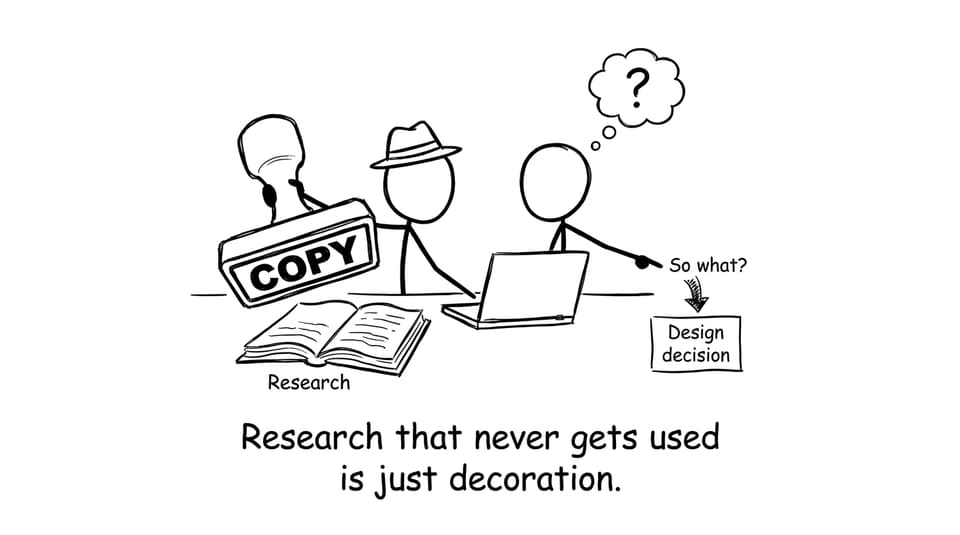
A practical way to enforce this: after every research paragraph, add one sentence starting with “Therefore, my design must…”
Mistake: little iteration (or iteration with no evidence)
Iteration is one of the easiest places to gain marks in IB Design Technology and one of the most missed.
Two versions alone are not the point. The point is learning. Iteration must show:
-
what you tested (linked to a requirement)
-
what the data or feedback showed
-
what you changed
-
why the change is an improvement (or a trade-off)
If your testing happens only at the end, iteration becomes impossible to prove. Build testing into the middle of the project using: How Do You Test Your Product in IB Design Technology?.
Mistake: evaluation that avoids uncomfortable truths
A weak evaluation reads like a victory lap.
A strong IB Design Technology evaluation reads like a designer thinking clearly: what worked, what failed, what limitations remained, and what should happen next.
The fastest upgrade is to evaluate against your design specifications one by one, using evidence. If you have no evidence, the honest move is to say so and explain what data you would collect next time. That honesty signals control.
When you are near the deadline, use a structured hand-in plan: Finalise and Submit Your IB Design Technology IA.
Mistake: time management that forces shallow thinking
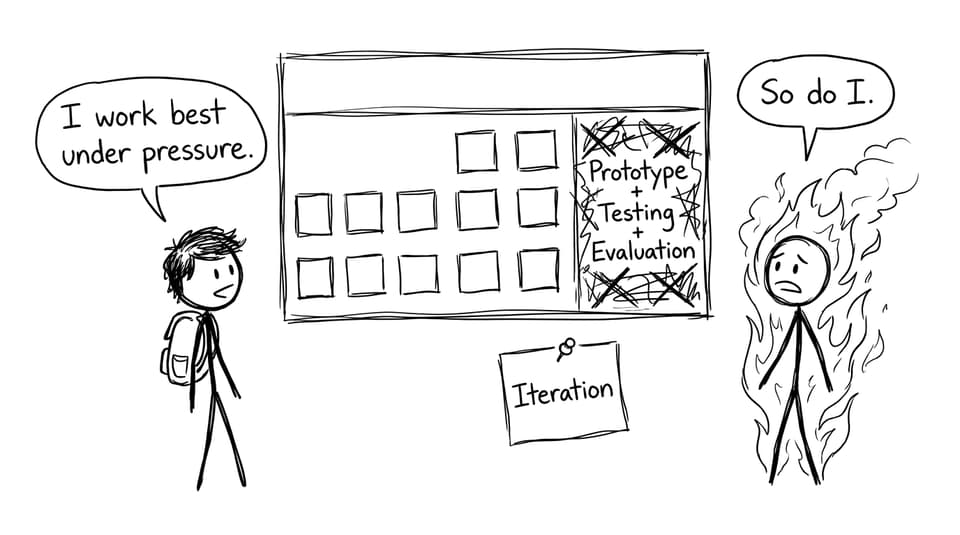
This one is brutal because it does not look like an academic mistake. It looks like a calendar problem.
When you leave prototyping, testing, and evaluation to the end, you guarantee thin iteration and weak evidence. The project becomes a scramble to finish, not a chance to learn.
If you are behind, the fix is not “add more.” The fix is “make the chain of reasoning visible.” Start here: What Should You Do If You're Falling Behind in IB Design Technology?.
Closing: protect the marks you already earned
The most painful part of IB Design Technology is that effort is not the same thing as evidence. You can work hard and still lose marks if your process is hard to follow.
RevisionDojo exists to make that process easier to prove. Use the Questionbank to practise examiner-style thinking, Study Notes and Flashcards to keep definitions precise, AI Chat to untangle unclear sections, and Grading tools to check whether your writing actually hits the criteria. When exams get close, rehearse with Predicted Papers and Mock Exams, and lean on the Coursework Library and Tutors when you need examples or a human strategy check.
If you want one place to start today, begin here and build outward: IB Design Technology Resources.