

You can feel it coming the moment your IA starts to look “serious.”
Your notebook fills up. Your prototype starts demanding attention like a needy houseplant. And somewhere in the background, exams sit quietly, pretending they are not a deadline.
Balancing the IA and exams in IB Design Technology is rarely about effort. It’s about timing, rhythm, and resisting the urge to sprint in one direction for weeks, then regret it later.
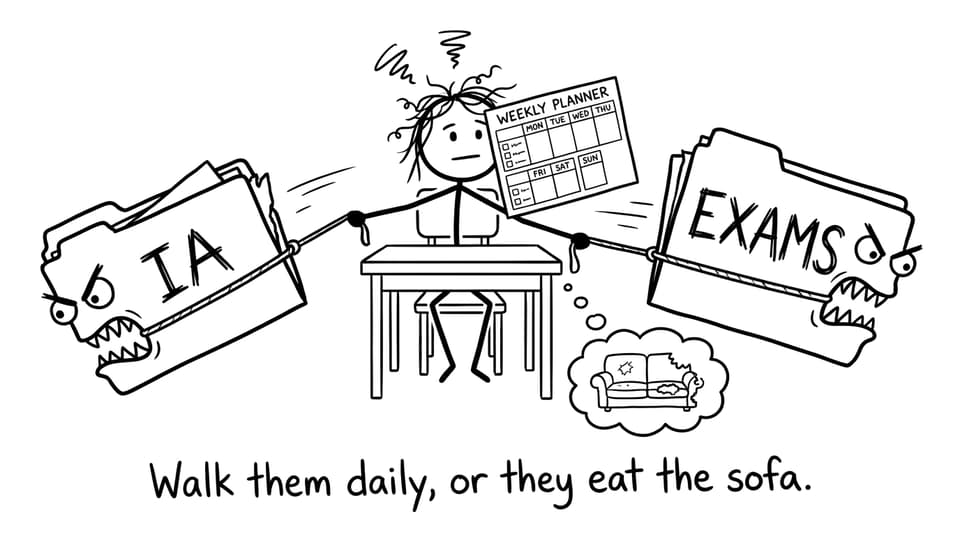
A quick balance checklist for IB Design Technology
Use this as your simple weekly “health check” for IB Design Technology:
-
Keep the IA moving every week (even if it’s small).
-
Keep exam skills warm every week (even if it’s short).
-
Treat IA thinking as exam training, not a separate life.
-
Increase exam practice gradually as the IA stabilizes.
-
Use feedback loops: rubric checks, timed responses, and reflection.
If you want a single home base for both sides of the course, start with the IB Design Technology hub and branch into practice and coursework support from there.
Why IB Design Technology feels harder to balance than it is
The course creates a psychological trap.
The IA runs over months, so it feels “safe” to delay. Exams feel far away, so you postpone them too. Then a deadline lands, another subject explodes, and IB Design Technology becomes the thing you do in stressed bursts.
What high scorers do differently is subtle: they build a routine that prevents either component from going cold.
For students who struggle with structure, RevisionDojo helps because it turns DT into a set of small, repeatable actions: Study Notes for concepts, Flashcards for recall, Questionbank for exam practice, and a Coursework Library that shows what strong IAs look like.
The mindset shift: IA skills are exam skills
Here’s the quiet secret of IB Design Technology: your best exam answers often sound like a good IA.
In both, you are rewarded for:
-
user-centred justification (not just describing a product)
-
evaluating trade-offs (not claiming perfection)
-
applying theory to context (not reciting definitions)
-
explaining constraints (time, materials, ergonomics, sustainability)
When you write a strong design specification, you’re rehearsing the logic you’ll need in Paper questions. When you evaluate testing data, you’re practising the language examiners like.
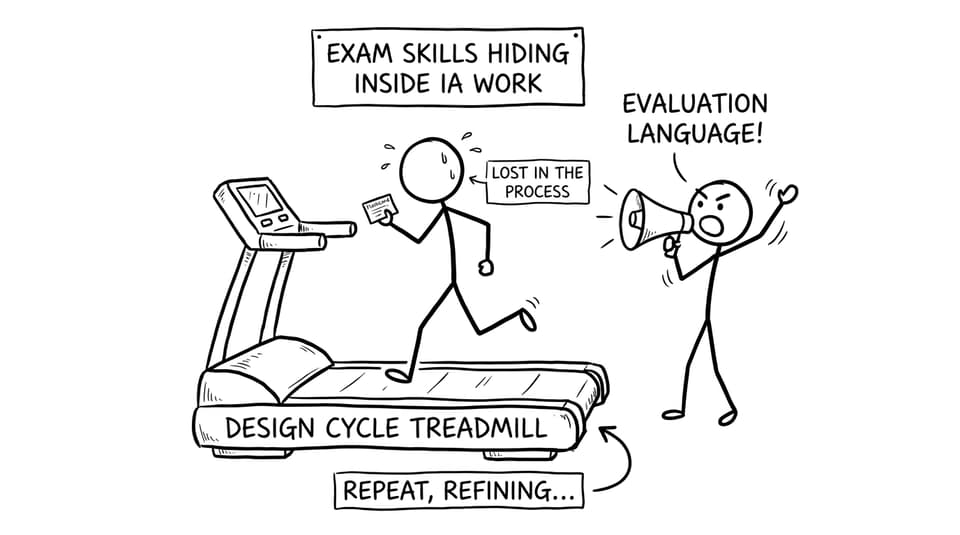
A good way to make this connection real is to do a small loop each week:
-
learn a topic using IB Design Technology resources
-
test it with exam-style prompts in the DT Questionbank
-
apply one idea directly to your IA narrative (requirements, materials choice, testing plan)
A three-phase plan that actually works
Balancing IB Design Technology gets easier when you accept that your focus should shift over time, but never snap.
Early course: build the IA foundation (and do “maintenance” revision)
Your goal early is to create momentum:
-
lock a manageable problem
-
start user research and requirements
-
set up documentation habits that won’t collapse later
In this phase, keep exam prep light but consistent. Ten to twenty minutes of short questions once or twice a week is enough to stop rust.
If you’re unsure what “strong IA structure” looks like, use the step-by-step IB Design Technology IA guide as a reference point.
IA development: keep exams alive with short, timed practice
This is the danger phase. Your IA becomes big enough to consume everything.
Instead of abandoning exams, do micro-sessions:
-
1 timed short response on a command term
-
1 evaluation paragraph (with evidence)
-
1 “apply-to-context” question from the Questionbank
This is where RevisionDojo’s AI Chat and Grading tools help. You can draft a paragraph, get feedback, and adjust quickly rather than spending an hour guessing what the markscheme wanted.
For topic-by-topic learning, a syllabus lesson like B2.1 The design process makes it easier to revise efficiently while your IA is still moving.
IA finalisation: shift steadily into full exam mode
When the IA is close to complete, you’re no longer “building.” You’re polishing.
That means:
-
cut low-value pages that don’t earn marks
-
tighten evaluation language
-
make your iteration obvious and evidence-based
At the same time, ramp up exams gradually: more timed work, more full sections, more planning under pressure.
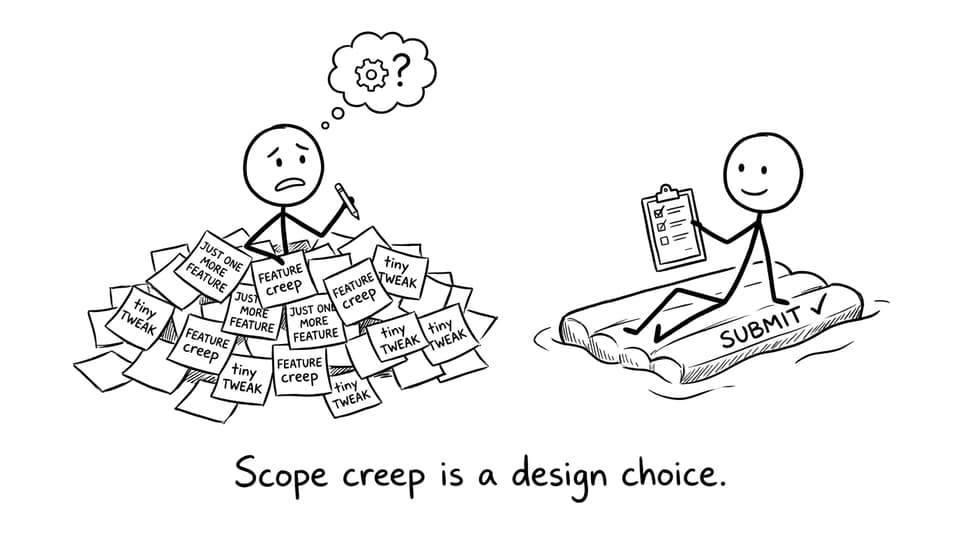
If you’re stuck in endless tweaking, this article is your guardrail: How to finalise and submit the IB Design Technology IA.
A weekly routine for balancing IA and exams
A simple default week for IB Design Technology (adapt based on deadlines):
-
2 IA sessions (45--90 min each): one for progress, one for documentation + reflection
-
2 exam sessions (20--40 min each): timed Questionbank practice + review
-
1 “bridge” session (15 min): connect an IA decision to syllabus language (materials, ergonomics, sustainability)
For realistic exam rehearsal, practise with IB Design Technology predicted papers or the subject paper sets at IB Design Technology papers. They help you build stamina without guessing what a full paper feels like.
Common balancing mistakes (and how to avoid them)
Most DT stress comes from a few predictable patterns:
-
“I’ll revise after the IA.” You lose exam fluency, then overcompensate.
-
Scope creep. Your product grows; your marks don’t.
-
Confusing effort with criteria. Length is not evidence.
-
Treating IA and exams as unrelated. You miss the overlap that saves time.
If you want examples of what top work looks like, use the IB Design Technology coursework exemplars to calibrate your standards.
Closing: Make IB Design Technology one project, not two
Balancing the IA and exams in IB Design Technology is easier when you stop treating them like rivals. They are two stages of the same skill: thinking clearly about users, constraints, trade-offs, and evidence.
If you want a calmer system, build your routine around RevisionDojo: the DT hub, exam-style practice in the Questionbank, fast recall with Flashcards, realistic rehearsal with Predicted Papers and Mock Exams, feedback using Grading tools, support from Tutors, and high-quality examples in the Coursework Library. Keep the IA moving. Keep exam skills warm. And let the overlap do the heavy lifting.