




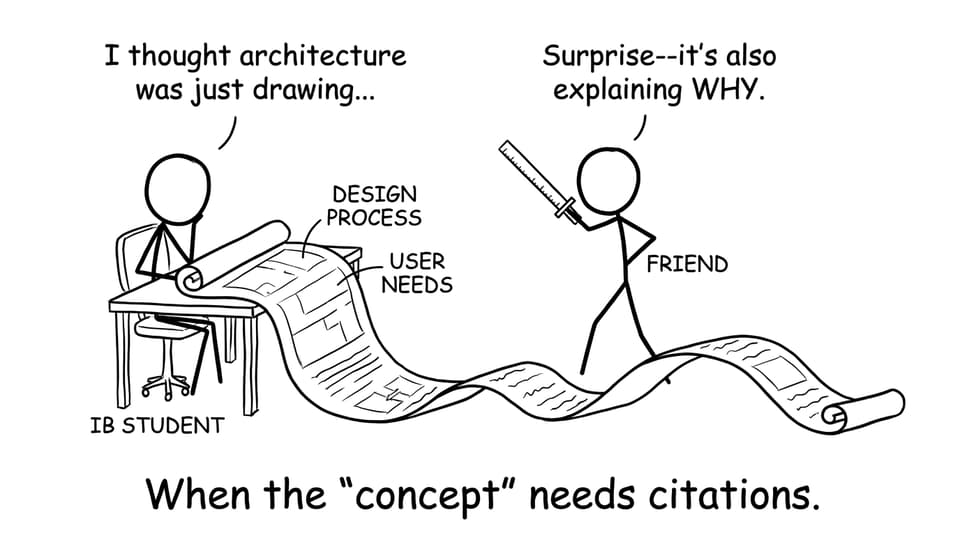
If you’ve ever watched someone sketch a building and thought, that’s what architecture is, you’re not alone. Most IB students arrive at architecture dreams through drawings: clean lines, bold forms, dramatic shadows. Then you open the IB Design Technology syllabus and realise it’s less about drawing the “perfect” thing and more about explaining why a thing should exist at all.
That shift can feel disappointing. Or it can feel like a secret advantage.
For architecture, IB Design Technology is often good, not because it turns you into an architect overnight, but because it trains the exact habits universities expect in studio: user awareness, constraints, iteration, and justification.
Quick checklist: is IB Design Technology good for architecture?
Use this fast check before you commit to IB Design Technology:
-
You like solving real problems, not only making beautiful images
-
You can explain decisions using evidence (testing, research, feedback)
-
You’re open to iteration: prototype, reflect, improve
-
You’re willing to balance IB Design Technology with Maths and other requirements
-
You understand that IB Design Technology supports portfolio work, but doesn’t replace it
If most of these feel true, IB Design Technology is a strong architecture-adjacent choice.
What architecture schools actually value
Architecture schools rarely grade you purely on artistic talent. They look for a pattern of thinking:
-
Spatial reasoning and problem-framing
-
Sensitivity to users, context, and constraints
-
Ability to justify trade-offs (cost vs sustainability, strength vs weight, beauty vs function)
-
Evidence you can take critique and improve
That is why IB Design Technology tends to “translate” well. The subject teaches you to treat design like an argument, not a vibe.
If you want a syllabus-aligned map of what you’re building, start with the IB Design Technology hub and keep it open while you revise.
How IB Design Technology supports architecture thinking
The most useful thing IB Design Technology gives future architects is a repeatable process.
You learn user-centred design (which architecture lives on)
Architecture is never just a building. It’s a response to people. IB Design Technology constantly pushes you back to the user: who is this for, what do they need, and what does the context allow?
That mindset shows up in strong studio work, and it also shows up in strong exam answers.
You practise constraints, not fantasies
A building is constrained by materials, structure, cost, safety, and environment. IB Design Technology makes constraints explicit and forces you to design inside them.
For revision, it helps to anchor constraints to concrete content. When you’re working on materials and performance, use Properties of materials notes to connect “architecture talk” (durability, stiffness, thermal comfort) to markscheme language.
You learn iteration without taking it personally
The design cycle in IB Design Technology rewards the student who improves, not the student who pretends they were perfect from the start.
This mirrors architecture critique culture: the goal is not to defend the first draft, but to produce a better second draft.
The design project: your most architecture-like experience
Your IB Design Technology design project is one of the closest things in the IB to an architecture mini-studio.
You practise:
-
Defining a problem clearly (the brief)
-
Translating user needs into requirements
-
Developing and refining solutions
-
Testing and evaluating outcomes
When you later write personal statements or prep for interviews, this project becomes your evidence. Not “I like buildings,” but “I can identify a need, design within constraints, and justify decisions.”
If you want process-focused support while you work, the guide How to Use RevisionDojo for IB Design Technology Success is built around staying structured when projects get messy.
What IB Design Technology does not replace for architecture
This is where students get caught out.
IB Design Technology is supportive, but it does not automatically cover:
-
University Maths expectations (varies by country and programme)
-
Architectural drawing conventions in depth
-
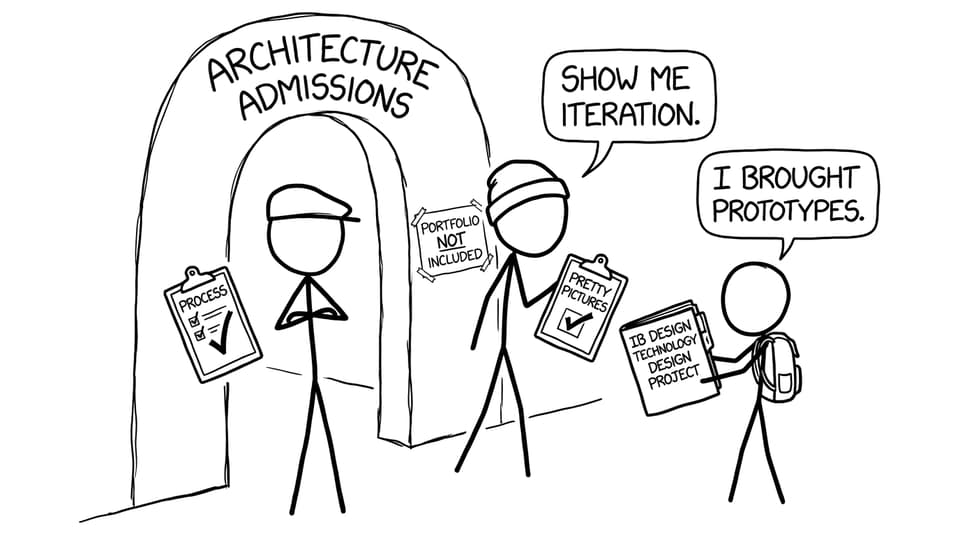
Portfolio expectations for architecture admissions
Think of IB Design Technology as your “design reasoning” subject. You still need to meet technical requirements, and you still need to build visual communication skills if your target schools demand a portfolio.
Best subject combinations if you want architecture
IB Design Technology works best when your schedule tells a coherent story.
Commonly helpful pairings include:
-
Maths (often essential)
-
A science for analytical confidence (Physics is common, but requirements vary)
-
A creative subject if you want portfolio momentum
If you’re trying to decide how to balance revision time across DT content, the post Best Study Strategies for IB Design Technology Students gives a routine that fits exam season.
IB Design Technology vs Visual Arts for architecture
Students often frame this as a rivalry. It’s more like two different gym plans.
Choose IB Design Technology if you prefer:
-
Structured creativity
-
User-centred problem-solving
-
Evaluating designs with evidence
Choose Visual Arts if you prefer:
-
Expressive exploration
-
Portfolio-first growth
-
Artistic risk-taking
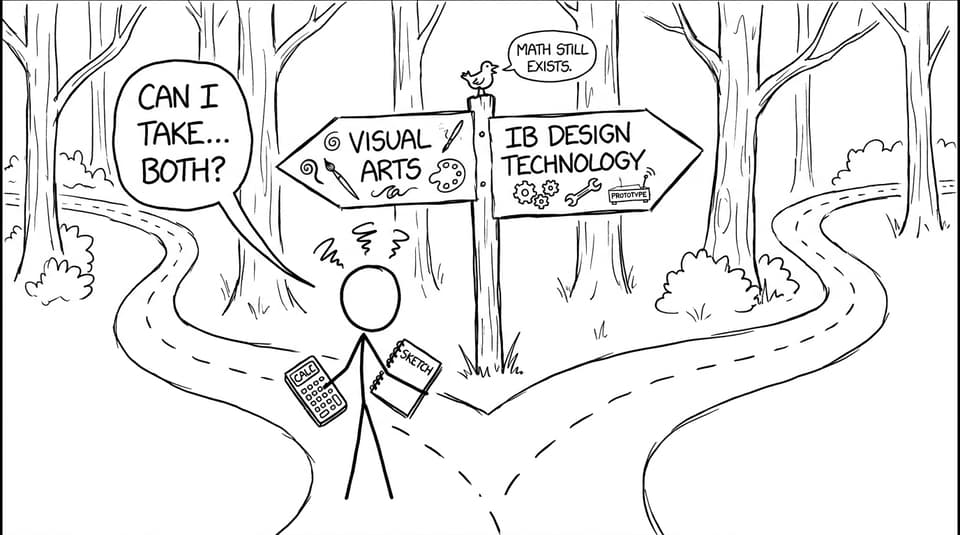
Many architecture applicants do both, but you don’t need both for a strong application. If you choose IB Design Technology, make sure your application language highlights iteration, constraints, and decision-making.
How to turn IB Design Technology into application strength
When you talk about IB Design Technology in applications, avoid describing only the final product. Architecture tutors tend to listen for process.
Focus on:
-
What you learned about users (not what you assumed)
-
The constraint you struggled with most and how you adapted
-
How testing changed your design
-
One decision you can defend with evidence
A useful exercise is to practise writing your project story like an exam response: claim, evidence, evaluation. That tone shows maturity.
Exam prep: keep IB Design Technology useful for architecture and grades
In the final stretch, you want your IB Design Technology revision to do two jobs: help you score well and keep your architecture pathway credible.
A practical loop:
-
Use Study Notes to clarify the exact syllabus language
-
Drill command terms and exam-style writing in the Questionbank
-
Lock in definitions with Flashcards (short, daily, consistent)
-
Use AI Chat when you’re stuck translating ideas into markscheme wording
-
Run timed practice with IB Predicted Papers and treat mistakes as design feedback
If you’re unsure about note structure, How to Create Effective IB Design Technology Revision Notes helps you organise content like a designer, not a highlighter.
Closing: choose IB Design Technology with eyes open
So, is IB Design Technology good for architecture? For many students, yes, because it teaches you to treat design as a chain of reasons: user need, constraints, iteration, evaluation. Architecture is full of drawings, but it’s powered by decisions.
If you want that decision-making to also turn into exam marks, RevisionDojo is built to support the whole loop: Questionbank, Study Notes, Flashcards, AI Chat, Grading tools, Predicted Papers, Mock Exams, a Coursework Library, and Tutors when you need human-level feedback.
Start at the IB Design Technology hub, pick one weak topic, and run one focused revision session today. IB Design Technology works best when you treat progress like a design cycle: small iterations, repeated often.