


If you have ever watched two countries “promise peace” while quietly increasing their defence budgets, you have already met realism.
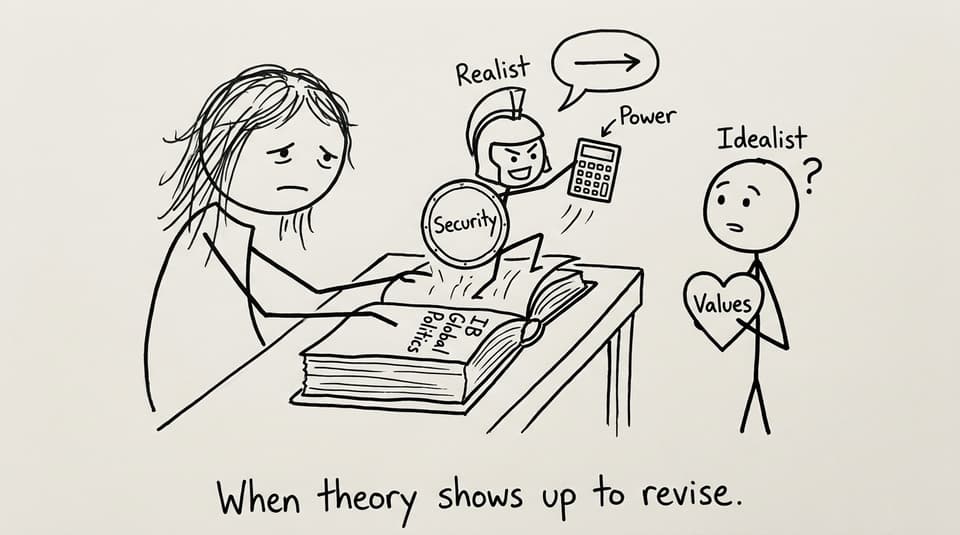
In IB Global Politics, realism is the theory that refuses to be surprised. It assumes that the world is competitive, that security is fragile, and that states behave the way stressed people do in a crowded room: they look for exits, size up rivals, and protect what they have.
Realism in IB Global Politics: a quick checklist
When you see a case study, ask:
-
Is the international system anarchic (no higher authority)?
-
Are states the main decision-makers?
-
Are actions driven by national interest and survival?
-
Is power (especially military power) the key currency?
-
Can cooperation be explained as temporary and interest-based?
This checklist is a fast way to “activate” IB Global Politics theory under exam pressure.
The core idea: anarchy (not chaos)
Realists start with one blunt assumption: the global system is anarchic. That does not mean disorder. It means there is no world government that can reliably protect states or enforce rules the way a domestic government can.
In IB Global Politics, this matters because it explains why security often beats morality in state decision-making. If survival is uncertain, states lean toward self-help. Treat “anarchy” as your foundational concept: it sets up why fear, mistrust, and competition can persist even when everyone claims to want stability.
If you want a clean definitions refresher before writing, RevisionDojo’s IB Global Politics Glossary is built for quick, exam-friendly language.
States first: the realist focus on the primary actor
Realism is famously state-centric. States have sovereignty, territory, and enforcement power. In realist logic, NGOs and international organisations can matter, but they cannot ultimately guarantee security in the same way a state can.
That is why realism fits so naturally into IB Global Politics questions on war, deterrence, alliances, and rivalry. When you feel lost in a stimulus, anchor your analysis back to state interests: Who gains security? Who loses strategic depth? Who feels threatened?
For broader course context and targeted revision tools, start from Global Politics - IB Resources | RevisionDojo.
Power and the security dilemma (the most testable duo)
Realists treat power as practical insurance. Military capability, economic leverage, and strategic alliances are ways to reduce vulnerability.
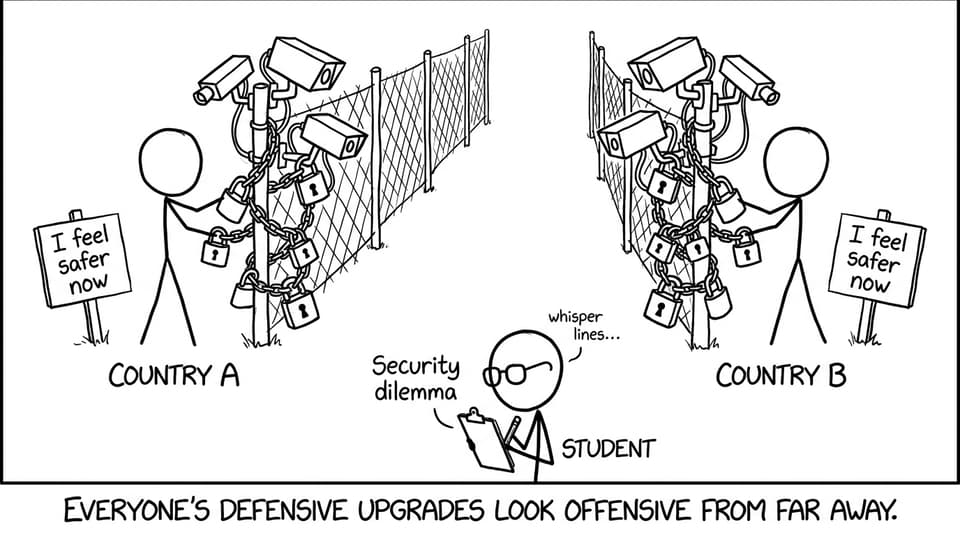
But there is a trap: the security dilemma. When one state increases its military capabilities to feel safer, others may interpret it as preparation for aggression and respond in kind. Everyone becomes less secure, even if no one intended conflict.
To tighten your terminology around power, use Types and definitions of power - IB Notes.
Institutions and ideals: why realists stay sceptical
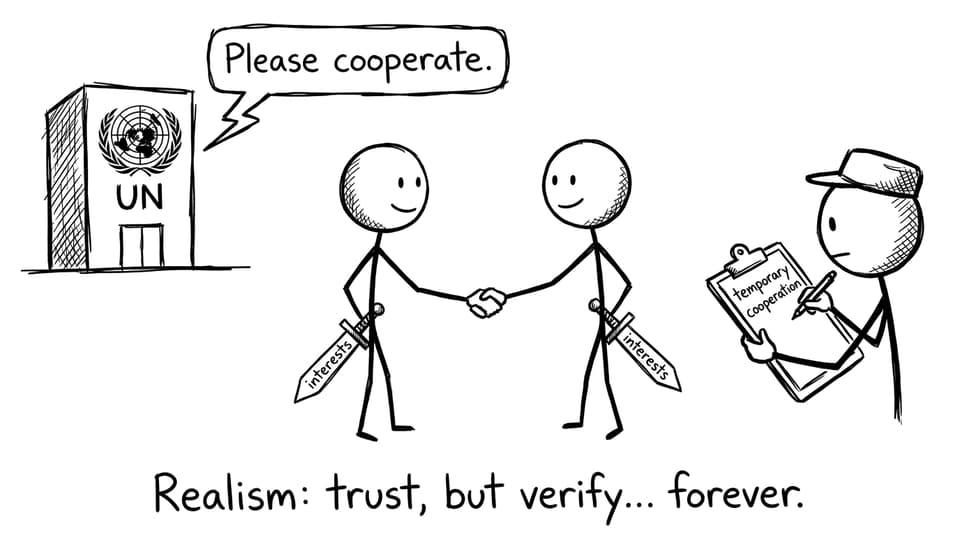
Realists are not saying cooperation never happens. They are saying cooperation is usually conditional. Institutions can facilitate agreements, but they do not erase anarchy. When interests shift, commitments can weaken.
For IB Global Politics evaluation, this is gold: realism explains patterns of conflict and competition well, but it can underplay norms, identities, and the growing influence of non-state actors.
To practise writing balanced evaluation, compare lenses using Strengths and Weaknesses of Global Politics Theories and Which Theory Best Explains Modern Conflicts?.
How to use realism in IB Global Politics exam answers
In IB Global Politics, realism earns marks when it is used as a tool, not a label. A strong paragraph usually does three things:
-
Apply: connect a real-world action to anarchy, security, or power.
-
Explain: show the causal logic (fear, vulnerability, deterrence, relative gains).
-
Evaluate: note what realism misses (norms, institutions, domestic politics, identity).
For exam practice, build speed with RevisionDojo’s Theoretical perspectives - IB Questionbank and structure timed responses with the IB Global Politics Paper 2 Guide.
Conclusion: make realism your default lens, then evaluate it
Realism is often the fastest way to explain why states compete, arm themselves, and sometimes choose force even when the costs are obvious. For IB Global Politics, treat it like your first pair of glasses: put it on, interpret the event through power and security, then switch lenses to evaluate what realism cannot explain.
To turn that into marks, combine RevisionDojo’s Study Notes, Flashcards, and AI Chat with the Questionbank and Grading tools for feedback-driven practice. When you are ready to simulate exam conditions, use Mock Exams and Predicted Papers from RevisionDojo’s IB Global Politics hub and walk into the exam with theory that actually moves your argument forward.