

Power is one of those words you think you understand until you try to define it under timed conditions.
In IB Global Politics, that moment usually arrives when a Paper 1 source mentions “influence” and your brain reaches for the obvious: armies, money, borders. Then the question quietly asks you to explain how influence works, who benefits, and why some actors seem powerful even when they lack tanks or GDP.
This guide is here for that exact moment. We’ll keep the concept clear, exam-ready, and flexible enough to apply to almost any case study you revise.
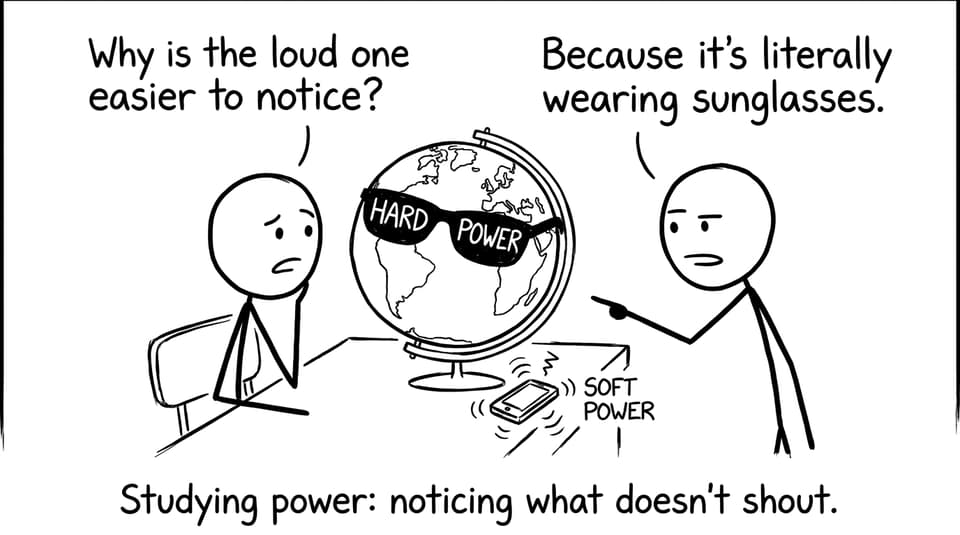
Power in IB Global Politics: a clean definition
In IB Global Politics, power is the ability of an actor to influence decisions, shape outcomes, or affect the behaviour of others in global politics.
Two details matter for marks:
-
Power is core (you will use it constantly).
-
Power is contested (reasonable scholars define and measure it differently).
If you want syllabus-aligned wording and practice, keep the IB Global Politics hub open while you revise: IB Global Politics Resources.
Quick checklist: how to talk about power in exams
Use this mini-checklist to keep answers sharp in IB Global Politics:
-
Name the actor (state, IGO, NGO, company, movement, individual).
-
Identify the type of power (material, relational, structural, ideational).
-
Explain the mechanism (coercion, incentives, agenda-setting, norm-shaping).
-
Add one precise example (date/stat/decision/outcome).
-
Include evaluation: limits, trade-offs, or a counter-interpretation.
For structure help, borrow the paragraph rhythm from: IB Global Politics Essay: Top-Scoring Structure.
Material power: the obvious kind (and still important)
Material power is the most visible type: military capability, economic resources, population, territory, technology, and access to strategic assets.
In IB Global Politics, material power often appears in realist explanations: states seek security, compete, deter rivals, and protect interests. But in exam answers, the mistake is stopping at description. Instead, show how material power turns into outcomes: sanctions that change behaviour, military alliances that shift bargaining power, or economic leverage that influences negotiations.
To practise writing it under pressure, use targeted drills from RevisionDojo’s Questionbank and then check your reasoning with AI feedback: Framing Global Politics Questionbank.
Relational power: power changes depending on who is in the room
Relational power is a quiet idea with huge payoff: power exists within relationships, not just inside actors.
A state can be powerful in one issue area and constrained in another. A smaller state can gain influence through alliances, strategic geography, niche expertise, or credibility. In IB Global Politics, relational power helps you avoid one-size-fits-all answers and makes evaluation feel natural: “This actor has leverage here, but not there.”
If you want a neat way to apply relationships to real examples, build a case-study dossier using: IB Global Politics Case Study Prep Notes.
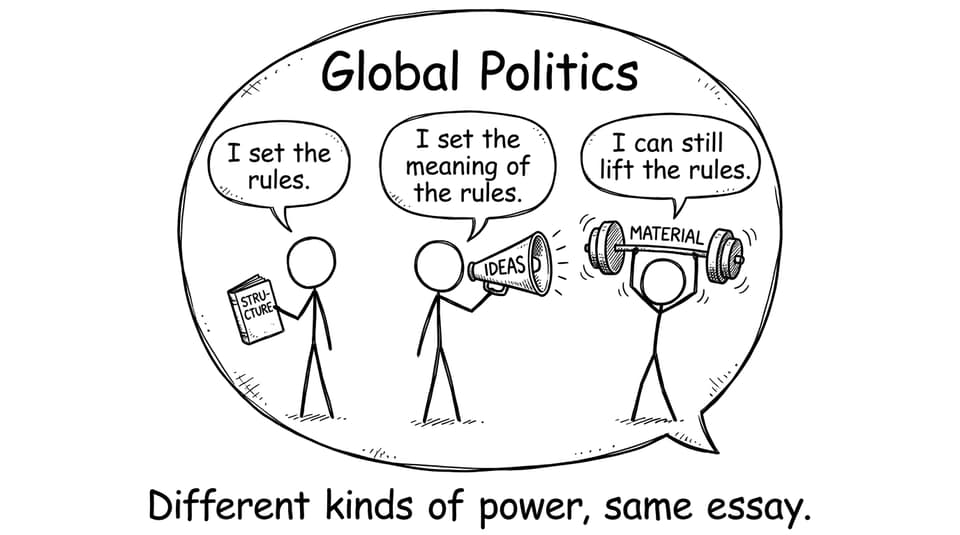
Structural power: who gets to set the rules?
Structural power is embedded in institutions and systems: global trade rules, international law, finance, and the procedures that decide whose voices count.
This form of power often operates without dramatic headlines. It shapes incentives and limits choices before negotiations even begin. In IB Global Politics, structural power is especially useful for essays on inequality, development, and global governance because it explains why some outcomes repeat over time even when leaders change.
To strengthen this area, revise the role of institutions and cooperation using: Notes for Intergovernmental Organizations.
Ideational power: controlling the story can be controlling the outcome
Ideational power is the ability to shape norms, values, and the language used to describe issues.
If you can define what counts as “security,” “terrorism,” “development,” or “human rights,” you can shape agendas without firing a shot. Media framing, education, diplomacy, and cultural influence all matter here. In IB Global Politics, ideational power often becomes the difference between a mid-level answer and a high-level one because it shows conceptual depth.
For concept practice, you can train definitions and evaluation with: Legitimacy Questionbank.
Why power is a contested concept (and how to use that for marks)
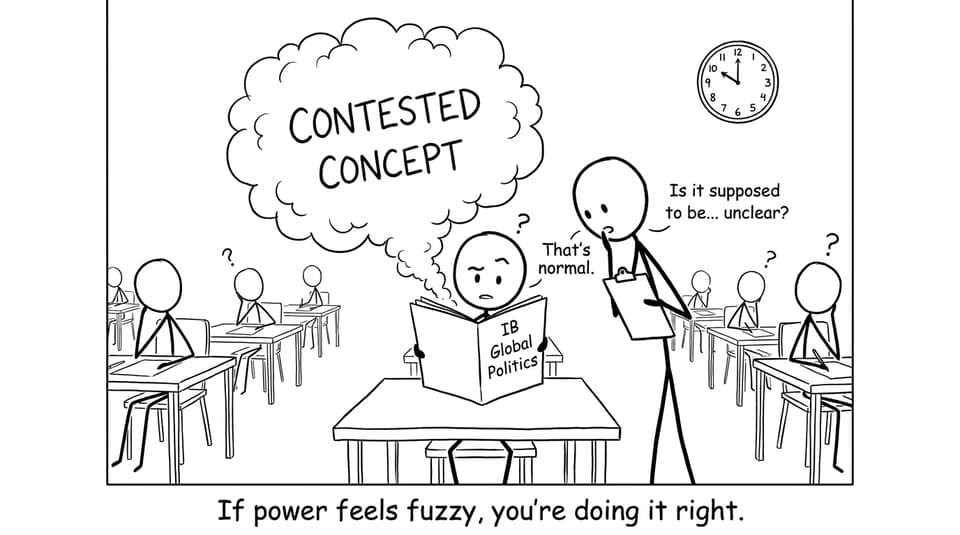
“Contested” doesn’t mean “confusing.” It means the debate is part of the content.
Different theories prioritise different sources of power, and each has blind spots. Realism may emphasise material capabilities; liberal perspectives may highlight institutions and cooperation; constructivist approaches often focus on norms and identity. In IB Global Politics, you score well when you acknowledge these lenses and then make a justified judgement about which best explains this case in this context.
If you’re studying the full unit, RevisionDojo’s topic page is a helpful anchor: Power and Global Politics.
Closing: turn power into a repeatable exam skill
Power in IB Global Politics isn’t just “who is strongest.” It’s who can shape choices, rules, and meanings across different contexts. Once you can name the type of power and explain the mechanism, your essays become calmer and your analysis becomes sharper.
If you want a single place to practise that skill, RevisionDojo is built for it: Study Notes for understanding, Flashcards for recall, Questionbank for exam-style pressure, Mock Exams and Predicted Papers for timing, AI Chat for fast clarification, and Grading tools to tighten evaluation. Start here and build your momentum: IB Global Politics Resources.