


You can usually spot the moment someone misunderstands IB Design Technology.
It’s when they say, “Oh, that’s the one where you just build things, right?”
If only.
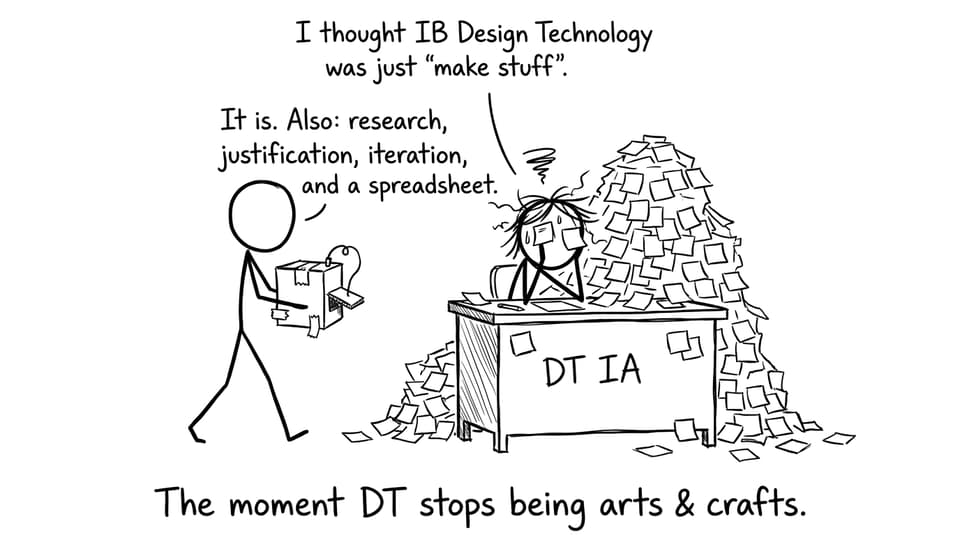
IB Design Technology is the subject where a simple-looking product turns into a chain of decisions: user needs, ergonomics, materials, sustainability, manufacturing, and then the hardest part: explainingexplaining every choice clearly enough that an examiner can award marks. For exam-focused IB students, it can be one of the most satisfying subjects to revise, because the course rewards thinking that is practical and structured.
What is IB Design Technology?
IB Design Technology is a Group 4 subject that teaches you to solve real-world problems through design. You study how designers move from a messy situation (a user problem in a real context) to a justified solution.
The emphasis is not on being “artistic.” It’s on being evidence-based. In IB Design Technology, you’re expected to think like a designer: define the problem, research what matters, generate options, evaluate trade-offs, prototype, test, iterate, and reflect.
If you want a single place to see what the course covers and how to revise it, start with the IB Design Technology Resources hub.
Quick checklist: is IB Design Technology a good subject choice?
Before you commit to IB Design Technology, ask yourself:
-
Do I enjoy solving practical problems with constraints (time, cost, user needs)?
-
Am I willing to write a lot of justification, not just build a final product?
-
Can I manage a long project without leaving everything to the last minute?
-
Do I like mixing creativity with science-style reasoning?
-
Do I want a subject that trains portfolio-ready skills (design thinking, iteration, evaluation)?
If you said yes to most of these, IB Design Technology tends to fit.
What do you study in IB Design Technology?
The content in IB Design Technology sits at the intersection of design theory and real application. You’ll see recurring themes like:
-
Human factors and ergonomics
-
Materials and their properties
-
Modelling and prototyping
-
Manufacturing and production thinking
-
Sustainability, ethics, and environmental impact
-
Evaluating products using measurable criteria
A useful way to revise is topic-first rather than “read everything.” RevisionDojo makes that easy because you can jump from notes to practice instantly. For example, if you’re tightening up your prototyping knowledge, go straight to targeted practice like the Modelling and Prototyping Questionbank. If you’re reviewing manufacturing systems, use a focused page like Computer-integrated manufacturing (CIM).
And if you like studying through examples (which DT rewards), a topic like Classic Design can be a surprisingly high-return revision area.
How is IB Design Technology assessed?
Assessment in IB Design Technology comes from two directions:
External exams
The exams test more than recall. They test whether you can apply design concepts to unfamiliar scenarios and justify decisions using DT language (command terms and criteria-based reasoning).
A fast way to build exam confidence is consistent practice. The IB Design Technology Questionbank helps you practise by topic, so you can turn weak areas into repeatable drills instead of vague revision.
Internal assessment: the design project
The internal assessment in IB Design Technology is a design project. It’s where students either gain a huge advantage or lose marks through missing evidence.
If you want a clear breakdown of what the project actually is, read What Is the IB Design Technology Design Project? and keep Step-by-Step Guide to Writing a Winning IB Design Technology IA bookmarked as a planning reference.
Is IB Design Technology hard?
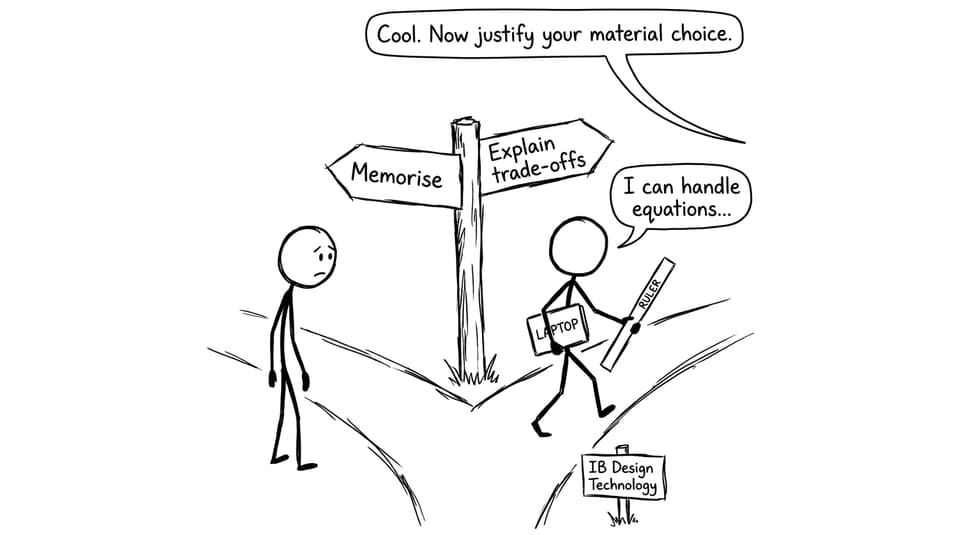
IB Design Technology is hard in a specific way: it’s demanding because it’s open-ended.
Some subjects feel difficult because the content is dense. DT can feel difficult because you must make decisions and defend them. You’re graded on clarity: clear criteria, clear testing, clear iteration, clear evaluation.
Students often struggle when they:
-
build first and explain later
-
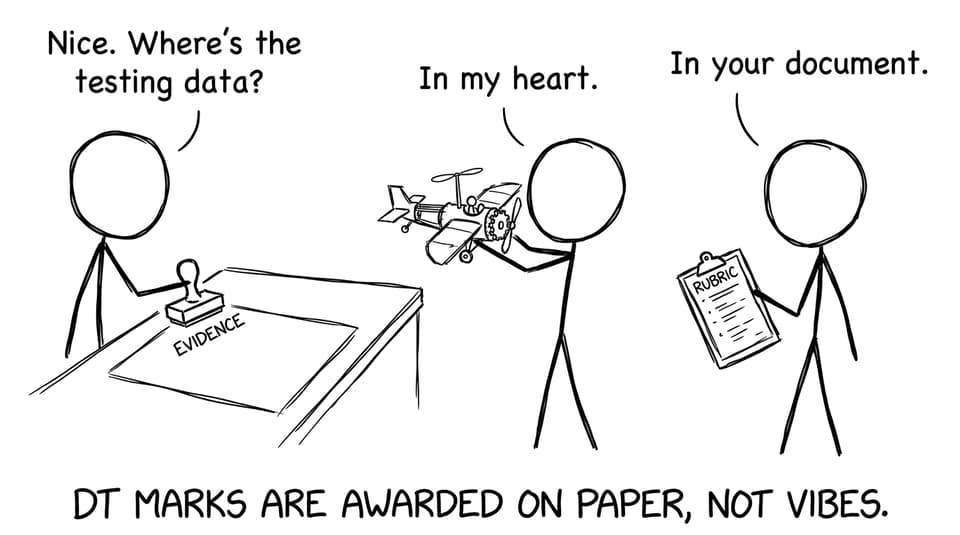
don’t collect measurable testing data
-
skip iteration (or claim it without evidence)
-
write vague design requirements that can’t be tested
If you want to understand how marks are actually awarded, these two guides are worth your time: How Is the IB Design Technology IA Graded? and How Do Teachers Mark IB Design Technology Internal Assessments.
Who is IB Design Technology best for?
IB Design Technology tends to be a great fit if you’re interested in:
-
engineering or product design
-
architecture and the built environment
-
human-centred problem solving
-
sustainability and ethical design
-
making ideas testable and measurable
It also suits students who like “applied learning”, youyou learn concepts, then immediately use them to judge real products or build justified solutions.
For a deeper feel of the mindset, How Does Design Thinking Work in IB Design Technology? is a strong overview.
How to revise IB Design Technology efficiently (without burning out)
The best revision for IB Design Technology is a loop:
-
Learn a concept quickly (notes)
-
Test it immediately (questions)
-
Fix the language (markscheme-style phrasing)
-
Repeat with spaced revision
RevisionDojo is built for this. You can move from Study Notes to Flashcards, then to the Questionbank, and use AI Chat when two terms blur together. When you’re preparing for exam conditions, build timed practice using Mock Exams and Predicted Papers. And when coursework pressure rises, use the Coursework Library, Grading tools, and Tutors to get feedback that’s aligned to criteria.
A practical routine is laid out in Best Study Strategies for IB Design Technology Students. If you’re worried about originality and inspiration boundaries, IB Design Technology: Can You Reuse Products or Ideas? is also worth reading.
Conclusion: should you choose IB Design Technology?
Choose IB Design Technology if you want a subject that rewards calm thinking under pressure and careful thinking over time. It’s not “just building.” It’s building, then proving why your solution deserves to exist.
If you’re aiming for top marks, keep your revision practical: study the syllabus points, practise questions weekly, and treat the IA like a long argument supported by evidence. Start at the IB Design Technology Resources hub, then build your system with RevisionDojo’s Questionbank, Study Notes, Flashcards, AI Chat, Mock Exams, Predicted Papers, Grading tools, Coursework Library, and Tutors. That’s how IB Design Technology becomes a strength you can rely on when exams get close.