What is Abraca ABC, Abraca ABC IB Business Management?
Three months before the exam, the IB drops a small document that changes the mood of an entire cohort.
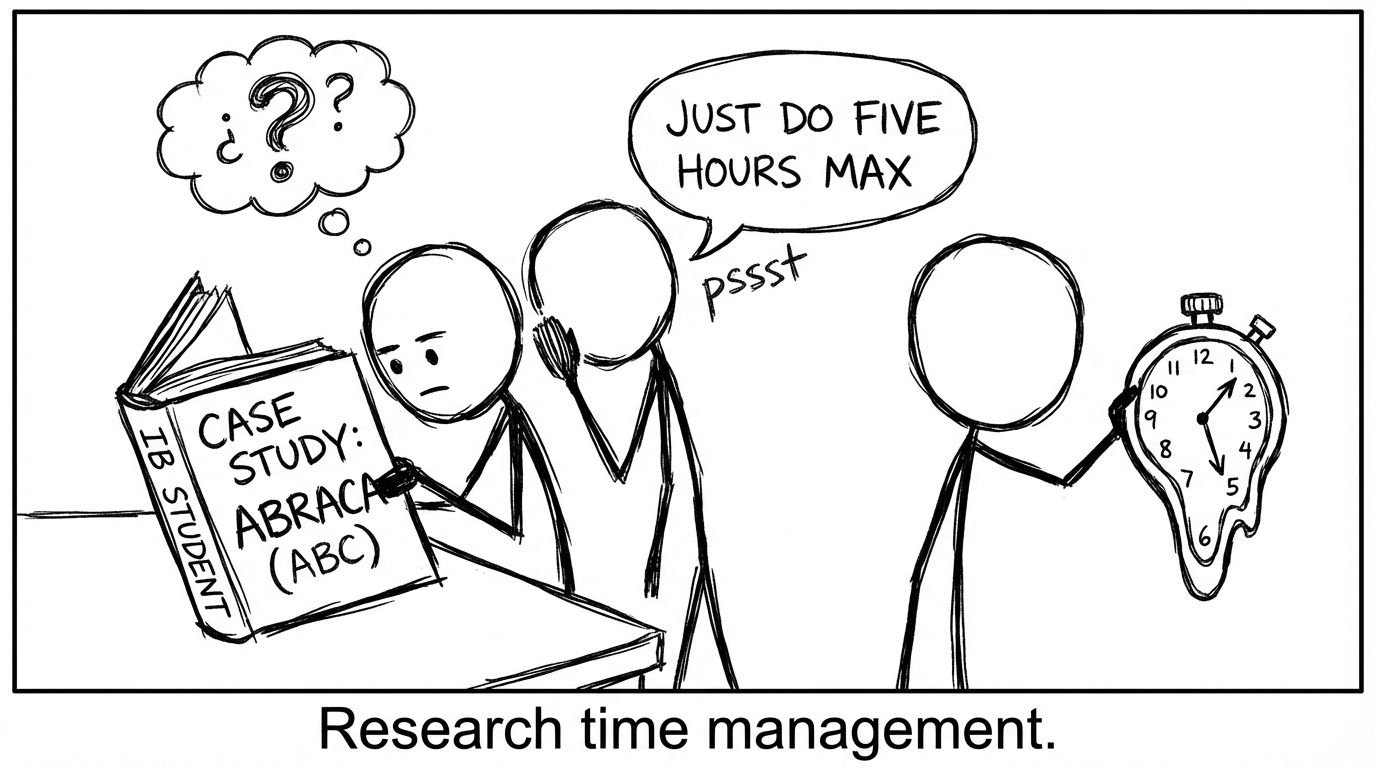
Not because it is long. Not because it is technical. But because it is specific. It tells you what the case study will be about, which topics sit slightly outside the Business Management guide, and it quietly suggests a limit: five hours of research. In other words: this is not a project. It is preparation.
So, what is Abraca ABC, Abraca ABC IB Business Management really asking you to do?
It is asking you to understand how a concrete producer in Country Z unexpectedly becomes a precious-metals recycler, and how that pivot creates a perfect IB-style tension between growth, ethics, sustainability, operations, and strategy.
Quick checklist: what to know about Abraca (ABC)
If you only have one page of notes by the end of your five hours, make it this checklist.
- Business identity: ABC is a publicly held company and the largest concrete producer in Country Z.
- Core operations: buys limestone and clay aggregates to manufacture cement and concrete.
- Discovery: ABC scientists discovered a room-temperature process to recover gold and other precious metals from e-waste circuit boards.
- Global context: 50 million tonnes of e-waste per year globally; only 20% recycled, 80% to landfill.
- New facility: opened in 2024; processes 100 tonnes of circuit boards weekly; recovers hundreds of kilograms of gold annually.
- Customers: gold sold to jewellery makers (hint: think B2B relationships and marketing orientation).
- Strategic considerations: efficiency in concrete, reduce environmental impact, become more market-orientated, and choose growth options.
If you want the full syllabus links that help you analyse all of that, start from RevisionDojo's main hub: IB Business Management resources.
What is Abraca ABC, Abraca ABC IB Business Management in one sentence?
What is Abraca ABC, Abraca ABC IB Business Management in exam terms?
It is a case study about a mature, carbon-intensive, large-scale operations business that discovers a lower-carbon innovation in e-waste processing, then faces strategic choices about scaling, market orientation, efficiency, and sustainability under stakeholder pressure.
That sentence is useful because it forces you to think like Paper 1 expects: not "what happens," but "what decisions follow."
The industry backbone: why concrete matters in Abraca (ABC)
Concrete is ordinary until you zoom out. Then you see why the case study says: half of the world's buildings are made from concrete.
From an IB lens, that single line is a gift.
- It signals scale economies and the importance of operations management.
- It signals externalities: concrete and cement are commonly framed as carbon-intensive industries.
- It signals market maturity: demand is stable, but competition and regulation can be intense.
For operations-focused revision, keep your tools sharp (and your definitions clean). RevisionDojo's Operations management topic list is a good "map" when you're trying to decide what to apply.
The surprise pivot: e-waste, circuit boards, and room-temperature recovery
The emotional core of the story is the word "by chance."
ABC wasn't hunting for gold. It was researching recycled aggregates for concrete. Then it discovered a process to recover precious metals from circuit boards at room temperature.
In IB Business Management terms, this invites multiple angles:
- Innovation and R&D: the discovery changes ABC's strategic options.
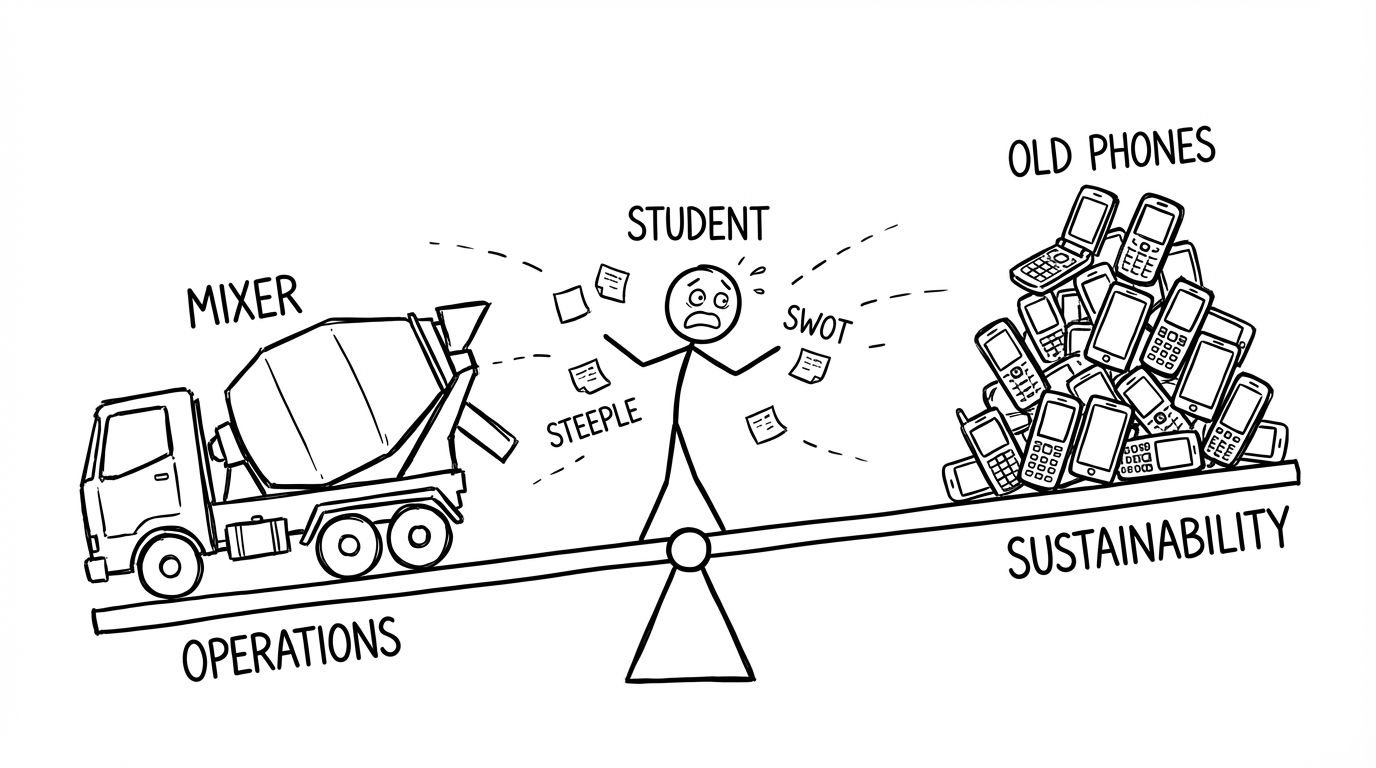
- Sustainability: room temperature implies lower energy use than burning circuit boards at extremely high temperatures (the case study calls the old method carbon-intensive).
- Business opportunity: turning waste into revenue.
- Risk: new operations, new compliance, new stakeholders.
And because ABC is publicly held, there is always an implied conversation with shareholders: "Is this a distraction, or the future?"
The terminology list: how to use it without over-researching
The IB's extra terminology list is not there to scare you. It is there to stop you wasting time.
If you learn the words and can use them naturally in analysis, you are already ahead.
Here is how to think about the key terms in what is Abraca ABC, Abraca ABC IB Business Management:
- Aggregates (construction materials): link to operations inputs and cost control.
- B2B: ABC sells gold to jewellery makers, which shapes marketing and relationships.
- Carbon-intensive: anchors sustainability evaluation and potential regulation.
- Circuit boards: the key input for the new factory.
- Concrete / cement / limestone / clay: core product and raw materials; think supply chain and vulnerability.
- E-waste / landfill / recycling: external environment, stakeholder scrutiny, and CSR.
- Plastic-shredding machinery: signals capital investment, capacity, and efficiency.
- Solar panels: hints at renewables and possible energy strategy.
- Toxic metals: compliance, safety, and ethical responsibility.
You do not need an engineering thesis. You need business meaning.
Becoming more market-orientated: what it likely means for ABC
The case says ABC is considering "becoming more market-orientated." That phrase is exam fuel.
Market orientation usually implies:
- systematic market research,
- listening to customer needs,
- adapting products and strategy to demand, not internal preference.
For revision, connect this to the marketing unit and especially the concept of orientation. RevisionDojo's marketing pathway starts here: Unit 4 Marketing Management.
If you want one tight angle: ABC may have historically been product-orientated (mass concrete producer), but the e-waste/gold business could push it to identify new customer segments, new value propositions, and new branding around sustainability.
To support evaluation in exam answers, it helps to understand how market data is gathered and used. Practice the logic with Market research practice questions.
Growth options: how to frame them using the Ansoff Matrix
When the case study says "growth options," you should hear: choose a tool.
The Ansoff Matrix is often the cleanest.
- Market penetration: sell more concrete in existing markets, maybe via efficiency or pricing.
- Market development: enter new geographic markets with concrete.
- Product development: innovate greener concrete mixes or recycled-aggregate variants.
- Diversification: scale e-waste processing further, or expand into adjacent recycling activities.
The case already hints at diversification (concrete to precious metals recovery). Your job is to evaluate whether ABC should deepen that move, and how risky it is.
RevisionDojo's Ansoff matrix notes are ideal for giving you the exact language examiners reward.
Efficiency in current concrete production: the operations angle that can win marks
It is tempting to treat the e-waste side as the "interesting" part. Many students will.
But the case study also explicitly includes "increasing efficiencies in its current concrete production." That is a clue that operations analysis can appear in multiple questions.
Possible efficiency themes you can evaluate:
- improved capacity utilization,
- lean production and waste reduction,
- better supplier contracts for limestone/clay,
- energy efficiency investments (solar panels appear in the terminology list for a reason),
- improved quality management.
When you need a quantitative-friendly angle (especially for HL thinking), break-even logic often supports evaluation of investment choices or cost changes. Practice the structure with Break-even analysis effects of cost or price changes.
Stakeholders and ethics: the tension you should keep returning to
ABC processes 100 tonnes of circuit boards per week. That is huge, and it creates stakeholders instantly.
- Local community: safety, pollution, jobs.
- Government/regulators: toxic metals, waste handling, environmental compliance.
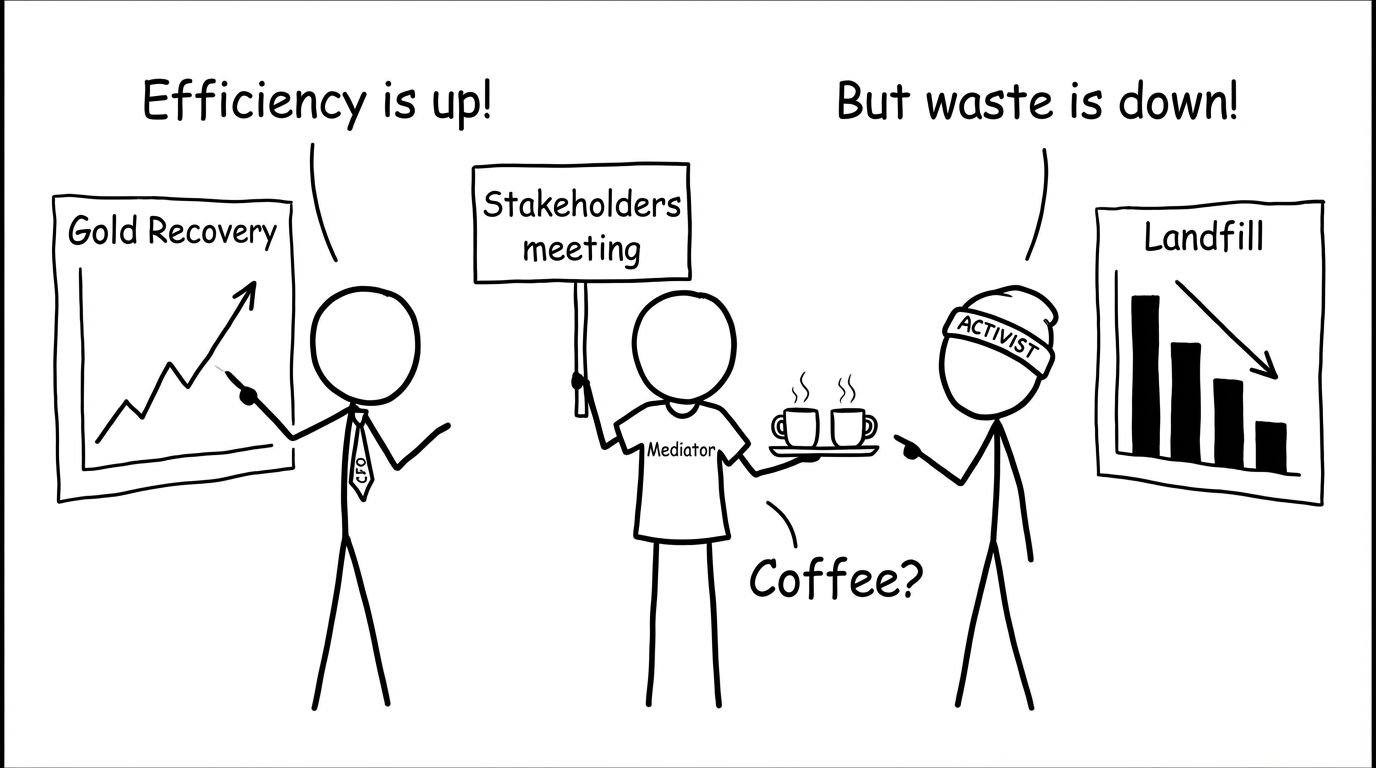
- Shareholders: profit, risk, reputation.
- Customers (jewellery makers): reliability, quality, ethical sourcing.
- Employees: training, safe working conditions.
The exam often rewards answers that show trade-offs, not just lists. A strong evaluation line sounds like: "This growth option improves profitability but increases reputational risk if recycling claims are challenged."
A smart 5-hour research plan (that matches what the IB wants)
The instruction "maximum of five hours" is also a hint about exam technique. You are not meant to bring in obscure statistics. You are meant to bring in clear business thinking.
Here is a five-hour plan aligned with what is Abraca ABC, Abraca ABC IB Business Management:
- Hour 1: Write definitions for all unfamiliar terms (aggregates, e-waste, B2B, landfill, carbon-intensive, toxic metals). Build a one-page glossary.
- Hour 2: Create a short STEEPLE brainstorm (2 bullets per factor) focused on concrete and e-waste.
- Hour 3: Choose 3 tools you will likely apply (SWOT, Ansoff, stakeholder map) and draft ABC-specific points.
- Hour 4: Practice two exam-style responses using RevisionDojo's Questionbank to make your writing timed and structured.
- Hour 5: Build a "case facts sheet" with the numbers (100 tonnes weekly, 50 million tonnes global e-waste, 20% recycled) and 6 implications.
For tool practice, use RevisionDojo's BM Toolkit hub so you're not guessing which framework fits.
How RevisionDojo helps you turn the case study into marks
The gap between reading and scoring is usually structure.
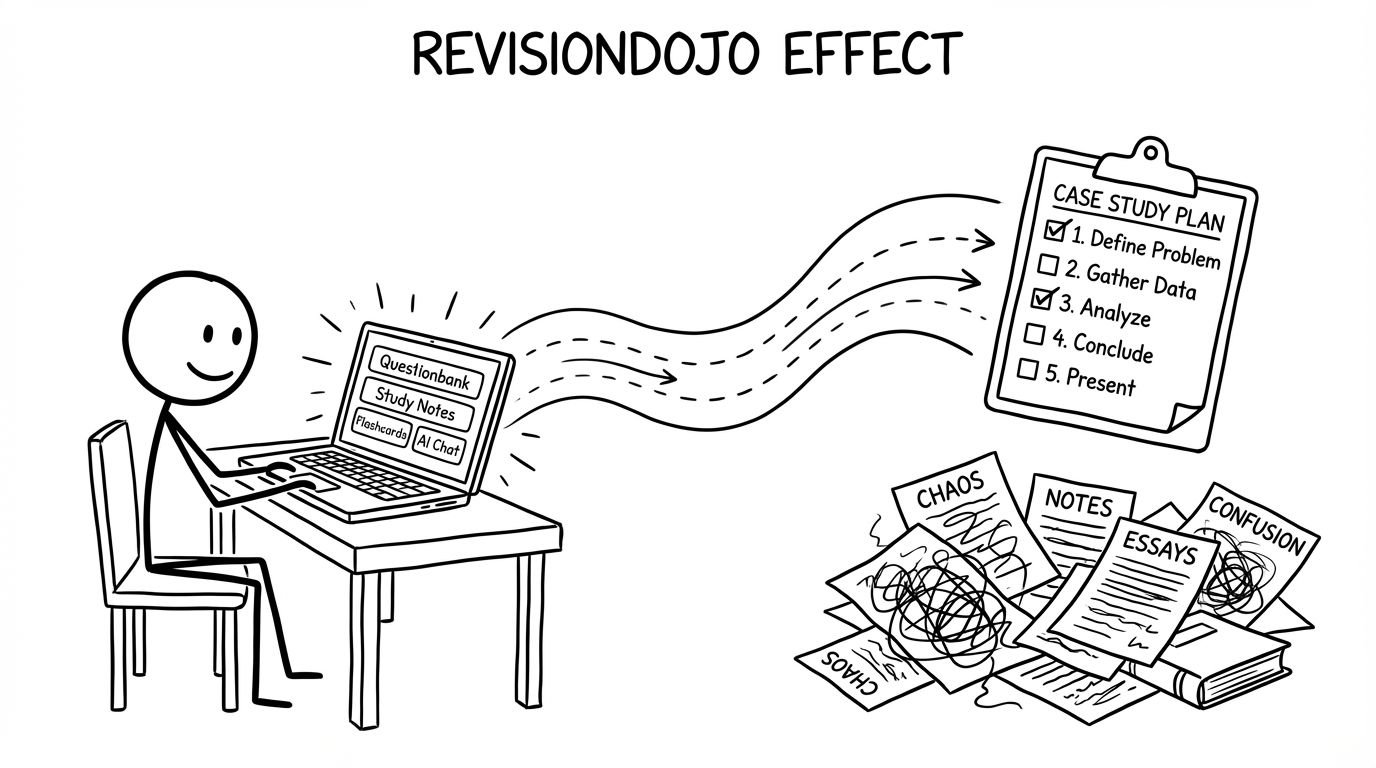
RevisionDojo helps close that gap in a way that fits the IB's five-hour intent:
- Study Notes to clarify the tools you might apply quickly.
- Flashcards to lock in the key terminology like "carbon-intensive," "B2B," and "e-waste."
- Questionbank to practise writing under time pressure with exam-style prompts.
- AI Chat to test your thinking: ask it to challenge your SWOT points or generate counterarguments.
- Grading tools to get rubric-based feedback on your case responses and coursework writing.
- Predicted Papers and Mock Exams to simulate the full Paper experience with the right pacing.
- Coursework Library and Tutors if you need models and human support to sharpen evaluation.
Start with the IB Business Management Predicted Papers when you're ready to practise end-to-end.
FAQ
What is Abraca ABC, Abraca ABC IB Business Management actually about in the M26 exam?
What is Abraca ABC, Abraca ABC IB Business Management is fundamentally about strategic decision-making under sustainability pressure. ABC is a large, publicly held concrete producer, which already puts it in a high-scale, operations-heavy context where efficiency and environmental impact matter. The twist is the accidental discovery of a room-temperature method to recover precious metals from circuit boards, which creates a new line of business tied to e-waste recycling. In the exam, you are likely to be asked to analyse choices like growth, market orientation, and environmental strategy using business tools. The case also gives you numbers (like weekly processing capacity) that can support evaluation and realism in your arguments. If you keep returning to trade-offs between profitability, risk, and sustainability, your answers will sound like top-band Business Management.
How much outside research should I do for Abraca (ABC) and e-waste?
You should treat the five-hour limit as a strategic boundary, not a challenge to hack. The IB is not asking for deep chemistry or engineering detail about metal recovery, and you can lose marks by writing irrelevant technical material. Instead, research just enough to use terminology correctly and explain business implications clearly, such as why room-temperature recovery may reduce energy costs and carbon emissions. Focus on stakeholder concerns like toxic metals, landfill reduction, and regulatory compliance, because those connect directly to Business Management concepts. Build a short glossary and a one-page context sheet, then stop. The best use of remaining time is practising exam responses with structure and evaluation, which is what the paper rewards. If you want efficient practice, RevisionDojo's Business Management Questionbank is the most time-effective way to convert your knowledge into marks.
Which business tools are most useful for analysing Abraca (ABC)?
Start with tools that let you compare options and evaluate consequences, because the case explicitly signals strategic choices. SWOT analysis helps you capture how ABC's scale and discovery create strengths, but also highlights threats like regulation and reputational risk. The Ansoff Matrix is especially helpful because the case involves potential diversification into e-waste processing and growth decisions around existing concrete markets. Stakeholder analysis is essential because recycling and toxic metals create multiple stakeholder groups with conflicting objectives. You can also bring in STEEPLE to frame external pressures like environmental policy, technology change, and social expectations around recycling. The key is not naming tools, but using them to produce a recommendation that is justified and balanced. RevisionDojo's BM Toolkit notes and lessons help you practise exactly that style of application.
Closing: turn "what is Abraca ABC" into your exam advantage
The students who score highest on the case study do something quiet and disciplined.
They read the context, learn the unfamiliar language, and then spend most of their time practising how to think with it.
That is the real answer to what is Abraca ABC, Abraca ABC IB Business Management: it is a structured invitation to analyse a business at the intersection of concrete, e-waste, growth, and sustainability, using the IB's tools with precision.
If you want the fastest route from context to confident answers, build your plan inside RevisionDojo: use the Study Notes and Flashcards for terminology, the Questionbank for exam-style practice, AI Chat for instant challenge questions, and the Predicted Papers and Mock Exams to rehearse the full experience under time pressure. What is Abraca ABC, Abraca ABC IB Business Management becomes much easier when you have a system that turns five hours of research into weeks of exam readiness.