
A carbon footprint is the story your choices leave behind
You can feel it in the tiny moments: the bus you don’t take because you’re late, the snack wrapped in three layers of plastic, the “quick” online order that arrives in a box big enough to live in. In IB ESS, those moments matter because they add up into a measurable idea: your carbon footprint.
A carbon footprint is the total amount of greenhouse gases released directly and indirectly by an individual, organization, product, or activity, usually expressed in tonnes of carbon dioxide equivalent (CO2e). It’s a simple definition with a powerful exam payoff. When you can explain carbon footprint clearly, you can connect consumption to climate change, sustainability, and systems thinking across the IB ESS syllabus.
Carbon footprint checklist for IB ESS answers
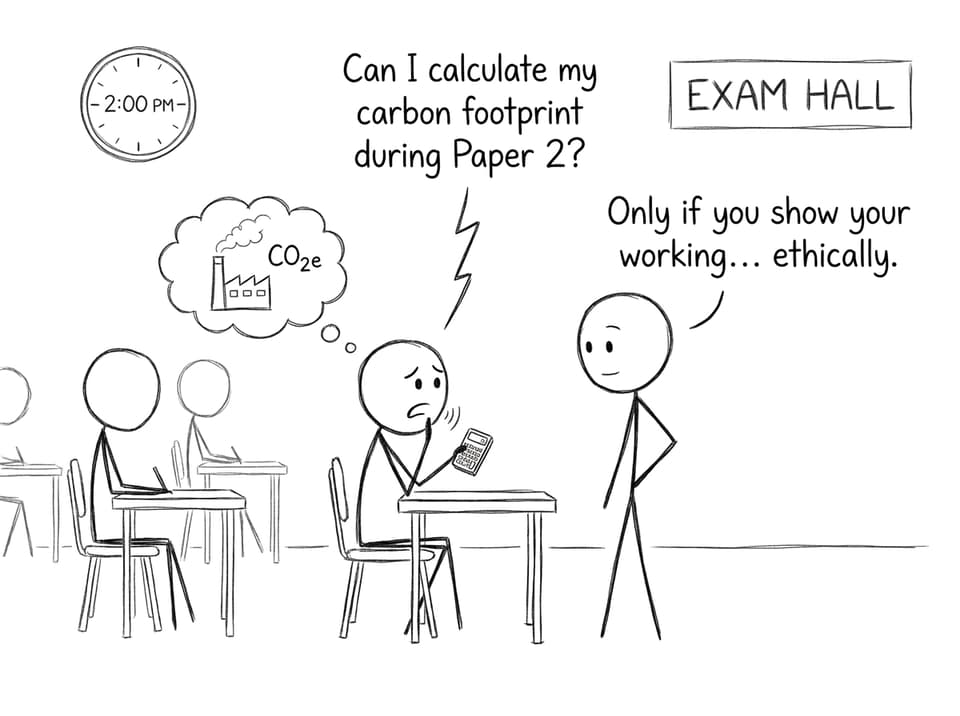
If an exam question mentions emissions, impacts, or sustainability, run this quick IB ESS checklist:
-
Define carbon footprint and state CO2e.
-
Separate direct vs indirect emissions.
-
Mention life cycle assessment (LCA) as a method.
-
Add one real example (transport, food, electricity, goods).
-
Evaluate limits: data uncertainty, boundaries, equity.
For wider course context and Topic links, keep the IB ESS resources hub open while you revise.
What counts in a carbon footprint in IB ESS?
In IB ESS, footprints are about boundaries: what you choose to include changes the number, and that’s part of the analysis.
Direct emissions (your “primary” footprint)
Direct emissions come from sources you control. Think: fuel burned in a car you’re driving, gas used for heating, or electricity use you can link to your household. These are often easier to see and easier to reduce quickly.
Indirect emissions (your “secondary” footprint)
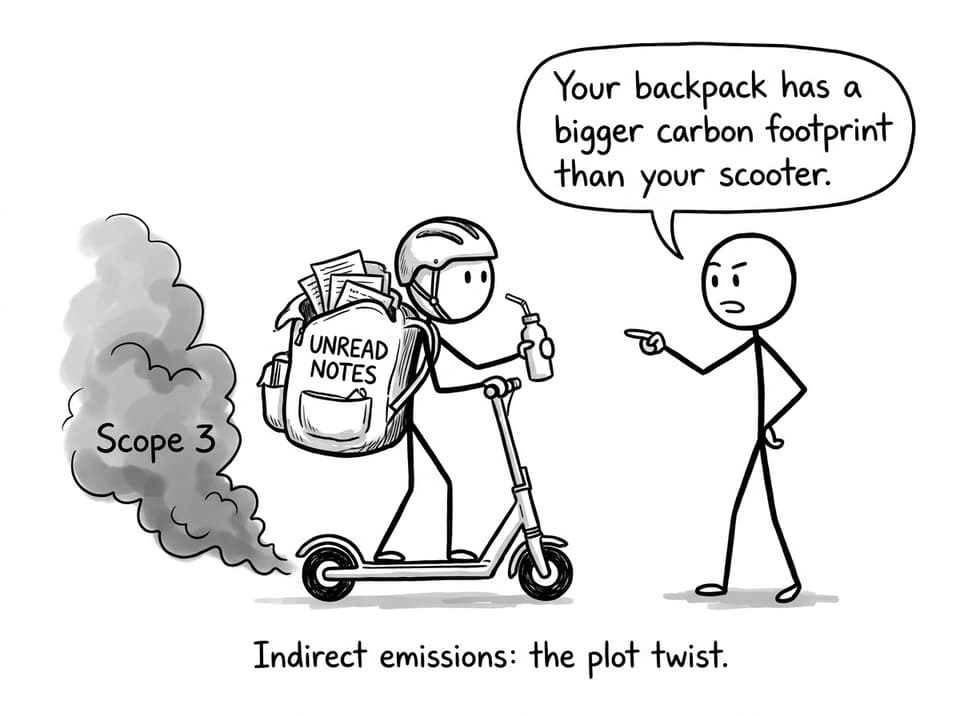
Indirect emissions happen up the supply chain and after you’re done using something. Manufacturing, shipping, packaging, and disposal all carry embedded emissions. Buying imported food, fast fashion, or new electronics can increase indirect emissions even if you personally “did nothing” that day.
This is why IB ESS emphasizes a systems approach: your footprint isn’t just what you burn, it’s what you trigger.
To tighten your terminology, RevisionDojo’s ESS key definitions glossary is a fast way to polish exam phrasing.
How carbon footprints are measured (CO2e, LCA, and accounting)
Carbon footprint calculations convert different greenhouse gases into a single unit: CO2e. This matters because methane and nitrous oxide warm the atmosphere differently, so CO2e standardizes impact for comparison.
Common approaches you can name in IB ESS:
-
Life Cycle Assessment (LCA): estimates impacts from raw materials to disposal.
-
Carbon accounting: often used by organizations to track emissions over time.
-
Online calculators: rough estimates based on lifestyle and consumption.
If you’re revising the bigger climate system, pair this with the carbon cycle notes so you can link emissions to stores, sinks, and sources.
Exam-ready examples of carbon footprint drivers
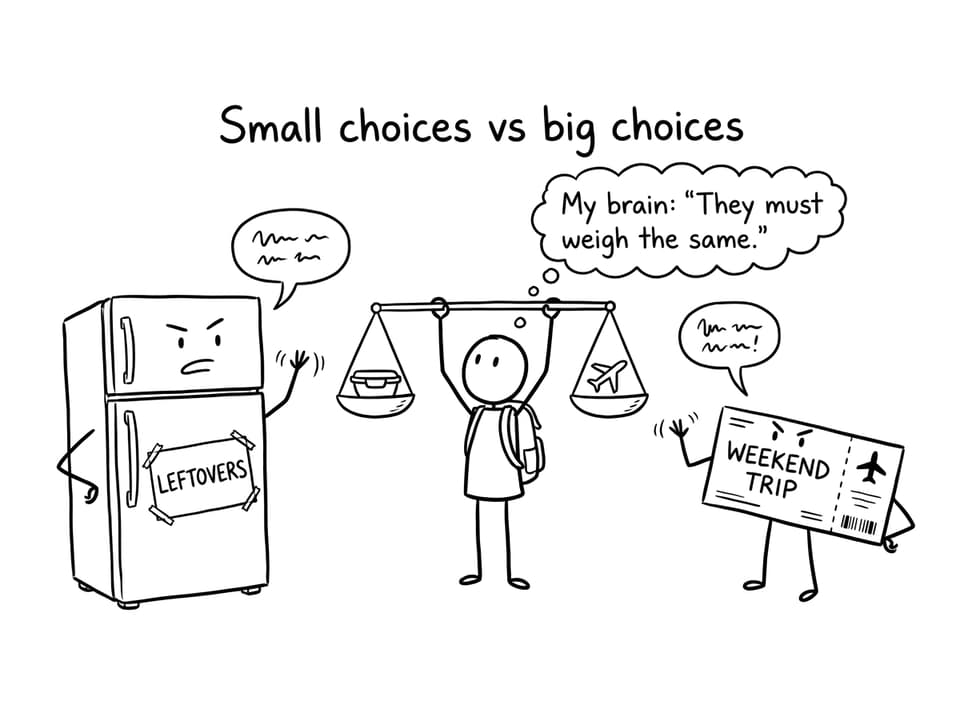
Examiners love when IB ESS answers stay concrete. Three flexible categories:
-
Transportation: air travel and private car use are high-impact per person.
-
Food systems: meat and dairy can be emission-intensive due to methane and land use.
-
Energy choices: fossil-fuel electricity increases CO2 emissions; renewables reduce operational emissions.
To practice how these appear in exam questions (graphs, short responses, evaluation), use the Foundations of ESS questionbank and the Topic 1 Foundations page.
Reducing a carbon footprint: IB ESS-style evaluation
A strong IB ESS response doesn’t just list solutions, it weighs trade-offs across the three pillars of sustainability. Strategies include:
-
Renewable energy transitions and energy efficiency
-
Public transport and active travel
-
Lower-carbon diets and reduced food waste
-
Reforestation and carefully evaluated offsetting
For a clean sustainability framing, connect this to What is sustainability? (IB ESS guide) and the core 1.3 Sustainability notes.
Closing: turn carbon footprint into marks
Carbon footprint is one of those IB ESS ideas that looks simple until you try to use it under exam timing. Define it cleanly, split direct vs indirect, mention CO2e and LCA, then evaluate limits and solutions. If you want to make that process feel calm, build a routine: learn the concept with Study Notes, lock it in with Flashcards, and stress-test it with timed Mock Exams and the Questionbank on RevisionDojo. When your definitions are automatic, your thinking gets room to be sharp.