


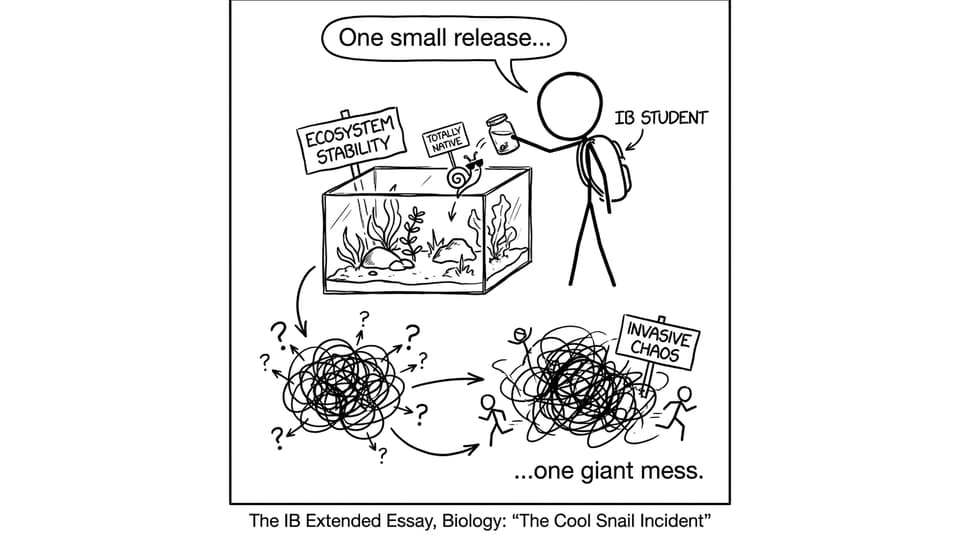
In the middle of revision season, your brain wants one simple rule: add one thing, get one result. Ecosystems do not work like that. In IB ESS, invasive species are the classic reminder that one small introduction can ripple through food webs, nutrient cycles, and even local economies. A single stowaway seed or aquarium fish can turn stability into a slow-motion systems failure.
What counts as an invasive species in IB ESS?
In IB ESS, an invasive species is a non-native organism that establishes, spreads, and causes harm (environmental, economic, or human health) in its new ecosystem. The key point for exams is that non-native does not automatically mean invasive; impact matters.
If you want the syllabus framing before you dive into case studies, start with the IB ESS syllabus success guide and then anchor your definitions with RevisionDojo’s IB ESS resources hub.
Quick checklist: how invasive species affect ecosystems
Use this as a fast IB ESS paragraph plan:
-
Arrive (often via human transport)
-
Establish (no predators, broad niche, fast reproduction)
-
Spread (high dispersal, disturbed habitats)
-
Disrupt (competition, predation, disease, habitat change)
-
Cascade (food webs shift, biodiversity drops, resilience weakens)
For the biodiversity language examiners love, pair this with 3.1A Biodiversity notes and the wider 3.3 Threats to biodiversity notes.
Why invasive species spread: the human system behind the biology
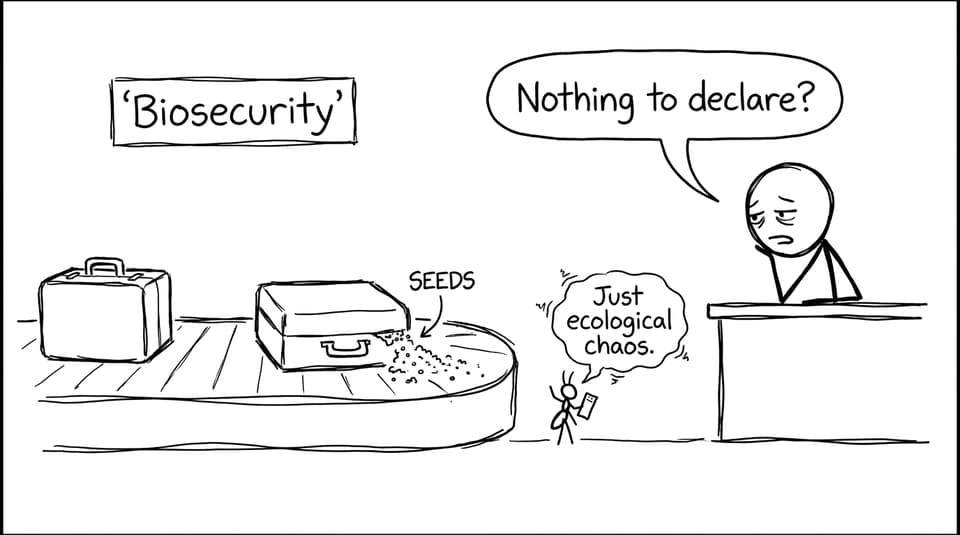
Most invasions are powered by human convenience: trade, travel, farming, gardening, and the pet industry. In IB ESS, this is where you earn systems-thinking marks: the pathway is social and economic, while the impact is ecological.
Climate change can also open doors. Warmer temperatures shift habitat suitability, letting some non-native species survive winters they previously could not.
Ecological impacts: the cascade IB ESS expects you to explain
Invasive species affect ecosystems through a few repeatable mechanisms:
Competition and competitive exclusion
Invaders may take food, light, nesting sites, or territory. If they exploit a broader niche or reproduce faster, native species decline. This connects neatly to resilience ideas in 1.2 Systems notes and the bigger skill of systems thinking in ESS.
Predation and food web disruption
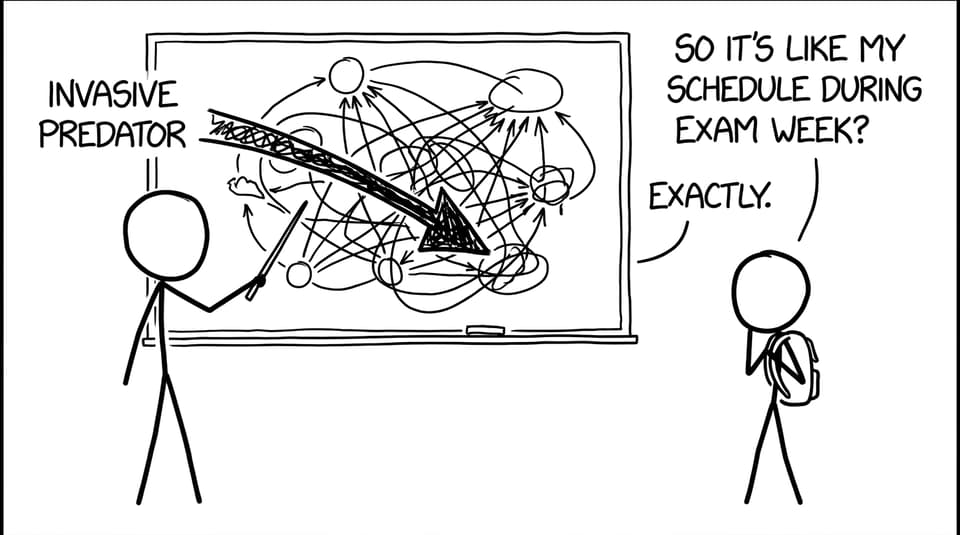
A new predator (or a new prey) changes trophic relationships. Remove enough energy from one level and the rest reorganizes. Examiners like phrases such as trophic cascade, reduced stability, and altered energy flow.
Habitat alteration and nutrient cycling changes
Some invasive plants reshape the physical structure of ecosystems (shade, root mats, fire regimes). Others change decomposition rates and nutrient availability, which can shift which species can even survive there.
Disease and pathogen introduction
Invaders sometimes carry parasites or pathogens that local species have no resistance to, lowering survival and reproduction.
Case study you can reuse: zebra mussels
Zebra mussels (Dreissena polymorpha) spread in North American freshwater systems via ballast water. They filter huge volumes of water, reducing plankton availability, and outcompete native mollusks. It’s a clean IB ESS example because it links ecology to infrastructure (clogged pipes) and economics (control costs).
Management strategies (and how to evaluate them)
In IB ESS, management is never “one perfect fix.” It’s trade-offs.
-
Prevention: inspections, biosecurity, public education
-
Early detection and rapid response: monitoring + quick removal
-
Biological control: introduce predators/parasites carefully (risk of new problems)
-
Mechanical/chemical control: effective but can harm non-target species
For conservation vocabulary and evaluation angles, connect to 3.3 Conservation and regeneration and the broader framing of biodiversity importance in ESS.
How this appears in IB ESS exam questions
Expect data-response items where you interpret population graphs, distribution maps, or before/after biodiversity indices. You can practice this style directly using RevisionDojo’s Ecosystems and Ecology Questionbank and deepen topic knowledge with the 3.2B Invasive species page.
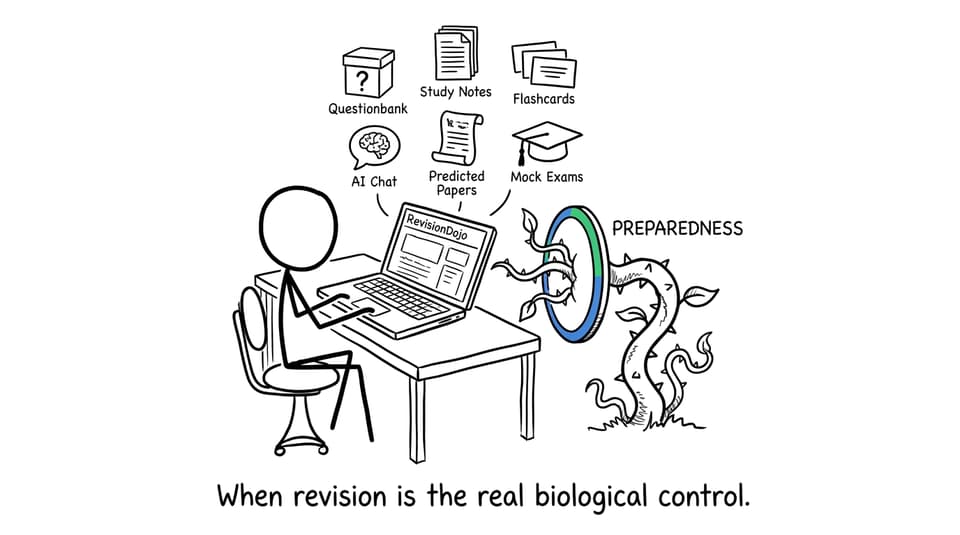
When you want the fastest loop from “I kind of get it” to “I can write it,” RevisionDojo helps you layer Study Notes, Flashcards, and AI Chat to test explanations, then use the Questionbank to lock in exam phrasing. Add Predicted Papers and Mock Exams when timing becomes the real invasive species in your schedule.
Conclusion: turn one topic into easy marks
Invasive species are not just a definition to memorize. In IB ESS, they are a ready-made story about systems: human pathways, ecological disruption, and management trade-offs. If you can explain how invasive species affect ecosystems as a cascade, competition, food web change, habitat alteration, disease, you can handle almost any data-response or essay angle.
To revise this efficiently, build your chain on RevisionDojo: start with the IB ESS resources hub, drill key terms with Topic 3 flashcards, and prove it under pressure in the Questionbank. That’s how IB ESS stops feeling like content and starts feeling like control.


