


A bakery at 6 a.m. looks simple from the pavement. Someone mixes flour, bread appears, and customers pay for it. But behind that ordinary exchange sits the whole architecture of a business: resources are purchased, risks are accepted, people are coordinated, value is created, and competing interests are balanced.
That is why "What is a business?" matters in IB Business Management. It is not merely an opening definition. It is the foundation beneath economic sectors, entrepreneurship, objectives, stakeholders, finance, marketing, human resources, and operations. Once you understand how these ideas connect, unfamiliar case studies become much easier to decode.
Business fundamentals at a glance
A business is a decision-making organization that combines resources to produce goods or provide services that satisfy customer needs and wants. It usually attempts to add value, although earning profit is not part of the definition itself.
Before moving on, make sure you can:
-
define a business without assuming every organization maximizes profit
-
identify inputs, transformation processes, and outputs
-
explain land, labour, capital, and enterprise
-
calculate and interpret added value
-
distinguish the four economic sectors
-
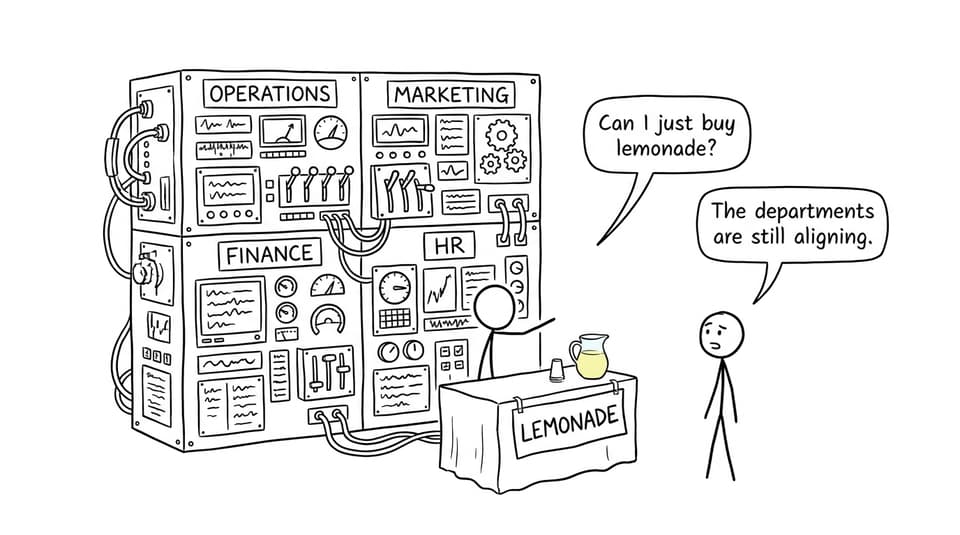
connect the four main functional areas
-
analyse objectives and stakeholder conflict
-
explain entrepreneurship and start-up challenges
-
apply every definition to evidence from a case study
Use the What Is a Business study topic as a syllabus-focused companion to this guide.
What is business activity?
Business activity begins with a gap between what people have and what they need or want. An entrepreneur or organization recognizes that gap and organizes resources to address it.
A need is generally essential, such as basic food or shelter. A want is desirable but not necessary for survival. Context matters, however. Internet access might appear to be a want until a student needs it to attend lessons or an employee requires it to work.
The basic process is:
Inputs -> transformation process -> outputs
Consider a tutoring business. Its inputs include tutors, subject knowledge, software, devices, finance, and time. Through lesson planning and teaching, it transforms those resources into an educational service. A manufacturing business follows the same broad process, although its output may be a tangible product.
A good is tangible, meaning it can be physically handled. A service is an intangible activity or benefit. Many organizations provide both: a restaurant supplies food while also offering preparation, convenience, atmosphere, and customer service.
The four factors every business needs
The resources used in production are called factors of production. IB students should know all four and apply them precisely.
FactorMeaningCafé exampleLandNatural resources and physical spaceWater, coffee beans, energy, premisesLabourHuman effort, knowledge, and skillsBaristas, cleaners, and managersCapitalManufactured resources used in productionCoffee machines, furniture, and computersEnterpriseInitiative, organization, and risk-takingThe founder coordinating the café
Capital can be confusing because everyday conversation often uses the word to mean money. In this framework, it commonly refers to productive assets such as machinery and equipment. Read the case carefully and make your intended meaning clear.
Enterprise is especially significant because resources do not coordinate themselves. An entrepreneur combines land, labour, and capital, makes decisions under uncertainty, and accepts the possibility that the venture may fail.
How a business creates added value
Added value is the difference between the selling price of an output and the cost of the bought-in inputs used to produce it:
Added value = selling price - cost of bought-in inputs
Imagine that a café uses $1.50 of ingredients and packaging to make a drink sold for $5.00. The added value is $3.50.
Crucially, added value is not profit. The café still has to pay wages, rent, utilities, interest, marketing expenses, and other costs. Confusing these two terms is one of the easiest ways to lose a knowledge mark.
A business can increase added value through:
-
recognizable branding
-
better quality or reliability
-
thoughtful product design
-
faster or more convenient delivery
-
customization
-
skilled customer service
-
useful technological innovation
The deeper point is that price alone does not create value. Customers must recognize a meaningful benefit. Raising the price without improving the offer may simply reduce demand. Explore this distinction further in How Businesses Create Value for Customers and Society.
Business sectors and the value journey
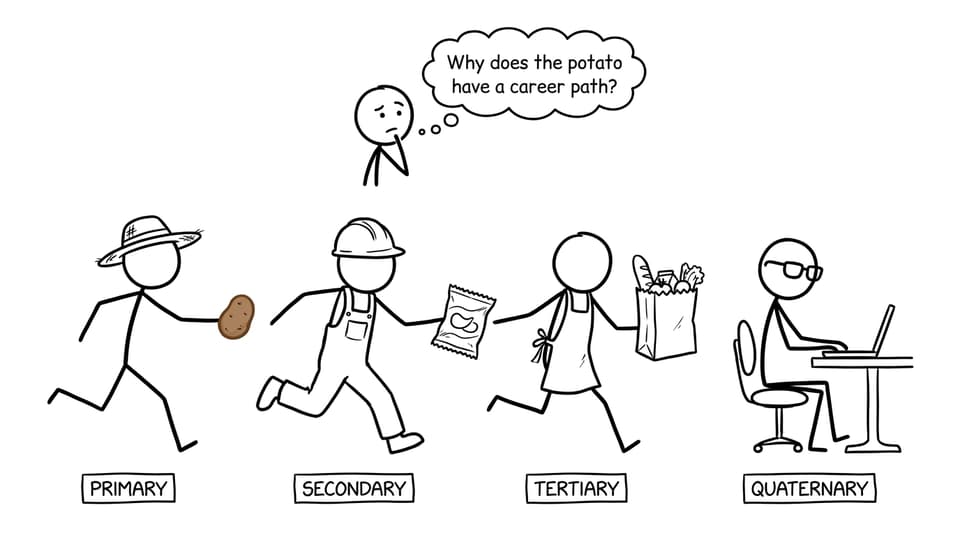
The current IB course distinguishes four sectors. These categories describe economic activity rather than ownership, legal structure, or organizational size.
SectorMain activityTypical examplesPrimaryExtracting or cultivating natural resourcesFarming, fishing, forestry, miningSecondaryTransforming materials or constructing productsManufacturing, food processing, constructionTertiaryProviding servicesRetail, transport, tourism, bankingQuaternaryProviding knowledge-intensive servicesResearch, software, data analysis, consultancy
One organization can operate across several sectors. A coffee company might grow beans, roast them, operate cafés, and analyse customer data. In an exam, classify the particular activity described rather than forcing the whole organization into one category.
For focused review, use the economic sectors notes and practice and compare the sectors through RevisionDojo's sector differences guide.
The four connected business functions
Most organizations divide responsibilities into functional areas:
-
Human resource management recruits, trains, organizes, motivates, and retains employees.
-
Finance and accounts obtains funding, records transactions, controls cash flow, and measures performance.
-
Marketing researches customers and coordinates product, price, promotion, and distribution decisions.
-
Operations management produces goods or services at the required cost, speed, and quality.
Weak answers describe these functions as separate boxes. Strong answers explain their interdependence. A marketing campaign may increase demand, but operations needs sufficient capacity, finance must fund the campaign, and human resources may have to recruit or train employees.
The IB Business Management resource hub organizes content around these connected units. The Business Management toolkit then helps students select frameworks for analysing decisions.
Objectives, stakeholders, and business conflict
Objectives give an organization direction and create standards against which results can be measured. Common objectives include profit, growth, protecting shareholder value, survival, increased market share, and ethical or environmental goals.
Profit is therefore a possible objective, not a condition that every business must satisfy. A social enterprise may generate revenue but prioritize a human, social, or environmental need. Its commercial activity supports its purpose rather than replacing it.
Objectives also create trade-offs. Higher wages might improve motivation while increasing costs. Rapid growth may raise revenue while creating cash-flow pressure. Sustainable materials may strengthen reputation but cost more in the short term. The business objectives revision resources provide further examples.
A stakeholder is an individual or group that affects, or is affected by, an organization's activities. Internal stakeholders include owners, managers, and employees. External stakeholders include customers, suppliers, lenders, governments, communities, and pressure groups.
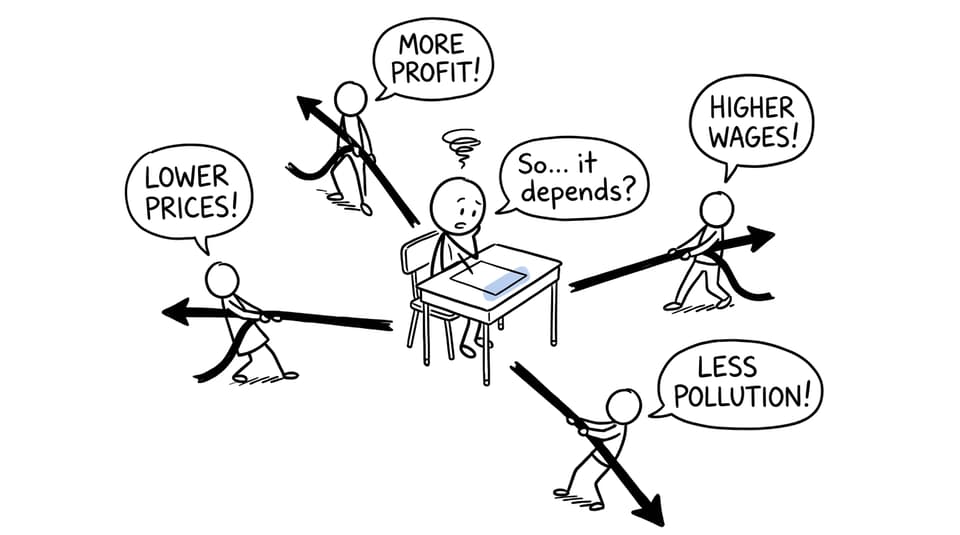
Do not merely list stakeholder groups. Explain the direction and significance of the impact. If automation reduces costs, owners may gain from stronger returns while employees face job insecurity. The internal and external stakeholders topic is useful for practising this analysis.
Entrepreneurship and starting a business
An entrepreneur identifies an opportunity, organizes factors of production, and accepts risk. Having an idea is only the beginning. The entrepreneur must research customers, obtain finance, plan operations, build awareness, recruit suitable people, and respond when assumptions prove wrong.
Common opportunities include independence, innovation, financial reward, personal achievement, and meeting an underserved need. Challenges include uncertain demand, limited finance, weak cash flow, established competitors, legal requirements, and difficulty earning trust.
These problems are connected. Poor market research can produce unrealistic sales forecasts. Those forecasts may encourage excessive spending, which can then cause a cash-flow shortage. Good analysis follows this chain rather than presenting isolated bullet points.
Turning business knowledge into exam marks
The current IB Business Management course was first assessed in 2024. It uses creativity, change, ethics, and sustainability as conceptual lenses. Its assessment objectives move from knowledge and understanding to application, analysis, synthesis, evaluation, and appropriate business skills.
That progression explains why memorizing definitions is not enough. Suppose a case says that a clothing organization buys recycled fabric, employs designers, manufactures jackets, and sells them online. A strong response might state:
The organization operates in the secondary sector because it transforms recycled fabric into finished jackets. Its designers may add value by creating distinctive products for which customers are willing to pay more than the cost of bought-in materials.
This works because it defines, applies, and explains. A reliable revision routine is definition -> case evidence -> consequence.
Start with RevisionDojo Study Notes and Flashcards for recall, then use the IB Business Management Questionbank for case-based practice. RevisionDojo's AI Chat and Grading tools can expose vague application, while Predicted Papers and Mock Exams build timed confidence. The Coursework Library helps students recognize effective research structure, and Tutors can provide individual guidance when a concept remains unclear.
Build the foundation before adding complexity
A business is an organized system for turning resources into goods or services that meet customer needs and wants. From that simple process come added value, economic sectors, functional decisions, entrepreneurial risk, objectives, and stakeholder conflict.
The students who improve fastest do not memorize the longest lists. They learn a precise idea, notice it inside a case, and explain why it matters. Use RevisionDojo as the ultimate IB resource to move deliberately from Study Notes and Flashcards to Questionbank practice, AI feedback, Mock Exams, and confident evaluation. That is how a basic definition becomes an exam-ready way of thinking.