
What I Wish I Knew Before IB Results Day
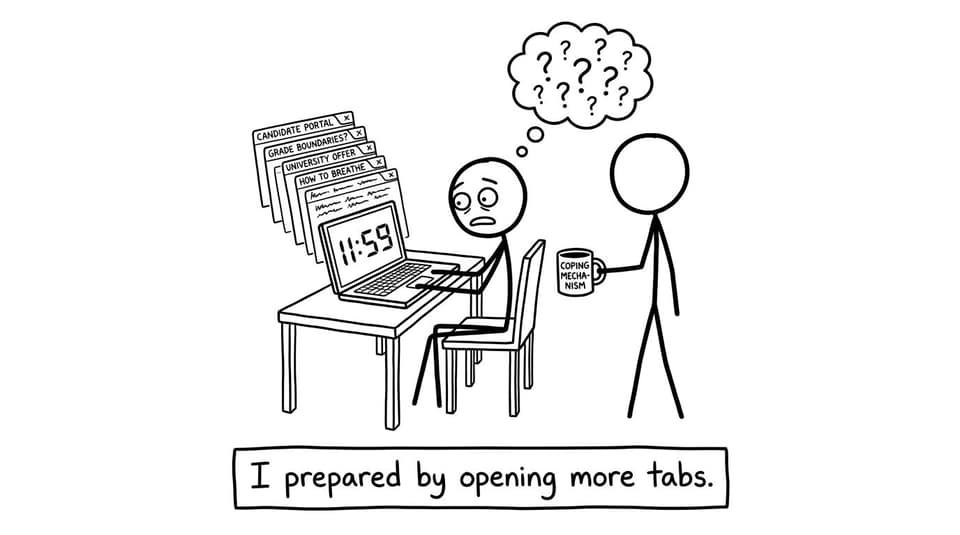
The night before IB results day has a particular kind of silence. Not peaceful silence: the kind where your brain fills the room with noise. You scroll. You reread messages you already understood. You open the candidate portal link "just to check it works," then you close it, then you open it again like that counts as preparation.
I wish someone had told me this: IB results day is not a single moment. It's a sequence of moments. And if you build a small plan for the sequence, your nervous system stops treating it like a cliff edge.
Because the truth is, whether your IB score lands exactly where you hoped or somewhere that surprises you, you will still need the same thing: clarity, a next step, and a way to turn emotion into action.
A calm IB results day checklist (save this)
Before IB results day:
- Find your login details and test access early (don't wait for adrenaline).
- Decide where you will open results (private first, public later).
- Choose one person who will get the full story, not just the headline number.
- Write two short scripts: one for "it went well," one for "it didn't."
- Prepare a 24-hour boundary plan (group chats and social media are optional).
On IB results day:
- Screenshot or write down your total and each subject grade.
- Pause for 10 minutes before you tell the internet.
- If universities matter, draft one short email within 24 hours.
- If you're considering a remark (EUR) or retake, ask your coordinator for component marks and boundary proximity.
If you want a step-by-step version of the logistics (timings, what to check first, what to do next), keep this open: What Should I Do on the IB Results Day? A Step-by-Step Guide.
What I wish I knew first: IB results are information, not identity
On paper, IB looks clean: six subjects, a core, a total out of 45. In real life, it's messy. Two people can earn the same IB score with completely different stories behind it: different teachers, different disruptions, different health, different home pressure, different exam rooms.
IB results day makes it tempting to compress your whole story into a single number, because numbers are efficient. But efficient isn't the same as accurate.
What I wish I knew: you can respect the number without worshipping it.
The practical benefit of that mindset is huge. When you treat your IB result as information, you can do what strong students always do: diagnose, decide, and iterate.
And if you're in the group that needs a plan fast, this piece is worth bookmarking: IB Results Day: What If Everything Goes Wrong?.
The part nobody says: you can prepare for IB results day without "manifesting"
A lot of results-day anxiety comes from feeling superstitious. As if planning for different outcomes will jinx the best one. It won't. Planning is not pessimism. Planning is respect for your future self.
Here's a simple way to prepare without spiraling:
Make three folders in your notes app
- Folder A: If I'm happy with my IB results (celebration ideas, thank-you messages, uni admin tasks)
- Folder B: If I'm unsure (questions to ask coordinator, options to research)
- Folder C: If I'm unhappy (EUR checklist, retake considerations, backup pathways)
You're not predicting failure. You're reducing panic.
And if you want the exact timing details so you're not guessing on the day, use: IB Results Day 2025: Exact Date, Key Timings, and What to Expect.
What I wish I knew about comparison: group chats are not a neutral environment
People say "don't compare," but they rarely explain the mechanism.
Comparison on IB results day is rarely about learning. It's about regulation. People throw numbers into chats because numbers are a shortcut to reassurance: "Tell me I'm safe."
If you're steady, those messages bounce off. If you're already anxious, they stick.
So the most underrated IB strategy is a boundary, not a revision technique.
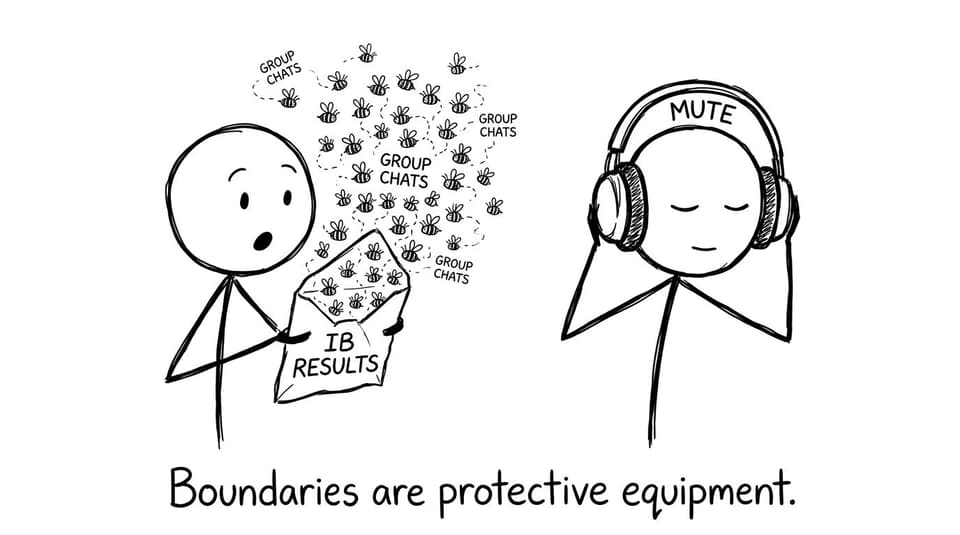
Two scripts that help:
- "I'm going to check my results privately first. I'll message later."
- "I'm taking today offline. I'll catch up tomorrow."
If you're worried about login timing and who sees what first, this clears it up: Do Students See IB Results Before Schools? Timing Explained.
What I wish I knew about next steps: the best antidote to IB panic is a small action
IB trains you to think big: big exams, big essays, big consequences. The trap is thinking that your response must also be big.
It shouldn't.
Your best move on IB results day is one small action that creates options. Not ten actions. One.
Examples:
- Ask your coordinator for component marks and how close you are to boundaries.
- Draft a university email (short, calm, factual).
- Do a 30-minute diagnostic set on the topics that hurt you most, so your retake decision is evidence-based.
That last one is where RevisionDojo is unusually helpful, because you can turn uncertainty into data fast: use the RevisionDojo Questionbank to target the exact topics that bled marks, get feedback immediately, and tag what needs review.
If you've never used RevisionDojo as a full system, this is the overview: RevisionDojo App: The Smarter Way to Prep for IB Exams.
The "small weights" rule
If your brain says "I should redo everything," translate that into a smaller task you can finish today.
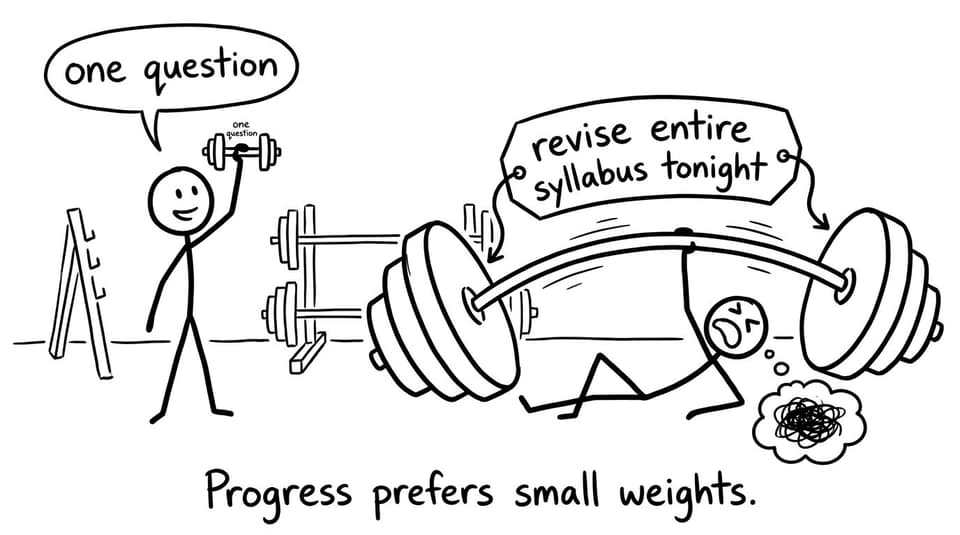
For IB students, small weights look like:
- 20 questions on one micro-topic in the Questionbank
- 10 minutes of Flashcards to stop memory leak
- One "why I lost marks" note, rewritten as a rule
Small weights build evidence. Evidence builds calm.
What I wish I knew earlier: the fastest way to improve an IB score is not motivation
Motivation is a mood. IB improvement is a loop.
A good loop has four steps:
- Learn (clear explanation)
- Recall (without looking)
- Apply (exam-style questions)
- Review (turn mistakes into targets)
RevisionDojo is built around that loop in a very literal way: Study Notes lead into Flashcards, Flashcards feed your weak-area memory, and the Questionbank turns knowledge into marks. When you get stuck, Jojo AI Chat stops the spiral quickly, and the Grading tools plus Coursework Library help you tighten written work with rubric-aware feedback.
If burnout is part of your story, this is worth reading slowly: How to Study for IB Exams Without Burning Out.
And if you want a real-world look at how top scorers structure practice, use: How 45-Point IB Students Prepare for Exams.
What I wish I knew about confusion: asking for help is a skill, not a flaw
A quiet problem before IB results day is that many students don't know what to do with uncertainty. They either avoid it or drown in it.
If you're retaking or rebuilding, the most powerful habit isn't studying longer. It's shortening the time between "I don't get it" and "I get feedback."
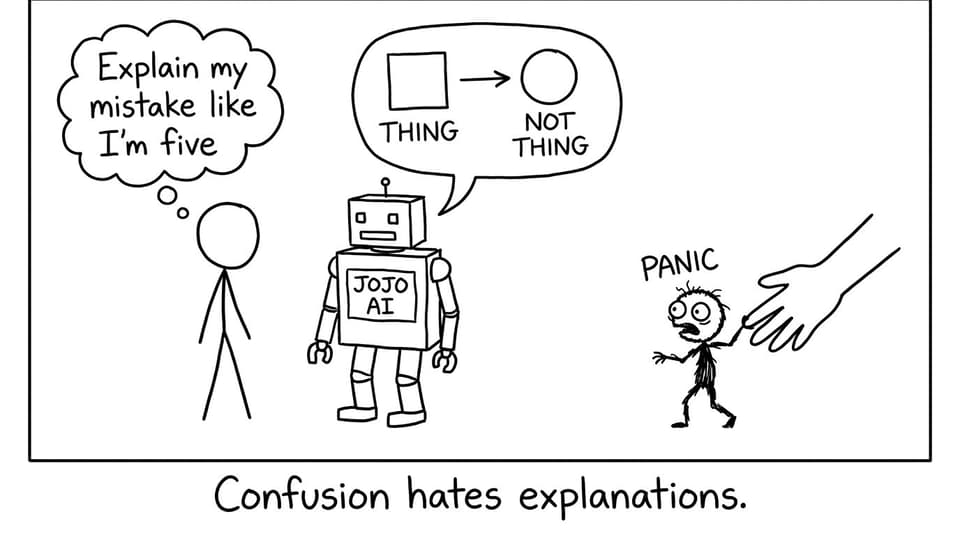
This is where RevisionDojo becomes a different kind of resource. You can ask Jojo AI Chat to mark your response, explain your exact misconception, and generate a new set of questions on the same subtopic. Then you can run a timed attempt using Mock Exams or Predicted Papers, and use analytics and tagging to return to weaknesses on schedule.
If you like structured creation (notes that become recall), this workflow is excellent: Custom IB Note Creation: Build Your Own Study Materials.
A gentle plan for the week after IB results day (if you need to rebuild)
Not a reinvention. A week.
Day 1: stabilize
- Sleep, eat, walk.
- Write down your IB results accurately.
- Decide who you'll talk to.
Day 2: get the facts
- Ask for component marks and boundary proximity.
- Decide if an EUR is rational, not emotional.
Day 3: communicate
- If university offers are involved, email today.
- Keep it short: result, next step, question.
Day 4-5: build a study loop
- Use Study Notes to repair the concepts that cost marks.
- Use Flashcards daily to make memory durable.
- Use the Questionbank for targeted practice sets.
- Use AI Chat to debug mistakes immediately.
Day 6-7: prove the plan works
- Do one timed session (Mock Exams or Predicted Papers).
- Review mistakes for patterns.
- Tag weak areas and repeat.
Closing: the point of IB results day is the next day
I wish I had understood that IB results day is a snapshot, not a sentence. A snapshot can be sharp and honest. But it still isn't your whole story.
If you're celebrating, celebrate fully and kindly. If you're disappointed, don't interpret that feeling as a prophecy. Use it as a signal to get facts, choose a path, and start small.
And if you want a calmer, more structured way to prepare for whatever comes next in IB, make RevisionDojo your home base: Questionbank for targeted practice, Study Notes for quick clarity, Flashcards for daily recall, AI Chat for immediate help, Grading tools for written work, Predicted Papers and Mock Exams for realism, plus the Coursework Library and Tutors when you need deeper guidance. IB becomes less scary when your next step is already built.