



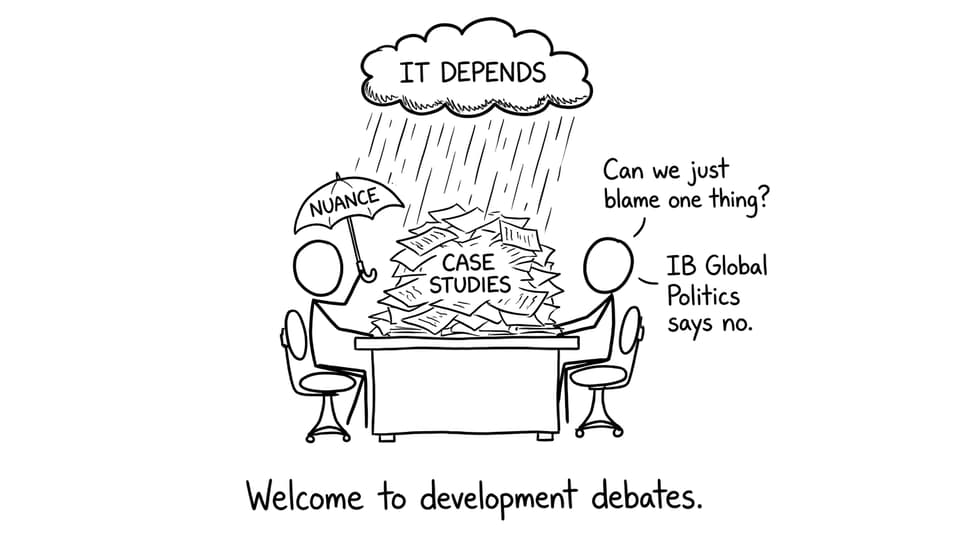
Developing countries rarely struggle with just one problem. It’s usually a knot: pull on “jobs,” and you find “education.” Pull on “health,” and you hit “debt.” In IB Global Politics, that knot matters, because examiners reward answers that see development as political, shapedshaped by power, institutions, and global systems, not just “bad luck.”
A quick IB Global Politics checklist
Use this as a fast plan for Paper 2 essays or Paper 1 context:
-
Define “development” and signal it’s contested in IB Global Politics
-
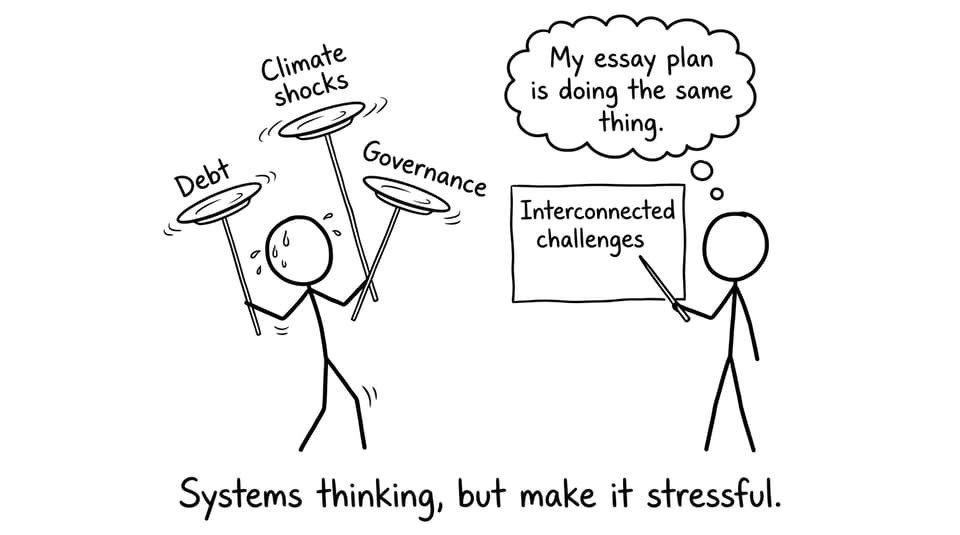
Explain 3-4 interconnected challenges (not a list)
-
Link domestic factors (governance, inequality) to global factors (trade, debt, climate)
-
Add 1-2 case studies or contemporary examples
-
Evaluate: who benefits, who loses, and what limits change
For definitions and structure, keep the IB Global Politics Revision Notes open while you plan.
Poverty and basic services: the everyday pressure
Poverty is still the most visible challenge, but in IB Global Politics you should treat it as a driver and an outcome. When large groups lack clean water, healthcare, or reliable schooling, states lose productivity and legitimacy at the same time. Families make short-term choices (work now, study later) because survival is urgent. That urgency can trap communities in low-wage sectors and informal economies.
If you’re revising how to frame “progress,” pair this with How Is Development Measured in Global Politics? to show you understand indicators beyond GDP.
Inequality: when growth doesn’t “land” for most people
Even when economies grow, benefits can concentrate among political or economic elites, urban centres, or certain ethnic groups. Inequality weakens social cohesion, fuels protests, and can turn elections into high-stakes battles over resources. In IB Global Politics, inequality is a power question: who has access to education, land, credit, and representation?
To sharpen that analysis, use IB Global Politics Inequality Notes and the argument framing in Does Development Always Lead to Inequality?.
Governance and institutions: capacity, trust, and corruption
“Weak governance” can sound vague, so make it concrete. States with limited administrative capacity struggle to collect taxes, regulate markets, or deliver services. Corruption doesn’t just waste money; it changes incentives, rewarding loyalty over competence. The political result is often low trust, which makes long-term reforms harder to pass and easier to sabotage.
A useful angle for essays is sovereignty: how far can governments act independently when institutions are fragile? Practice that link using the Sovereignty Questionbank.
External economic pressures: trade dependence and debt
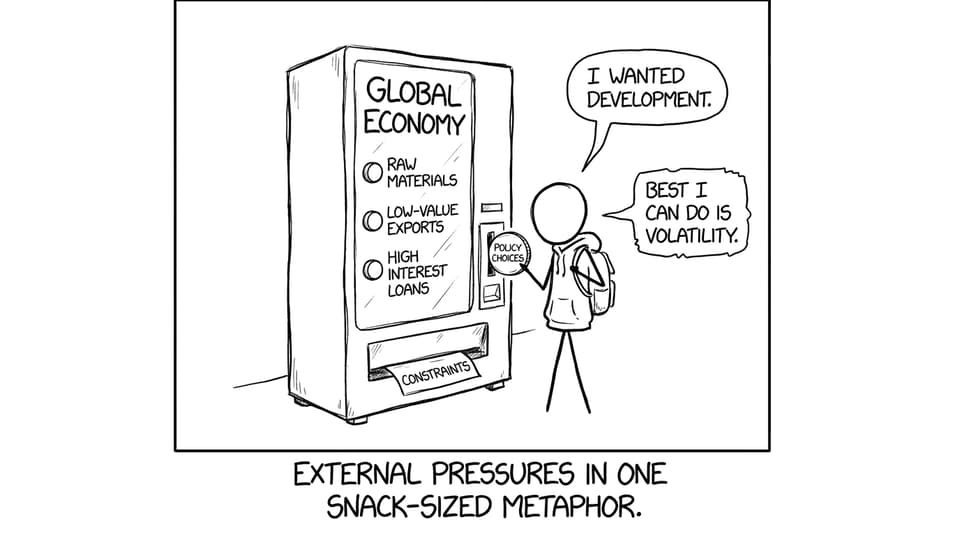
Many developing countries rely on exporting raw materials or low-value goods. That makes them vulnerable to price swings they didn’t create. Debt adds another layer: repayment can crowd out spending on schools, hospitals, or climate adaptation. In IB Global Politics, this is where you discuss dependency, unequal exchange, and the policy constraints imposed by global markets and international finance.
For a syllabus-aligned way to write it, see Drivers of Development: Economic, Environmental, Political… and the broader Development and Sustainability hub.
Conflict, climate, and demographics: compounding shocks
Conflict and political instability destroy infrastructure and divert budgets into security. Climate change intensifies food insecurity and displacement, and developing countries often face the harshest impacts despite lower historic emissions. Demographic pressure can be an opportunity (a “youth dividend”), but only if jobs and services keep pace; otherwise unemployment can heighten instability.
Conclusion: write like development is a system
Developing countries face poverty, inequality, governance limits, external pressures, conflict, climate risks, and demographic strain, butbut the high-scoring IB Global Politics move is showing how these challenges connect. If you want to practise that systems-thinking style, RevisionDojo is built for it: use the Questionbank, Study Notes, Flashcards, AI Chat, Grading tools, Predicted Papers, Mock Exams, Coursework Library, and Tutors to turn “it depends” into structured, evaluative answers.