



If you have ever walked out of an IB English class thinking, “I had something smart to say… why didn’t it sound smart?”, you have already met the real opponent in this course.
It is not vocabulary. It is not having the “right” theme.
It is the quiet difference between having an idea and earning marks for an idea. In IB English, marks come from the assessment criteria, and the criteria are surprisingly consistent across the oral and written components. Once you see that pattern, revision stops feeling like guesswork.
Quick overview: what you are assessed on in IB English
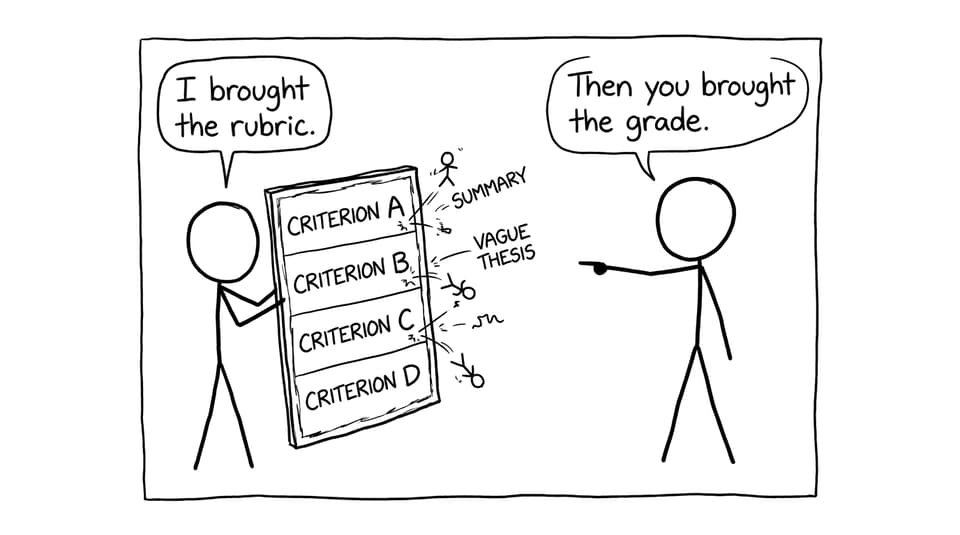
Across the Individual Oral and the written exams, IB English repeatedly rewards four things:
-
Knowledge and interpretation: accurate understanding that turns into a defensible reading
-
Analysis of choices: techniques linked to effect and purpose (not just identification)
-
Focus and organization: a line of argument that develops logically
-
Language control: clear, precise academic expression
If you want one place to anchor your practice, start with IB English A Lang & Lit Resources, then pair it with targeted drills from the IB English A Lang & Lit Questionbank.
Individual Oral (IO) assessment criteria (Internal Assessment)
The Individual Oral (IO) is marked out of 40, then moderated by the IB. You speak for 10 minutes, followed by 5 minutes of teacher questions. In Language & Literature, you connect one literary extract and one non-literary extract/body of work through a focused global issue.
A practical companion while planning is the IB Oral (IO) Guide: Language & Lit and Literature, and when you want rubric-based feedback, use the IB Language A: Individual Oral Grader.
Criterion A: Knowledge, understanding, and interpretation (10)
This is where IB English asks: do you genuinely understand the texts and the global issue, and can you interpret them with insight?
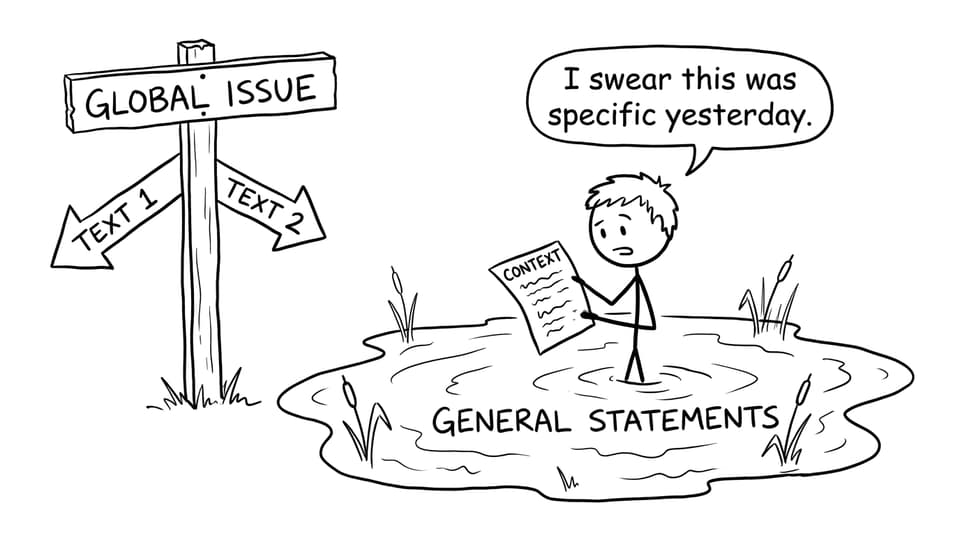
High-scoring orals reference the extract and the wider work, but only when it strengthens the argument. The easiest way to miss marks is to sound informed while staying vague. Specific moments, specific choices, specific implications.
Criterion B: Analysis and evaluation (10)
Criterion B rewards “how” and “why.” You identify authorial choices (language, structure, imagery, tone, perspective) and evaluate how those choices shape meaning around the global issue.
A useful mental formula for IB English is: choice + effect + purpose. Without the last two parts, you are listing.
Criterion C: Focus, organization, and development (10)
This criterion measures whether your oral has a clear through-line. The global issue should not be a decorative label; it should guide what you select, what you emphasize, and what you omit.
For an calmer prep approach, see IB English Oral Assessments: A Calm Prep Plan.
Criterion D: Language (10)
Here, IB English is not demanding “fancy.” It is demanding control: accurate grammar, appropriate register, and vocabulary that helps precision.
Strong language sounds intentional. Weak language sounds like you are searching for meaning while speaking.
Paper 1: Unseen text analysis assessment criteria
Paper 1 asks you to analyze unseen text(s) under time pressure. SL typically analyzes one unseen text; HL analyzes two. Either way, the criteria still map cleanly onto the same four-skill pattern that defines IB English.
If you want a method for style analysis, use IB English: Analyze Language & Style in Paper 1 Unseens. For structured practice, the Guide: How To Master Paper 1 - IB (Notes) is a strong reference.
Paper 1 Criterion A: Knowledge and interpretation
You show understanding of what the text is doing: its purpose, audience, context signals, and central message.
Interpretation is not summary. In IB English, summary is the floor; interpretation is the staircase.
Paper 1 Criterion B: Analysis and evaluation
You analyze how language and structure create meaning. This is where you win marks by making choices feel deliberate: why that headline, why that shift in tone, why that metaphor now.
Paper 1 Criterion C: Focus and organization
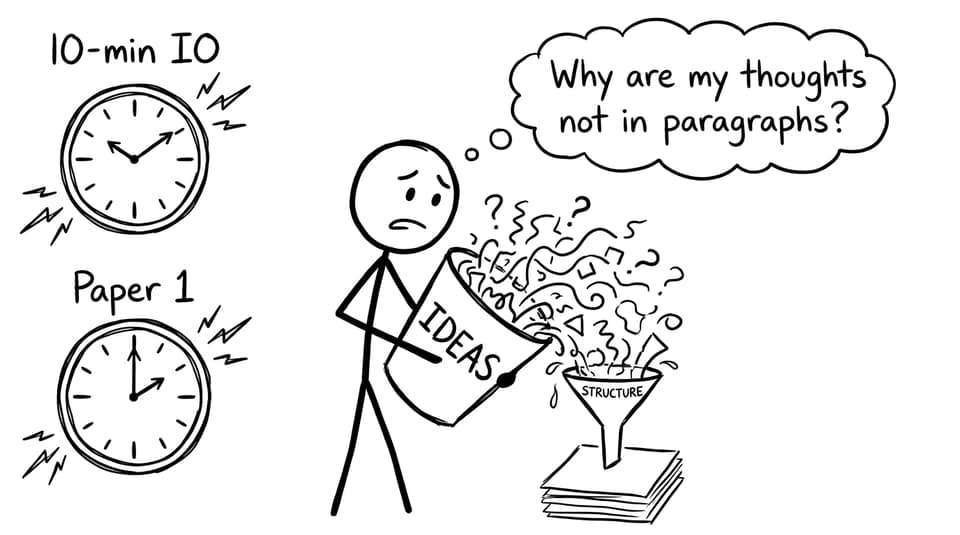
Your response needs a guiding thesis and paragraphs that clearly develop it. Examiners can feel when a paragraph was written because the student “noticed a technique” rather than because it advances the argument.
Paper 1 Criterion D: Language
Clear sentences, accurate terminology, and an academic register that stays readable.
Paper 2: Comparative essay assessment criteria
Paper 2 is a comparative literary essay on two works studied in the course. It is the component where many IB English students learn that “I know both books” is not the same as “I can compare both books.”
For a criteria-focused breakdown, keep Understanding the IB English A Language and Literature Paper 2 Criteria open while planning.
Paper 2 Criteria A-D: what changes
The labels are familiar, but the expectations tighten:
-
Criterion A rewards knowledge that answers the question directly and stays comparative.
-
Criterion B rewards analysis of authorial choices in both works, with comparisons that create insight.
-
Criterion C rewards a structure that interweaves texts (not two separate mini-essays).
-
Criterion D rewards a controlled academic voice, especially under timed conditions.
HL Essay (HL only): assessment criteria
The HL Essay is an externally assessed essay of 1,200-1,500 words on a studied literary work. It is less about speed and more about disciplined inquiry: a line of investigation you can sustain without drifting.
The criteria are still A-D: knowledge/understanding, analysis/evaluation, focus/organization, and language. In IB English, that consistency is a gift: it means every practice task trains the same core muscles.
For the most efficient mental model of those muscles, read How to Understand and Apply the IB English Assessment Rubrics.
Closing: treat criteria as your study plan
The assessment criteria for IB English are not a mystery rubric hiding in a PDF. They are the course.
When you revise by criteria, you stop asking, “Do I have enough quotes?” and start asking, “Can I use this quote to prove an interpretation, analyze a choice, and build a coherent argument?”
If you want a single workflow to practice every component with feedback, RevisionDojo gives you the tools that match how IB English is actually marked: targeted drills in the Questionbank, fast recall with Flashcards, structured Study Notes and Cheatsheets, rubric-aligned Grading tools, predicted papers and Mock Exams for timing, and AI Chat and Tutors when you need your thinking challenged rather than simply corrected.