




There’s a moment every IB student recognizes: you’re staring at your subject choices, and suddenly it feels like you’re not picking classes -- you’re picking a future.
That’s where IB Group 6 Arts creates a special kind of pressure. It’s creative, expressive, and honestly more personal than most subjects. But when universities get involved, students start asking the same quiet question: Will this help me, or hurt me?
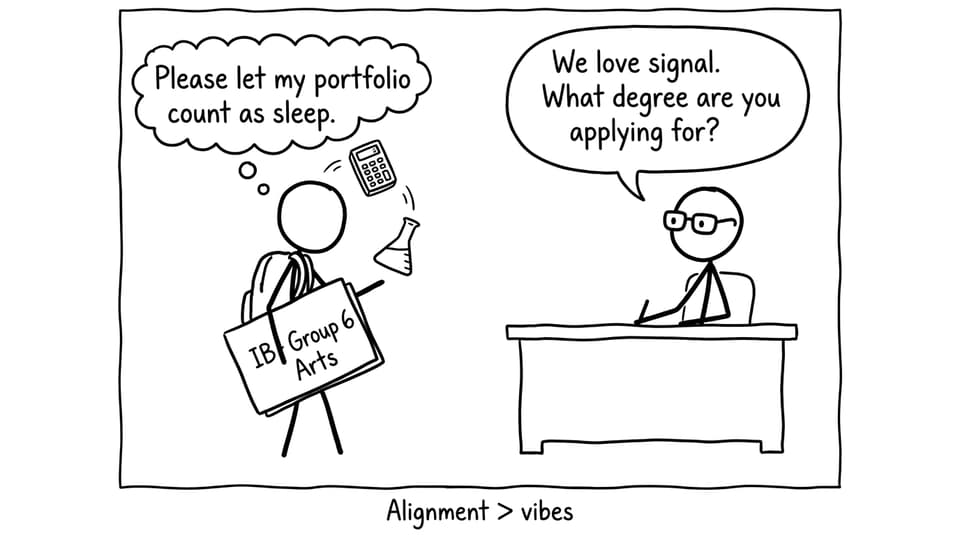
The reassuring truth is that universities are rarely judging you for choosing an arts subject. They’re judging fit and readiness. And IB Group 6 Arts can show both -- if you play it strategically.
What counts most in admissions (quick checklist)
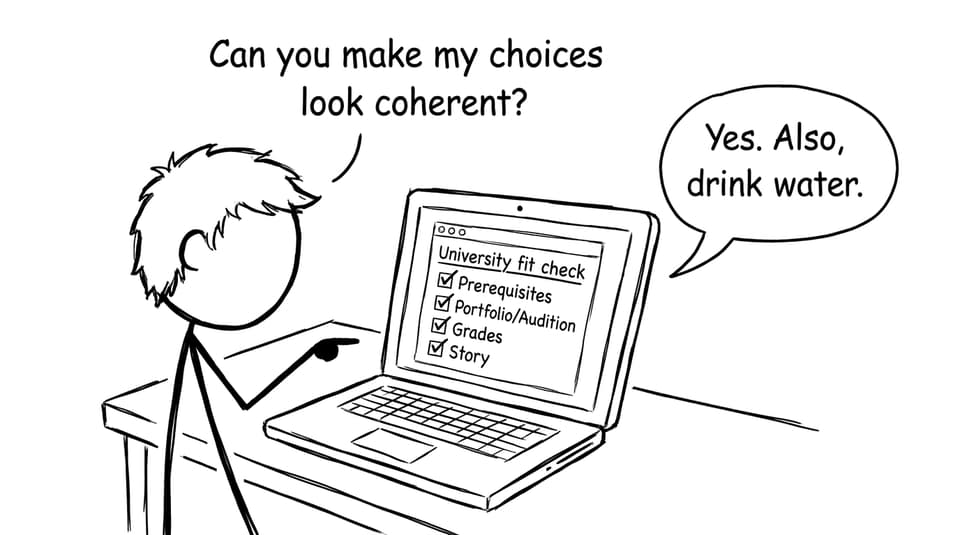
Use this checklist before you overthink your IB Group 6 Arts choice:
-
Degree prerequisites: do you need specific HLs for your course?
-
Portfolio or audition expectations (common in creative degrees)
-
Your overall IB points: every subject still contributes equally
-
Your story: can you explain why this subject belongs in your profile?
If you need a clean overview of how the Diploma is structured, revisit How Many Subjects Do You Take in the IB?
What are IB Group 6 Arts subjects, really?
IB Group 6 Arts is the IB’s arts group: typically Visual Arts, Film, Theatre, Music, and Dance. You can take them at SL or HL, and they’re assessed through a mix of creative output and reflection.
This matters because universities often value what Group 6 trains you to do: make something, justify decisions, and revise your work based on feedback. That’s not “extra.” That’s academic maturity.
If you want more context and comparisons, this is worth reading: How Do Universities View IB Group 6 Subjects Compared to Others
When IB Group 6 Arts helps your university application most
IB Group 6 Arts tends to matter most when it directly supports what you’re applying for.
Creative degrees (where it can be a major advantage)
For architecture, fine art, design, film, theatre, or music, Group 6 can be more than a “nice addition.” It can be evidence that you’ve already practiced the key mode of the degree: portfolio building, performance development, and critique.
Universities in these areas may not just like arts subjects -- they may expect them.
Competitive applications (where it can help you stand out)
Even outside the arts, IB Group 6 Arts can add dimension. A future law student with Theatre can demonstrate communication and interpretation. A future economics student with Music can show long-term discipline and structured practice.
The key is coherence. The arts subject should connect to your narrative, not sit like a random extra.
When IB Group 6 Arts can be less helpful (and what to do)
For medicine, engineering, and some computer science pathways, universities often care more about HL Maths and HL Sciences than about an arts elective.
This doesn’t mean IB Group 6 Arts is “bad.” It means it’s usually neutral compared to meeting prerequisites. If you’re missing a required subject, no amount of creative excellence fixes that.
If you’re unsure about keeping options open, start here: Which Subjects Should I Take at IB if I Don’t Know What to Do in University Yet?
HL vs SL in IB Group 6 Arts (the strategic choice)
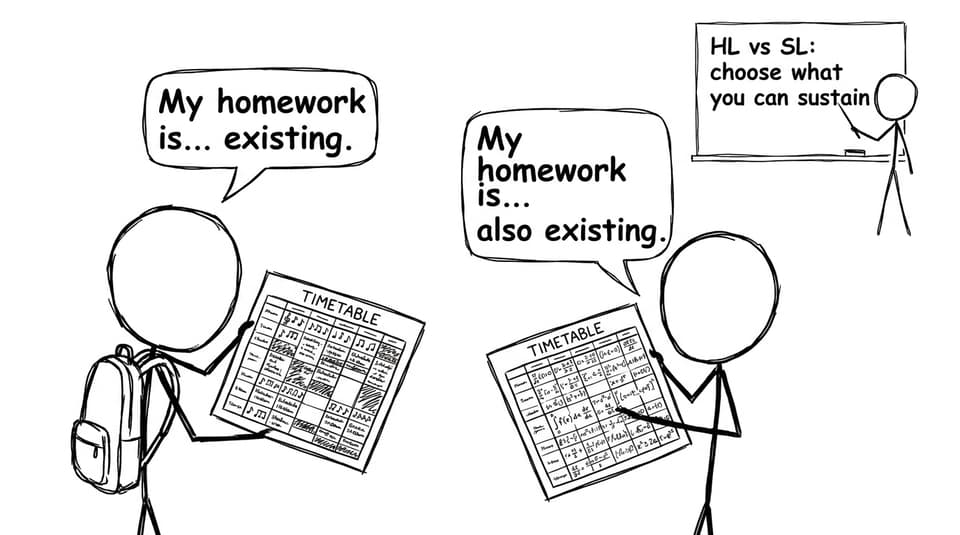
HL is a signal: it says you’re committing time and identity to the subject. SL is a balance move: it keeps creativity in your timetable without letting coursework swallow your week.
A useful rule: choose HL if you need the subject for your degree story or portfolio. Choose SL if you love it, but your prerequisites live elsewhere.
For a broader guide on how universities interpret level choices, read: Do Universities Care About HL vs SL in IB Subjects?
Coursework, portfolios, and why Group 6 feels different
A big reason IB Group 6 Arts changes your IB experience is that it’s often “always on.” There’s usually a portfolio, rehearsal process, journal, or creative investigation moving in the background.
That workload can be a gift if you’re consistent. It can also become a slow leak in your schedule if you leave it until deadlines.
To understand how IB coursework works in general, read What Is an IA? Understanding the Internal Assessment in IB and (for Group 6 specifics) Will My IB Group 6 Coursework Be Sent to the IB?
This is where RevisionDojo becomes practical, not inspirational: use Study Notes to clarify terminology and concepts, Flashcards for quick daily recall, and the Questionbank for exam-shaped practice where it exists. For portfolio and reflection-heavy components, the Coursework Library shows what good looks like, and the Grading tools help you iterate earlier instead of guessing.
A simple way to present IB Group 6 Arts in your application
Think of admissions as pattern recognition. You’re giving them signals.
-
Show alignment (degree choice and arts work support each other)
-
Show process (drafts, reflection, improvement)
-
Show achievement (strong grades and strong output)
If you want a deeper look at how arts can support scholarships, see Can IB Group 6 Subjects Help Me Get Scholarships?
Conclusion: make IB Group 6 Arts a signal, not a gamble
Used well, IB Group 6 Arts isn’t a side quest. It’s a way to show universities how you think: creatively, critically, and with follow-through.
Make sure prerequisites are covered. Choose HL vs SL based on sustainability. Then build a body of work you’re proud to explain.
When you’re ready to tighten your whole plan -- from portfolios to points -- RevisionDojo gives you the full toolkit: Questionbank, Study Notes, Flashcards, AI Chat, Grading tools, Predicted Papers, Mock Exams, Coursework Library, and Tutors. And yes, IB Group 6 Arts can absolutely be part of a high-scoring, university-ready strategy.