
The moment you realize your IA is not “just coursework”
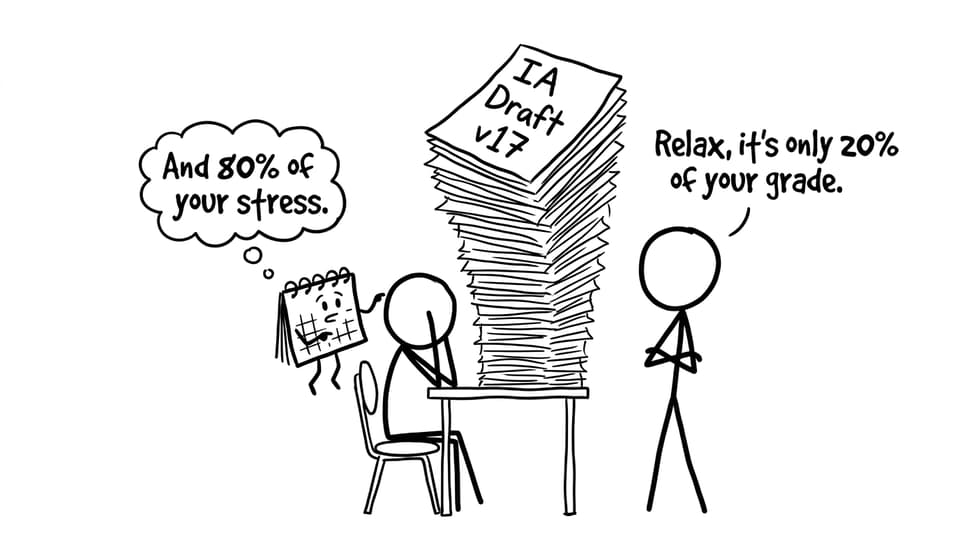
You’re revising for exams, minding your own business, and then someone says, “Don’t forget your IA.” Suddenly it feels like your calendar gets louder. That’s because an IA (Internal Assessment) isn’t a side quest in IB. It’s part of your final grade, it’s assessed using a rubric, and it’s one of the few times you can earn marks through sustained thinking instead of exam-day adrenaline.
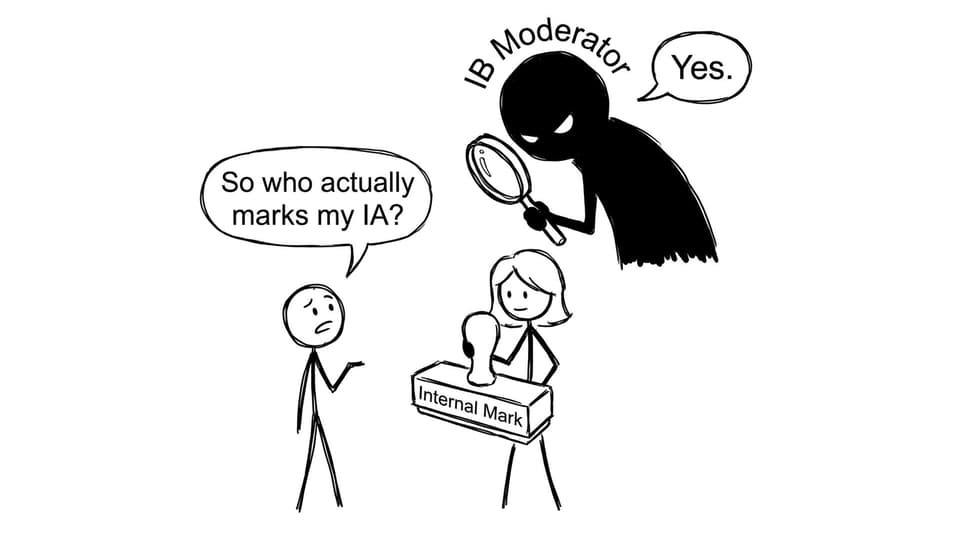
In simple terms: an IA is work you complete during the course, marked by your teacher and then moderated by the IB to keep grading fair across schools. Done well, your IA can raise your overall result and reduce pressure on exam papers.
IA overview checklist (what you actually need to know)
Before you go deep, keep this IA checklist in your notes:
-
Your teacher marks your IA using official criteria
-
The IB moderates samples to align grading standards
-
The format depends on the subject (experiment, exploration, oral, portfolio, report)
-
Most IA success is rubric alignment + clear evidence
-
Starting earlier beats “being smarter” later
If you want a subject-by-subject starting point, use the IB IA Guides hub.
What is an IA in IB, exactly?
An IA is the internal component of many IB subjects. “Internal” means your teacher assesses it, but that doesn’t make it casual. Moderation means the IB checks a sample of work to make sure standards match globally.
A helpful way to think about the IA is as your proof of skill. Exams reward speed under pressure; an IA rewards decision-making over time: choosing a focused question, collecting evidence, and explaining what the evidence means.
If moderation feels mysterious, read How IA Moderation Works (and How to Protect Your Grade) for a calm, practical breakdown.
Types of IA you’ll see across IB subjects
Your IA changes shape depending on the course, but the logic stays the same: investigate something specific and communicate it clearly.
Common IA formats
-
Sciences (Biology, Chemistry, Physics): an investigation with data, analysis, and evaluation
-
Math (AA/AI): a mathematical exploration (often modeling or pattern-based)
-
Individuals and Societies: research-based report, essay, or analysis task
-
Languages: often an assessed oral or portfolio-style component
-
Arts: portfolio + reflection process
If you’re in ESS, this page shows what a structured IA looks like in detail: ESS IA Essentials.
Why the IA matters for exams (even if it’s not an exam)
Most students underestimate the IA until it’s late. Then they realize it’s not only worth a meaningful portion of the grade, it also trains the exact thinking exams reward: precision, justification, evaluation, and clear academic writing.
A strong IA can also stabilize your final outcome. If exam revision goes slightly off-plan (it happens), your IA mark can protect you.
How to do well in your IA (without living in Google Docs)
A good IA isn’t “long.” It’s deliberate.
A simple strategy that works
-
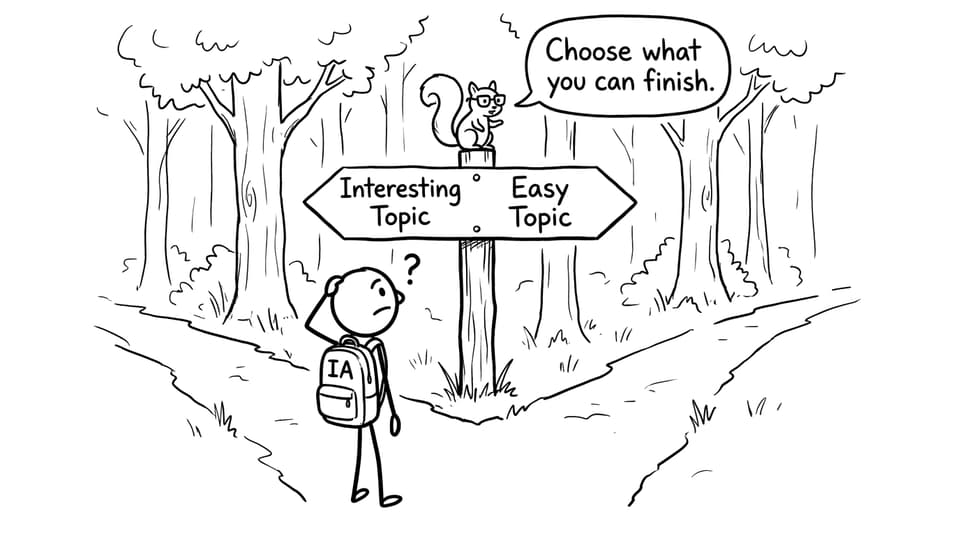
Pick a topic you can explain to a friend in 60 seconds
-
Build everything around the criteria language (not vibes)
-
Write with evidence on the page, not in your head
-
Get feedback early, then revise in small loops
For one high-impact section, learn how to upgrade evaluation using: How to Write a Compelling IA Evaluation Section.
And if you want tools that make this faster, RevisionDojo is built for it: use the Coursework Library for models, Grading tools for rubric-aware feedback, and AI Chat when you’re stuck but don’t want to lose an hour.
Using RevisionDojo to support your IA and exam prep
The hidden stress of an IA is context switching: drafting, checking criteria, finding exemplars, then jumping back to exam revision. RevisionDojo reduces that.
Use these features as a simple loop:
-
Study Notes to clarify content quickly from the RevisionDojo home hub
-
Flashcards for daily recall: Flashcards
-
Questionbank for exam practice you can measure: Questionbank
-
Predicted Papers and Mock Exams to build timing: IB Predicted Papers
-
Grading tools to check if your IA actually shows evidence for each criterion: IB IA Grading Service
For a bigger picture study routine that keeps the IA from taking over, see RevisionDojo App: The Smarter Way to Prep for IB Exams.
Final thoughts: your IA is a grade you can control
The IA is one of the fairest parts of IB, even though it doesn’t always feel like it. You get time, feedback, and multiple chances to make your thinking clearer. If you treat your IA like a rubric puzzle (not a motivation test), it becomes manageable and surprisingly satisfying.
When you’re ready to move from “I hope this is fine” to “I know where the marks are,” use RevisionDojo’s IA Guides, Coursework support, Grading tools, and exam prep loop (Questionbank, Study Notes, Flashcards, AI Chat, Predicted Papers, Mock Exams, and Tutors). Your IA shouldn’t steal your exam season, it should strengthen it.