


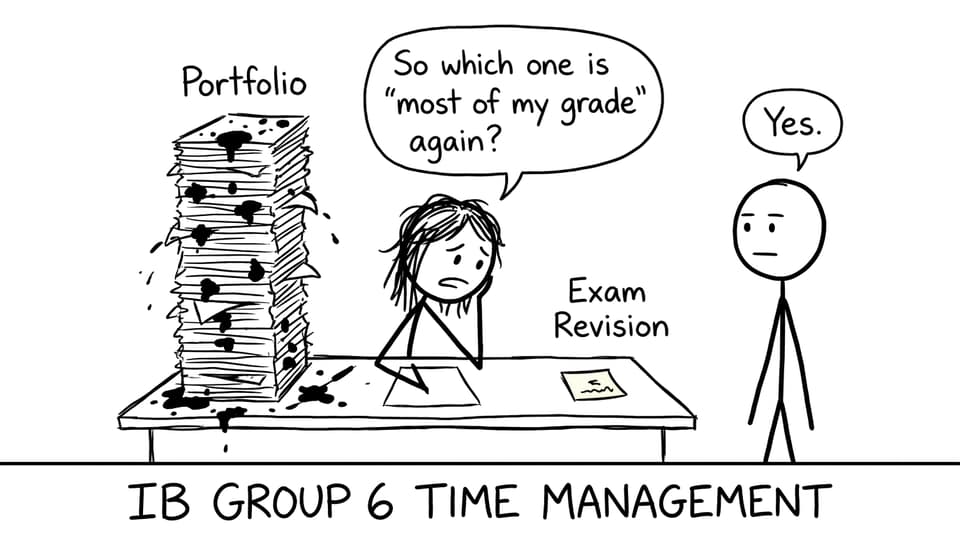
The night before a deadline, you learn a strange truth about time: it doesn’t move evenly. Ten minutes of “quick polishing” turns into an hour. A “final reflection” becomes a full rewrite. And somewhere in the background, your exam revision plan sits there, untouched, like a well-intentioned New Year’s resolution.
That tension is the heart of IB Group 6 Arts. Students often ask whether coursework is more important than exams, because the workload feels endless. The honest answer is reassuring and demanding: in most IB Group 6 Arts subjects, coursework and portfolio components carry the main weight, while exams (when they exist) are usually secondary.
IB Group 6 Arts overview: what usually counts most
Use this quick checklist to orient your priorities in IB Group 6 Arts:
-
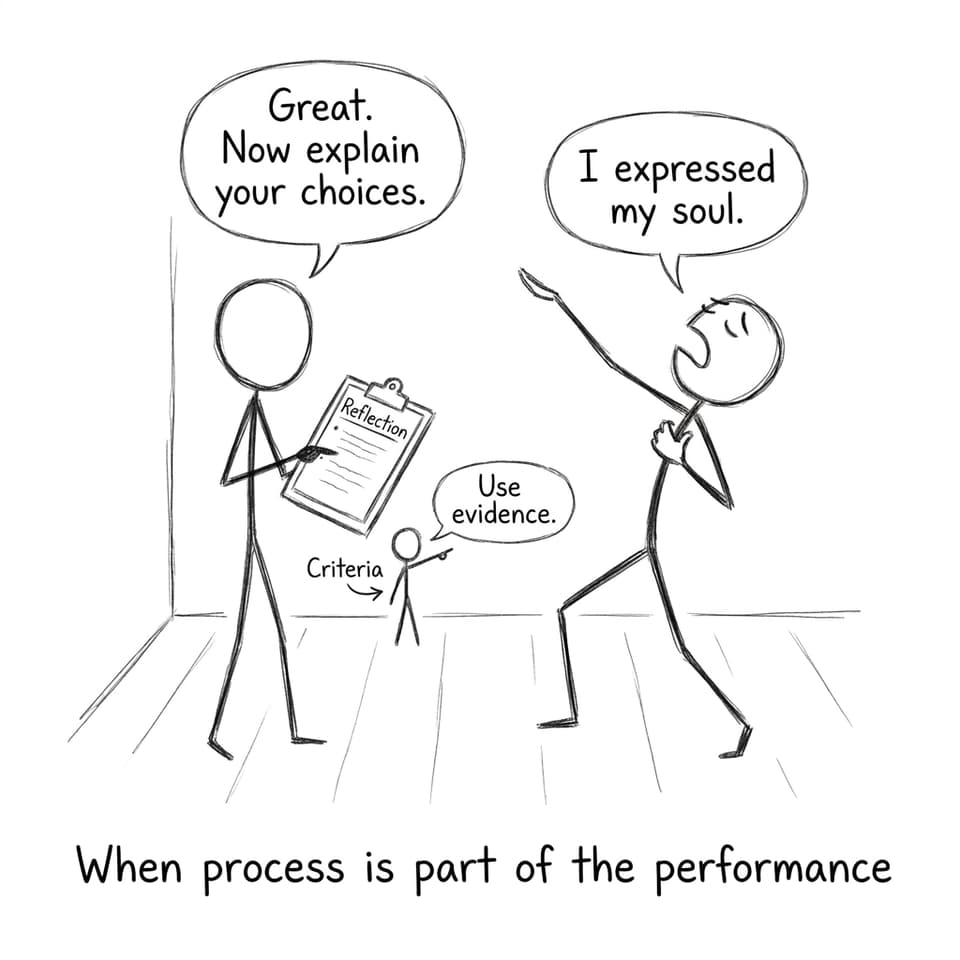
Prioritize process + evidence: drafts, experiments, rehearsal logs, annotations, and reflection.
-
Treat criteria like a compass: your work isn’t “good” because it’s pretty; it’s strong because it proves growth.
-
If your subject includes an exam component, prepare for it strategically, but don’t let it cannibalize portfolio time.
For a wider view of how arts subjects are structured, start with Choosing Your Group 6 Subject: A Comprehensive Guide.
Why coursework dominates in IB Group 6 Arts
The IB didn’t design IB Group 6 Arts to reward last-minute performance under timed pressure. It’s designed to reward what artists actually do: iterate, fail, revise, research, and explain decisions.
That’s why examiners look for things that are hard to measure in a one-off test: originality, technical control over time, purposeful experimentation, and reflection that shows you understand why you made choices.
If you want to see this contrast clearly, read How Do IB Group 6 Assessments Compare to Other Groups?.
Visual Arts is the clearest example: portfolio is the grade
In IB Group 6 Arts, Visual Arts is the most straightforward case: there’s no traditional written exam. Your final result comes from coursework components (including the Process Portfolio, Comparative Study, and Exhibition).
That’s why planning matters more than panic. If you only document outcomes, you lose marks. If you document decisions, experiments, and what changed, you give the examiner a story they can award.
Useful guides to keep open while you work:
What about Music, Theatre, Dance, and Film: do exams matter?
In IB Group 6 Arts, other subjects can include written or listening elements, but they still revolve around sustained creative work.
For example, Music students often discover that the “hardest” part isn’t a single paper; it’s building a portfolio that proves intention across Exploring, Creating, and Performing. The exam-style parts reward vocabulary and analysis, but the core of your mark story is still your creative evidence and reflection.
Two practical reads if Music is your subject:
A simple strategy: treat your portfolio like weekly training
Most students lose marks in IB Group 6 Arts for the same reason: they work in bursts. Portfolio subjects punish bursts because they hide growth.
A better system is boring and powerful:
-
One weekly “evidence session” (screens/pages/logs updated)
-
One weekly “criteria session” (check your work against the rubric)
-
One weekly “feedback session” (get specific, strand-based advice)
To make feedback feel less mysterious, use How to Get Effective Feedback on Your IB Group 6 Work.
How RevisionDojo helps you balance portfolios and exams
RevisionDojo works well for IB Group 6 Arts because it supports both sides of the course: the long creative build and the moments of assessment pressure.
-
Use Study Notes and Flashcards to keep key terminology, contexts, and analysis frameworks alive.
-
Use AI Chat when you’re stuck on reflection wording or need to connect decisions to criteria.
-
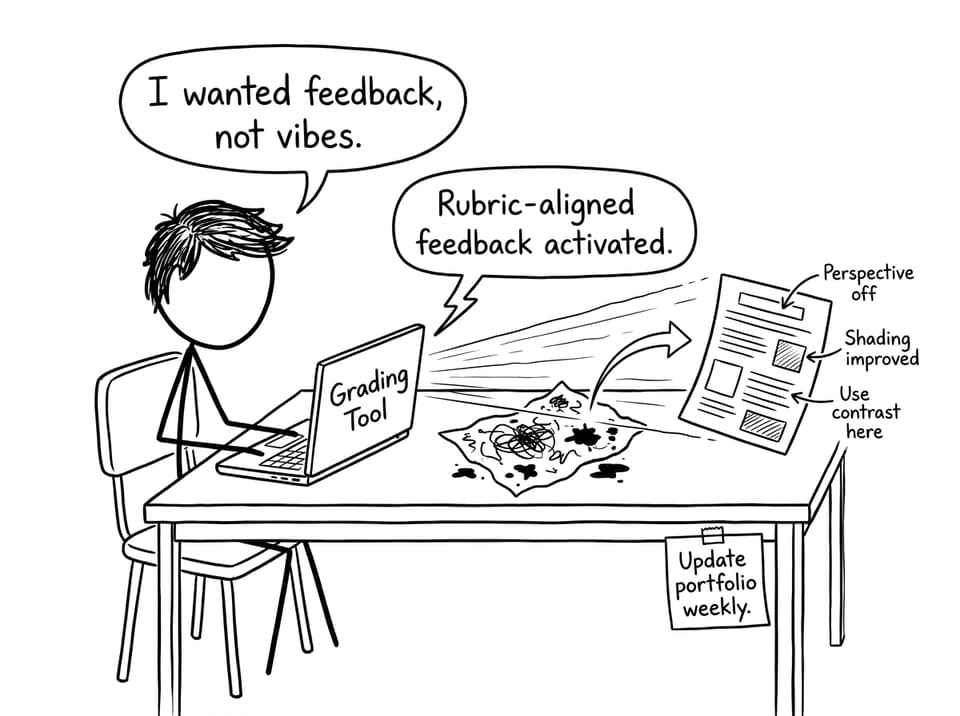
Use Grading tools to get rubric-aware feedback on drafts and commentary.
-
Use the Coursework Library to see what “examiner-ready” looks like.
-
Use Mock Exams and Predicted Papers when your subject includes exam-style components.
-
Use Questionbank practice when you need quick, focused drilling.
If you want a clear picture of your target marks, check IB Grade Boundaries.
Closing: the right question for IB Group 6 Arts
The real question in IB Group 6 Arts isn’t “portfolio or exams?” It’s: Am I producing evidence of growth every week? When you do that, coursework stops feeling like a monster and starts acting like a map.
If you want a single home base to manage the creative workload and the exam-side stress, build your routine inside RevisionDojo with the Questionbank, Study Notes, Flashcards, AI Chat, Grading tools, Predicted Papers, Mock Exams, Coursework Library, and Tutors. In IB Group 6 Arts, consistency beats panic every time.