
In Group 3, students often discover a surprising truth: the hardest part of IB Philosophy isn’t the reading. It’s the moment you realise you can argue brilliantly in class, then freeze when a timed essay asks you to do it with precision.
That’s why choosing between IB Philosophy SL and HL matters. Not because one is “better,” but because the difference changes how much depth, stamina, and structure you’ll need on exam day. If you’re preparing for exams, understanding the SL vs HL split helps you plan revision like a calm strategist, not a last-minute philosopher.
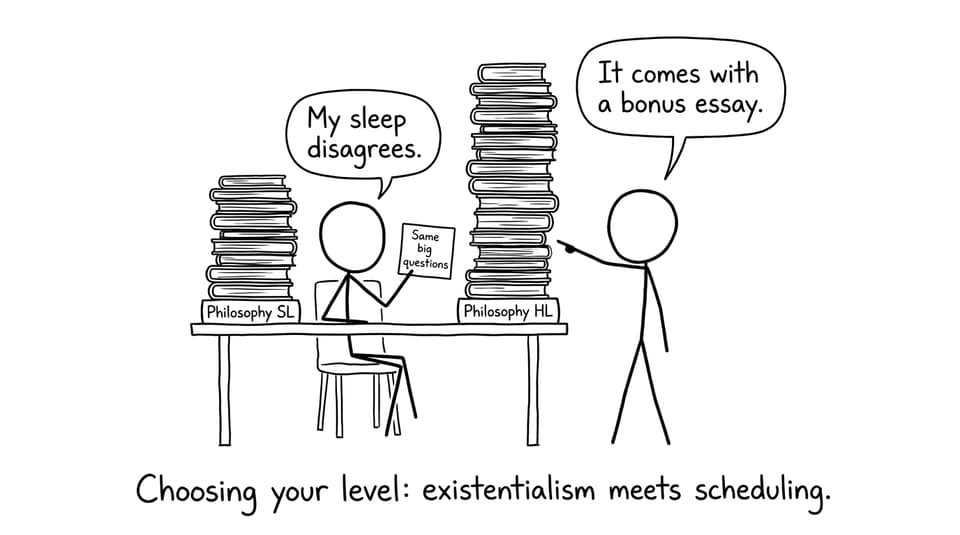
Quick checklist: SL vs HL at a glance (Group 3)
-
Both SL and HL study the core theme, optional themes, and a prescribed text
-
HL adds more: an additional theme, deeper text work, and an extra exam paper
-
Assessments overlap, but HL has Paper 3 and a longer IA
-
Workload differences are real, mostly because HL demands more sustained analysis under time
If you want a broader overview of the subject itself, keep Your Complete Guide to IB Philosophy Course and Exams open in a second tab.
What stays the same in Group 3 Philosophy (SL and HL)
IB Philosophy is built around learning how to think in public: you make claims, support them with reasons, test them against objections, and refine them.
Core theme and optional themes
At both levels, you study the core theme: What is a human being? You also choose optional themes (commonly ethics, philosophy of mind, political philosophy, philosophy of religion, and more depending on your school). This shared foundation means SL students are not doing “light” philosophy. They’re doing real philosophy with real expectations.
Prescribed text
Both SL and HL analyse one prescribed philosophical text, learning how to interpret arguments carefully and write about them clearly. If you want a structured way to practise exam-style writing, RevisionDojo’s Philosophy resources hub helps you organise revision by topic and level.
The real differences: what HL adds (and why it changes revision)
In Group 3, HL differences tend to show up less as “more chapters” and more as “more pressure.” Philosophy HL follows that pattern.
HL studies an additional theme
HL students study an extra theme beyond what SL covers. That extra theme isn’t just content; it’s extra vocabulary, extra comparisons, and extra chances for exam questions to pull you into unfamiliar combinations.
HL goes deeper on the prescribed text
HL expects a more comprehensive and detailed engagement with the text. In practice, this means you need cleaner quotes, sharper argument maps, and more comfort explaining how a line supports (or threatens) a philosopher’s conclusion.
HL adds Philosophical Analysis (Paper 3)
HL students take an extra exam focused on Philosophical Analysis. This is where HL becomes less about what you know and more about how you operate: can you examine a problem from multiple angles, keep your reasoning consistent, and still write a coherent essay under time?
To see how level choice affects overall IB strategy, Does HL vs SL Matter in IB? The Honest Answer is a useful companion read.
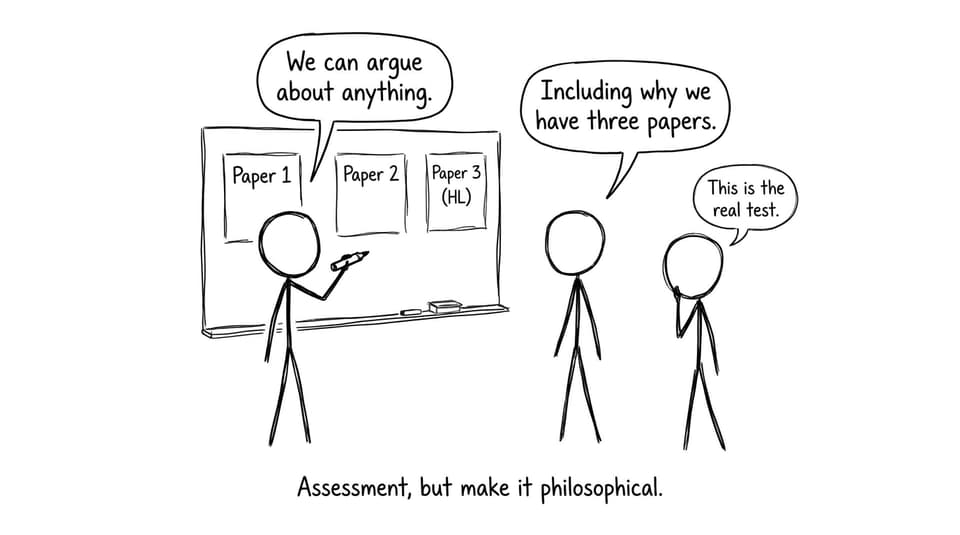
Assessment breakdown (SL vs HL) for exam preparation
Paper 1 (SL and HL)
-
Covers the core theme and optional themes
-
Essay-based questions
-
2 hours
Paper 2 (SL and HL)
-
Focuses on the prescribed text
-
Essay-based questions
-
1 hour
Paper 3 (HL only)
-
Covers Philosophical Analysis
-
Essay-based question choice
-
1 hour
Internal Assessment (SL and HL)
Both levels complete an internal assessment based on philosophical analysis of a non-philosophical stimulus.
-
SL length: 1,600 to 2,000 words
-
HL length: 2,000 to 2,500 words
If you’re building a revision plan across Individuals and Societies, General FAQ for IB Group 3 Subjects can help you align expectations across your timetable.
Choosing SL or HL: a decision framework that feels honest
Choose SL if you want breadth with control
SL is often the right fit if you like philosophical ideas but want to protect time for other higher-load subjects. In Group 3 terms, SL can be a strong points play: fewer extra components means more time to practise the same core skills until they become automatic.
If you’re still weighing options, Easiest Group 3 Subject in IB: How to Choose offers a practical way to think about fit without oversimplifying the work.
Choose HL if you enjoy depth and can sustain repetition
HL is a great choice when you genuinely want more philosophy and can commit to consistent essay practice. The students who thrive at HL are rarely the ones who “read the most.” They’re the ones who practise producing arguments under time, then improve through feedback.
For revision technique ideas tailored to HL, see Best Revision Techniques for IB Philosophy HL.
How RevisionDojo helps Group 3 Philosophy students revise
Philosophy rewards a simple loop: understand the idea, recall it, apply it in writing, then fix what breaks.
RevisionDojo is built for that loop:
-
Study Notes to clarify themes and core arguments fast
-
Flashcards to keep definitions and philosopher positions alive
-
Questionbank to practise exam-style prompts and build speed
-
AI Chat when you get stuck mid-argument and need an explanation now
-
Grading tools to tighten essays using rubric-aware feedback
-
Mock Exams and Predicted Papers to simulate timing and stamina
-
Coursework Library and Tutors when your IA needs a second set of eyes
If you want the bigger picture of how the platform fits into exam prep, read RevisionDojo App: The Smarter Way to Prep for IB Exams and explore the Questionbank feature.
Closing thoughts: choosing your Group 3 level with confidence
IB Philosophy asks you to take big questions seriously, then answer them with small, disciplined steps: definitions, reasons, counterarguments, clarity. The SL vs HL choice is really a choice about how many of those steps you can practise each week without breaking your schedule.
Whichever level you choose, treat Group 3 Philosophy like training, not inspiration. Build your loop with RevisionDojo’s Study Notes, Flashcards, Questionbank practice, and realistic Mock Exams and Predicted Papers. Then show up to the exam with something better than opinions: a repeatable method for thinking under pressure.