
Introduction
The first time many students realise what IB SEHS is really teaching them isn’t during a unit test. It’s later, in some unrelated moment: arguing a point in History, planning a CAS project, or pitching an idea in Business Management. Suddenly, the habit of asking “What’s the evidence?” shows up like muscle memory.
That’s the quiet power of IB SEHS. Yes, it’s a Group 4 science. But it also trains a set of transferable skills that travel well into non-science degrees: law, business, humanities, media, design, and anything else that rewards clear thinking under pressure.
If you’re preparing for exams, this matters. When revision gets heavy, remembering the “why” helps. You’re not only learning content. You’re building a toolkit.
Quick checklist: the transferable skills IB SEHS builds
Use this as a revision lens. As you practise IB SEHS questions, ask which skill you’re training.
-
Critical thinking: evaluating claims, spotting weak reasoning
-
Data handling: reading graphs, trends, reliability, validity
-
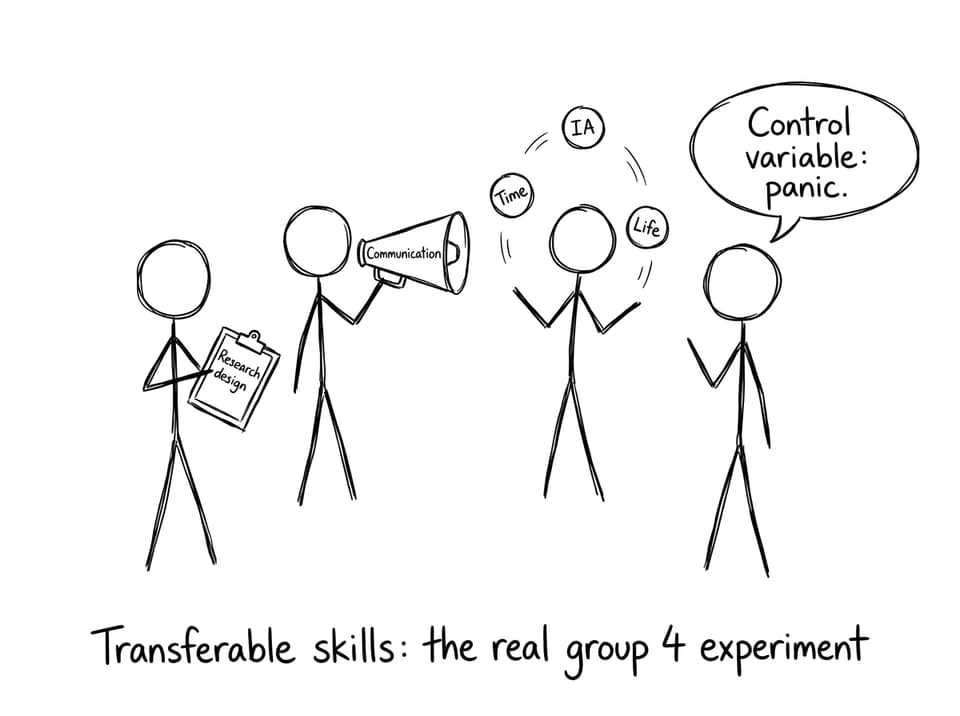
Research design: variables, controls, ethical considerations
-
Communication: structured explanations, concise conclusions
-
Collaboration: planning, roles, conflict management
-
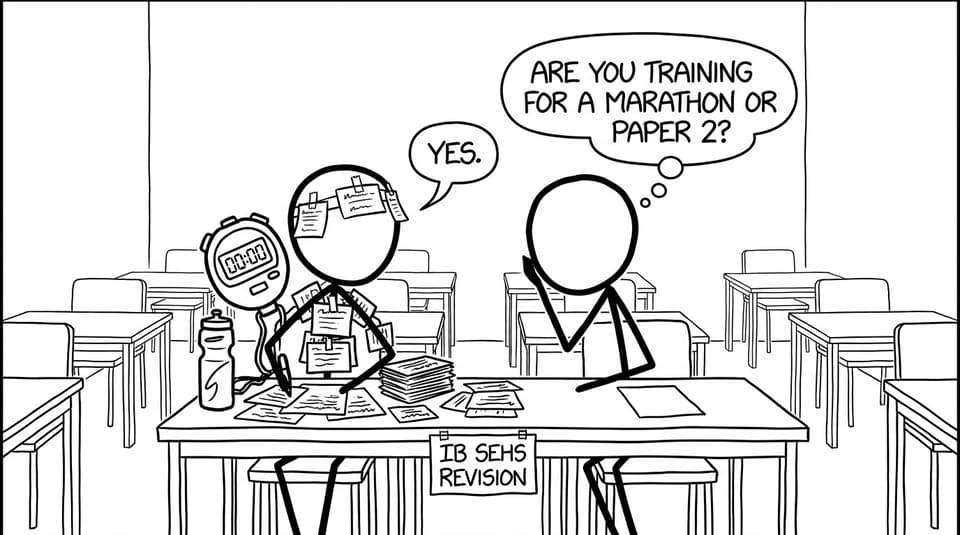
Time management: pacing the IA and exam preparation
-
Adaptability: responding when results (or revision plans) go off-script
A practical way to train all of these quickly is to rotate between Study Notes and timed practice in the IB Sports, exercise and health science Resources, then lock key ideas in with spaced repetition.
Critical thinking: the habit of not believing yourself too quickly
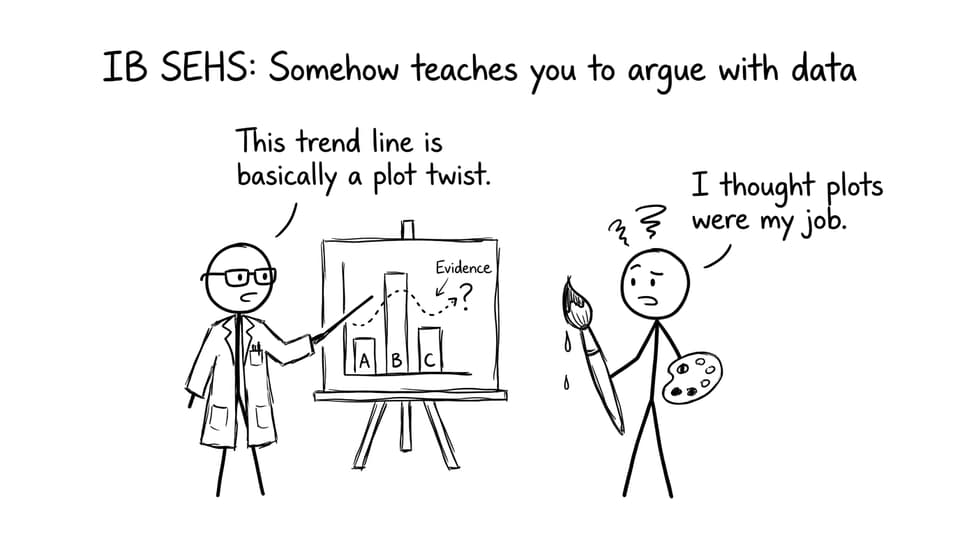
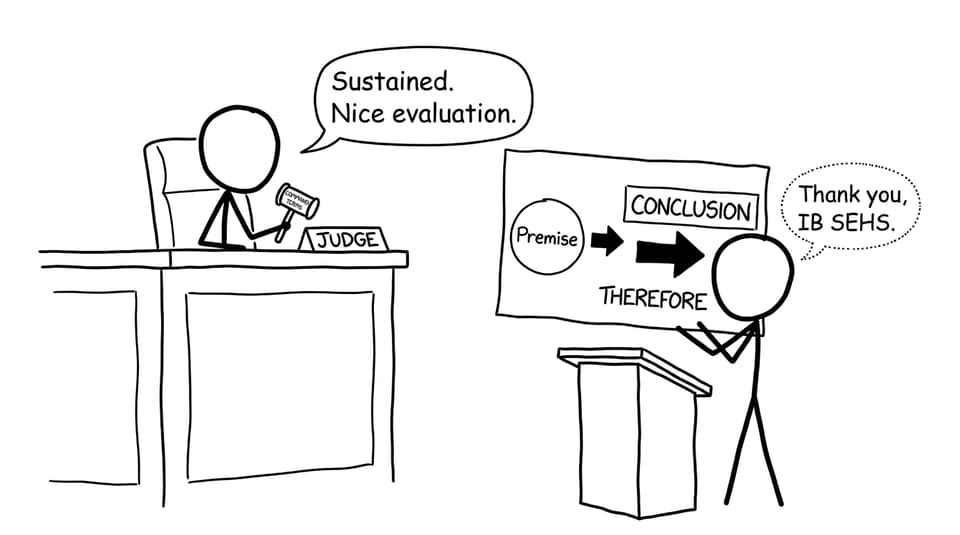
In IB SEHS, you’re constantly asked to judge: Is this conclusion justified? Is the sample size too small? Does correlation get mistaken for causation? Those questions don’t stay in the lab.
Non-science majors live on arguments. Law students test claims against evidence. Humanities students weigh interpretations. Business students judge whether a strategy has real support or just confidence.
A good way to practise this for exams is to treat every longer response like a mini debate: make a claim, support it, then attack it briefly with limitations. When you revise topics like hydration or nutrition, build the evaluation habit using targeted resources such as Topic A.2 Hydration and Nutrition. That’s IB SEHS training your brain to be persuasive without being sloppy.
Data literacy: learning to think in graphs, not vibes
A lot of students assume data skills belong to STEM only. But university courses in economics, psychology, politics, and marketing all expect you to interpret charts and make decisions under uncertainty.
IB SEHS gives you repeated exposure to:
-
trends and anomalies
-
averages vs outliers
-
measurement error
-
reliability and validity
-
cause-and-effect reasoning
And because the subject is applied, the numbers usually come with a story you can picture, which makes the skill stick.
If you want to train this efficiently, do short daily sets from RevisionDojo’s Questionbank and force yourself to write one sentence of interpretation for every graph or table. Over time, IB SEHS stops feeling like memorisation and starts feeling like pattern recognition.
Communication: the underrated superpower of SEHS answers
Science communication is a special kind of clarity: you have to be precise without being verbose, and structured without sounding robotic. That is exactly what many non-science majors struggle with when they hit university.
In IB SEHS, strong communication looks like:
-
defining terms cleanly
-
linking cause to effect
-
using correct vocabulary (but only when it adds meaning)
-
writing conclusions that match the data
One of the fastest ways to improve before exams is to compare your wording against high-quality notes. RevisionDojo’s IB Sport Science Notes can help you hear what “exam-ready clarity” sounds like.
Research design: a skill that shows up everywhere later
Even if you never run another experiment after graduation, research design is everywhere: surveys in sociology, user testing in design, A/B tests in marketing, and evidence standards in policy.
IB SEHS trains you to think in systems:
-
What is the independent variable?
-
What could confound the result?
-
How should we control conditions?
-
What would make this conclusion stronger?
You can revise this skill directly using a focused reference like study design notes, then apply it to mixed practice. This is also why your IA matters: it’s not only coursework, it’s a rehearsal of how to think.
For IA improvement, RevisionDojo’s IB SEHS IA (2026 syllabus) Grader helps you see the criteria as a checklist of transferable thinking: justification, method, analysis, evaluation.
Teamwork and time management: the “real life” curriculum
The funny thing about IB SEHS is that it teaches collaboration in a way that feels unglamorous at first: group data collection, shared equipment, splitting write-ups, aligning on methods. But those moments build the habits that employers and universities quietly reward.
And time management is unavoidable. Between topic tests, practical write-ups, and the IA, you learn to plan in weeks, not days.
RevisionDojo supports this practical side with tools that mirror real exam conditions: Mock Exams and Predicted Papers to build stamina, and Flashcards to keep recall alive when time is tight. If you need a bigger strategy overview, the RevisionDojo app exam prep guide lays out a simple loop: learn, recall, apply, review.
Global perspective: health and performance as a human story
Non-science majors often end up studying people: cultures, incentives, identities, institutions. IB SEHS is quietly doing that too. Topics like nutrition, public health, and participation in physical activity always connect to environment, access, and social context.
That global lens becomes an advantage in essays, interviews, and personal statements because you can talk about health not just as biology, but as a systems problem with human consequences.
For a mindset boost during tough weeks, it helps to read something that normalises the workload. The Ultimate Survival Guide for IB Sports Science Students frames IB SEHS as a long game: consistency beats intensity.
Conclusion: why IB SEHS is bigger than your subject choice
If you’re a non-science major, IB SEHS isn’t a detour. It’s a training ground. The content helps you score marks, but the process builds habits that show up everywhere: evidence-based thinking, clear communication, research logic, teamwork, and the ability to keep moving when the plan collapses.
If you want to turn those skills into exam results, run your revision through RevisionDojo: practise with the Questionbank, consolidate with Study Notes and Flashcards, get unstuck with AI Chat, and sharpen coursework with the Grading tools and Coursework Library. Make IB SEHS the subject that improves everything else you do, not just the grade you earn.