

TOK Nov 2026 Prompt #2: Failure and Knowledge (and why it feels personal)
The first time a draft collapses, it rarely feels like “knowledge production.” It feels like you just wasted a weekend. But TOK Nov 2026 Prompt #2: Failure and Knowledge forces a calmer question: is failure merely common in learning, or is it actually necessary for new knowledge to be made?
The title asks: “To what extent do you agree that failure is an essential part of the production of knowledge? Discuss with reference to the arts and one other area of knowledge.” The keyword doing the heavy lifting is essential. Not “helpful.” Not “motivating.” Essential means: would knowledge still be produced without it?
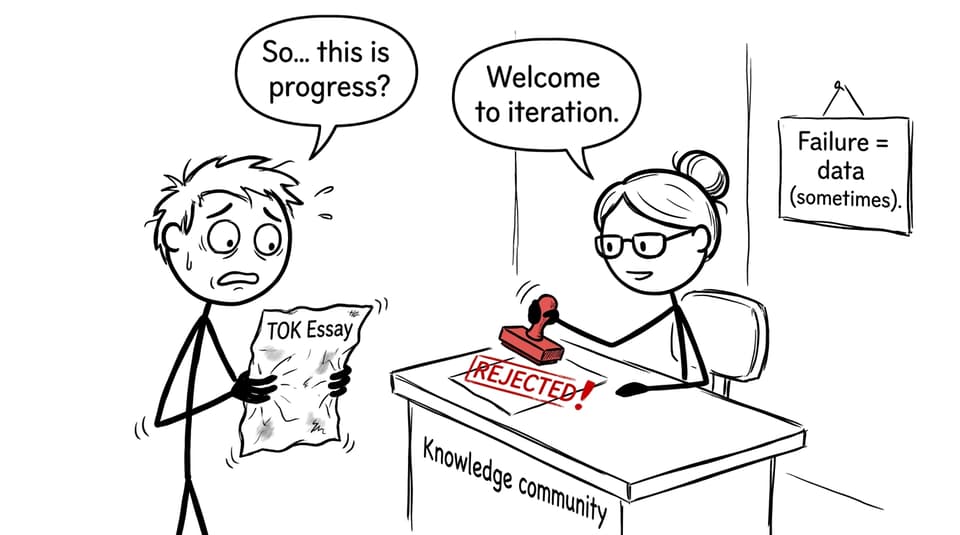
A quick checklist before you write
Use this checklist to keep TOK Nov 2026 Prompt #2: Failure and Knowledge sharply TOK-focused:
-
Define failure in each AOK (failed outcome? flawed method? rejection by the community?).
-
Define essential (logically necessary vs historically typical).
-
Clarify what production of knowledge means (creation, testing, acceptance, consensus).
-
Choose AOKs that treat failure differently (arts + natural sciences is a strong contrast).
-
Build claims and counterclaims, then weigh them.
If you need help keeping structure tight, use Comprehensive Guide to IB TOK Essay Structure alongside Structuring for Success in IB TOK Essays.
What the prompt is really testing
In TOK Nov 2026 Prompt #2: Failure and Knowledge, you are not being graded on resilience. You are being graded on epistemology: what role does failure play in turning ideas into justified, shared knowledge?
A useful way to frame it is to split “knowledge production” into stages:
-
Generation: new possibilities appear (often through imagination, intuition, experimentation).
-
Testing: methods strain those possibilities (and failure becomes visible).
-
Acceptance: communities decide what counts (peer review, critics, institutions, conventions).
Failure can be essential in one stage and optional in another. That nuance is often what moves an essay into higher mark bands.
For broader session context, see IB TOK Essay Prescribed Titles, November 2026.
Failure in the arts: when “wrong” is informative
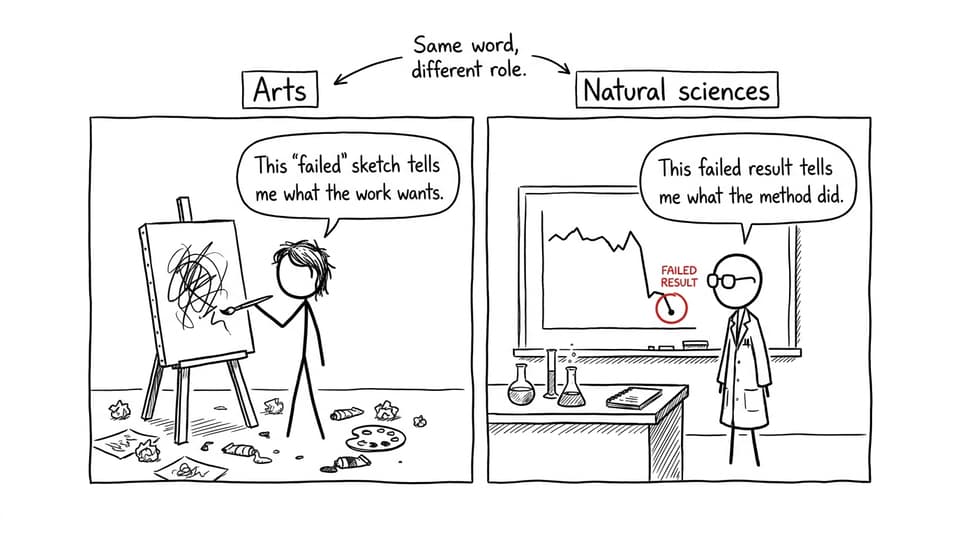
In the arts, a “failure” is rarely a single objective event. A draft that doesn’t work can still reveal what the piece is trying to become. Here, failure is tied to interpretation and aesthetic judgement: the work fails for an audience, within a tradition, or against an intention.
A strong claim might be: failure is essential in the arts because creative knowledge often emerges through iteration, where abandoned attempts clarify form, meaning, and emotional impact. A counterclaim: some artistic knowledge can be produced without obvious failure (for example, mastery within a known style, or deliberate constraint), so failure may be common but not strictly necessary.
To sharpen your Arts analysis, use Exploring Knowledge in the Arts for TOK Students and pair it with your example-selection skills from The Art of Linking Examples to Knowledge Questions.
Failure in the natural sciences: when “failed” becomes evidence
In the natural sciences, failure can be more clearly defined: a hypothesis is falsified, a result does not replicate, a model predicts poorly, a method introduces bias. Here, failure is often built into methodology: you try to break your claim because surviving criticism is part of earning reliability.
A strong claim: failure is essential because it functions as a filter that removes or refines false explanations, making scientific knowledge progressively more robust. A counterclaim: some scientific progress relies more on successful confirmation, technological advancement, or new instruments than on failure alone, so failure is not the sole engine of knowledge production.
If you need to anchor your TOK terms in the bigger course, browse IB Theory of Knowledge Resources.
Where students lose marks on TOK Nov 2026 Prompt #2: Failure and Knowledge
Most weaker essays quietly swap the TOK question for a life lesson: “failure teaches you, therefore it’s essential.” Examiners want something harder: is failure epistemically necessary for knowledge to be produced, and does that answer change across AOKs?
Two practical fixes:
-
Make your introduction a roadmap, not a trailer: TOK Essay Introductions That Grab Attention.
-
Make your ending a judgement, not a recap: How to Write Effective TOK Essay Conclusions.
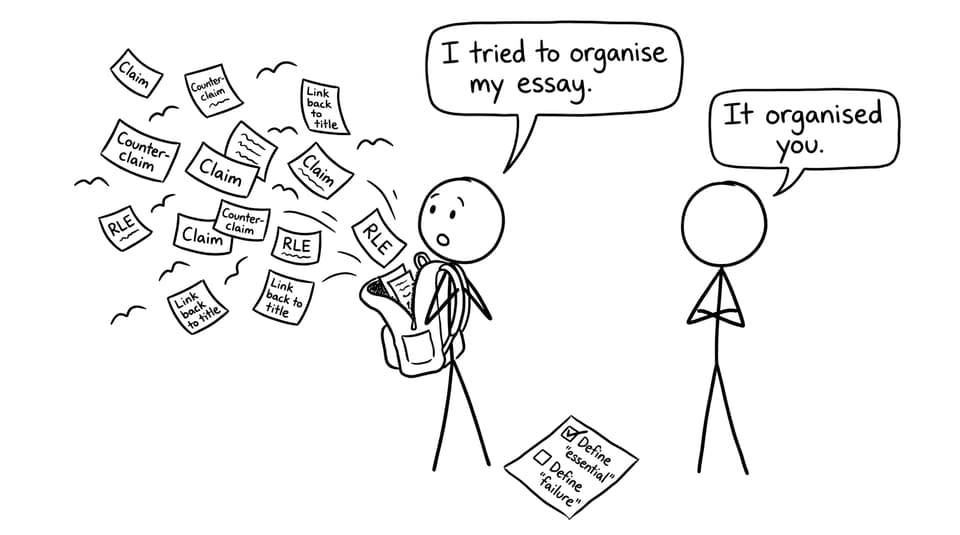
Closing: turn failure into analysis, not inspiration
If there’s a quiet lesson in TOK Nov 2026 Prompt #2: Failure and Knowledge, it’s that “failure” isn’t automatically meaningful. It becomes meaningful when a knowledge community can interpret it, learn from it, and change what it accepts as justified.
When you’re ready to go from overview to a deeper plan (thesis direction, AOK-by-AOK moves, and a model path), start here: TOK Nov 2026 Prompt #2: Failure and Knowledge. And when you draft, RevisionDojo’s Questionbank, Study Notes, Flashcards, AI Chat, Grading tools, Predicted Papers, Mock Exams, Coursework Library, and Tutors are built to help you iterate faster and think more clearly under pressure.