

The quiet difference between a 6 and a 7 in IB Math
Most students think a 7 in IB Math is earned in the final week: a heroic weekend, a perfect set of notes, a sudden burst of discipline. But the jump from “I understand this” to “I can do this under time pressure” usually comes from something less dramatic: a repeatable system.
A 7 is rarely about knowing more content. It’s about making fewer predictable mistakes: choosing the right method faster, writing working that earns marks, and practicing the exact question styles your exam rewards.
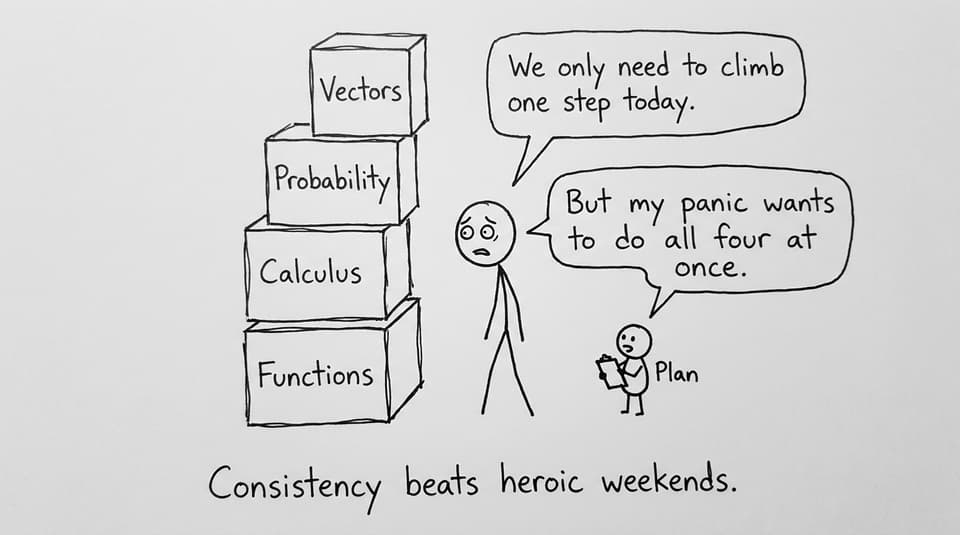
A quick IB Math 7 checklist (save this)
-
Pick your exact course and level (AA or AI, SL or HL) using the IB Math hubs.
-
Learn one micro-skill at a time using short, syllabus-aligned notes.
-
Drill that micro-skill immediately with exam-style questions.
-
Turn every mistake into an “error log” plus one flashcard.
-
Do timed practice weekly so your pacing becomes normal.
Good news: RevisionDojo already organizes this workflow in one place: Study Notes, Questionbank, Flashcards, AI Chat, Grading tools, Predicted Papers, Mock Exams, Coursework Library, and Tutors.
Tip 1: Stop revising “math” and start revising one IB Math decision
A common trap in IB Math revision is studying topics as if they’re chapters, instead of decisions: “Is this substitution or parts?” “Do I need a diagram?” “Is this a regression interpretation question?”
Start at the right home base:
Then pick one slice (example: calculus technique, function transformations, or statistics interpretation). If you’re AA and calculus keeps slipping, anchor your week around IB Mathematics Analysis and Approaches Calculus.
Tip 2: Use the Questionbank like a coach, not a bucket
Doing random practice feels productive because it’s busy. But 7-level performance in IB Math comes from targeted repetition with feedback.
Use the platform-level tool first: Questionbank. Then zoom into a topic set (for example: Math AA Calculus Questionbank).
Your rule: practice until you can explain why the markscheme gives marks. That’s the hidden curriculum.
If you want a strategy for tightening this loop, borrow the approach from IB Math: Targeted Revision Using the Questionbank.
Tip 3: Make recall automatic with Flashcards (formulas + “when to use”)
In IB Math, forgetting isn’t the real problem. Freezing is. Flashcards help because they train retrieval under mild pressure, which is the same skill you need on exam day.
Start here: IB Flashcards with Spaced Repetition (SRS). If you’re AA, jump straight to Mathematics Analysis and Approaches Flashcards.
A 7-level tweak: don’t only card the formula. Add a second card that asks, “When is this method valid?” That’s how you stop losing marks to the right technique used at the wrong time.
For a deeper routine, see How to Use RevisionDojo Flashcards for Formula Mastery.
Tip 4: Use Jojo AI Chat for fast clarification, not long lectures
When you’re stuck in IB Math, the worst outcome is spending 40 minutes confused and calling it revision. The best outcome is getting unstuck quickly, then returning to practice.
Use Jojo AI as a “one-question tutor”: ask what step you’re missing, what command term is being tested, and what a full-mark solution must include.
You can also build a stronger system around it via Meet Jojo AI: Your Personal IB Study Assistant.
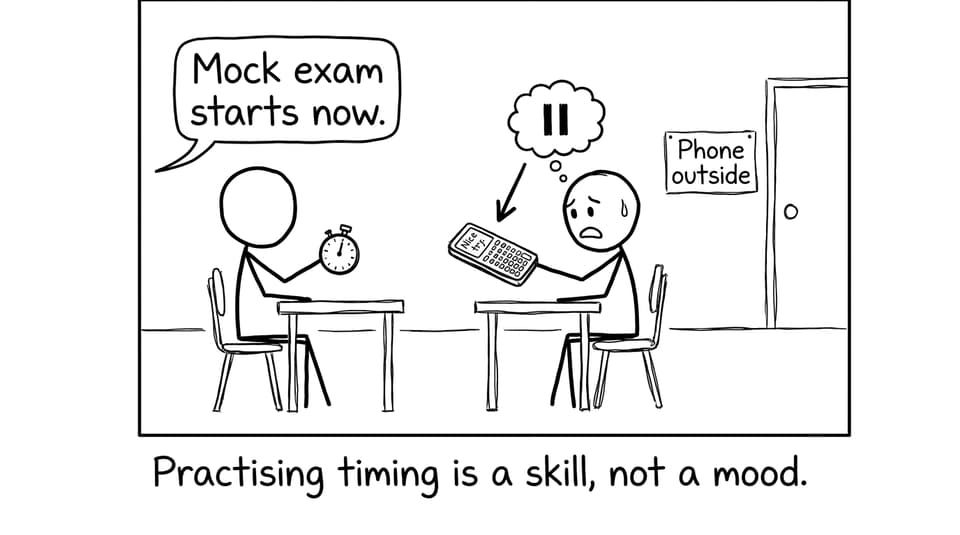
Tip 5: Simulate exam conditions early (timing is a topic)
Students who score 7 in IB Math don’t magically become faster in May. They rehearse speed.
Once a week, run a timed session using:
-
Or, if you’re AI: Math AI Predicted Papers
Then review like an examiner: where did you drop marks (method, algebra, interpretation, units, rounding)? For pacing structure, this guide helps: How to Use RevisionDojo's Mock Exam Builder to Simulate IB Conditions.
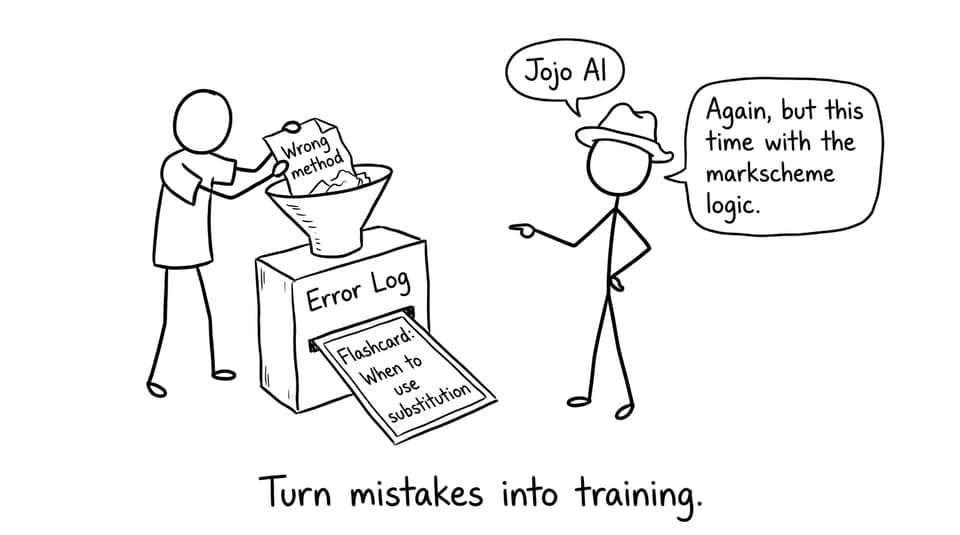
Tip 6: Turn every mistake into a repeatable asset
Here’s the compounding effect in IB Math: the same mistake repeats until you turn it into a system.
After each session, write a 3-line error log:
-
What did I do?
-
Why did I do it?
-
What will I do next time?
Then create one flashcard (or ask Jojo AI to generate one) that targets the decision you missed.
Conclusion: build a calm IB Math system that earns a 7
A 7 in IB Math isn’t a personality trait. It’s what happens when your revision stops being emotional and becomes mechanical: notes for clarity, Questionbank for precision, flashcards for recall, and timed practice for confidence.
If you want one place to run that whole loop, open RevisionDojo and start with your course hub, then commit to one focused topic today. Your future self doesn’t need more panic; they need a plan that repeats.